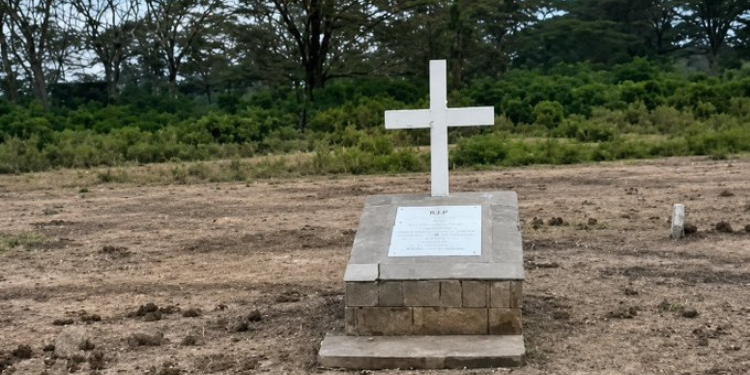
Have you ever driven along the Nakuru-Nairobi Highway and wondered about the prominent white cross that resembles a roadside grave near Morendat Junction?
For years, the striking memorial has captured the attention of motorists travelling between Nairobi and Nakuru, and many assume it marks a roadside burial site.
But the monument is a memorial, not a grave, dedicated to Father John Kaiser, an American Catholic missionary whose death in August 2000 remains one of Kenya’s most controversial unsolved cases.
The memorial stands near Morendat Junction, close to Naivasha, at the approximate spot where Fr. John Kaiser was found dead on the morning of August 24, 2000, after being killed the previous day.
More than two decades later, the white cross reminds travellers of a man remembered for his fearless defence of justice and human rights.
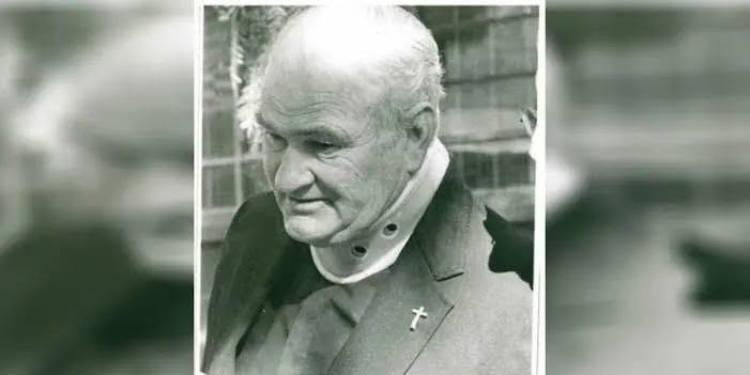
Who Was Father John Kaiser?
Born on November 29, 1932, in Perham, Minnesota, United States, Fr. John Kaiser dedicated nearly four decades of his life to missionary work in Kenya after joining the Mill Hill Missionaries.
Also Read: Truth Behind Donholm’s Iconic Mushroom-Shaped Water Tower
He served in several parts of the country, particularly within the Catholic Church’s Ngong Diocese, where he became known not only for his pastoral work but also for speaking out against corruption, land grabbing, politically instigated ethnic violence, and the forced eviction of vulnerable communities.
During the ethnic clashes of the 1990s, Fr. Kaiser was among the most vocal advocates for victims, especially those affected in areas such as Enoosupukia.
Fr Kaiser openly criticized powerful individuals whom he believed were behind human rights abuses.
At the time of his death, reports indicated that he was preparing to provide evidence relating to politically motivated violence, including information linked to investigations by the Akiwumi Commission into the tribal clashes of the 1990s.
The Mystery Surrounding His Death
On the morning of August 24, 2000, the body of Fr. John Kaiser was discovered beside his pickup truck under acacia trees near Morendat on the Nakuru-Nairobi Highway.
He had suffered a close-range shotgun wound to the back of the head, with a shotgun found nearby.
Also Read: Truth Behind Kenyans Losing Affordable Houses Purchased if Ruto Loses Elections
The circumstances surrounding his death immediately sparked controversy, with initial investigations suggesting that he had taken his own life.
However, that conclusion was strongly disputed by the Catholic Church, human rights organizations, independent investigators, and Kenyans, who argued that the nature of the gunshot wound and other forensic evidence made suicide highly unlikely.
The case attracted international attention, prompting the involvement of investigators from the United States’ Federal Bureau of Investigation (FBI).
A Kenyan judicial inquest in 2007 ruled that Catholic priest Fr. John Kaiser was murdered, rejecting earlier claims that he died by suicide.
Magistrate Maureen Odero, who led the inquiry, said previous investigations, including an FBI report, were flawed and based on weak evidence.
The inquest, which heard from 111 witnesses, overturned initial findings made by police and investigators following Kaiser’s death in 2000.
The Truth, Justice and Reconciliation Commission (TJRC) later identified his killing as a political assassination linked to his outspoken activism.
Despite multiple investigations over the years, no one has ever been convicted of his death, leaving the case unresolved more than 25 years later.
Although motorists refer to it as “Father Kaiser’s grave,” the monument along the highway is a memorial marking the place where his body was found.
His actual burial took place in Lolgorien, near the Kenya-Tanzania border in Narok County, where he had served in his final parish.
Follow our WhatsApp Channel and X Account for real-time news updates.