
The United States Embassy in Nairobi has issued a health advisory to travelers after Kenya confirmed a case of Bundibugyo virus disease, a form of Ebola, prompting health authorities to launch contact tracing efforts.
In the advisory issued on October 6, the embassy said health officials were tracing contacts linked to the case and urged travelers to remain alert and follow public health guidance.
The embassy noted that Ebola is a rare, severe and often fatal hemorrhagic fever illness.
Actions Recommended for Travelers
The U.S. Embassy advised travelers to consult information provided by the U.S. Centers for Disease Control and Prevention on Ebola and to review the CDC Travelers’ Health guidance for Kenya.
It also urged individuals who may be at risk for Ebola to alert healthcare providers if they experience symptoms consistent with the disease and to seek guidance before presenting themselves for treatment.
Travelers were further advised to continue taking malaria prophylaxis as prescribed by their doctors, noting that symptoms of malaria can resemble those of Ebola and potentially lead to unnecessary health concerns.
The embassy said people who have traveled to areas experiencing Ebola outbreaks should monitor their health for 21 days following their trip.
Also Read: How Kenyans Can Protect Themselves After First Ebola Case
It also encouraged travelers to review general health information for Kenya, consult available medical provider lists and check with their travel insurance companies regarding medical evacuation options in the event of illness while abroad.
According to information cited in the advisory, the Ministry of Health said the patient traveled by land from the Democratic Republic of the Congo to Uganda before proceeding to Kenya through Jomo Kenyatta International Airport aboard Jambojet flight 8523 on October 3.
The embassy said Kenyan health officials were conducting contact tracing after confirming the case.
Health authorities are seeking to identify and monitor individuals who may have come into contact with the patient during the journey as part of efforts to contain the disease.
Current State of Ebola in Uganda and DRC
As of October 7, 2026, the Ebola situation differs significantly in Uganda and the Democratic Republic of Congo (DRC).
Uganda officially ended its 2026 Ebola outbreak on August 27, 2026.
The country declared the outbreak over after completing the required 42-day period without a new confirmed case.
The last confirmed patient was discharged from care on July 16, 2026.
Uganda recorded 20 confirmed cases and two confirmed deaths during the outbreak.
The outbreak was caused by the Bundibugyo virus, the same Ebola species involved in the ongoing outbreak in the DRC.
Uganda currently has no reported active Ebola cases.
Also Read: How Ebola Is Treated and What Happens to Patients After Isolation
However, Uganda remains important to the regional response because it shares a border with the DRC and has continued surveillance and preparedness measures.
The DRC is still experiencing an active and expanding Ebola outbreak.
The outbreak was declared in May 2026 and has become the largest Ebola outbreak ever recorded in the country.
Latest CDC figures, based on data through October 2, put the DRC at 8,442 confirmed cases and 4,080 confirmed deaths.
The outbreak has spread across several provinces.
WHO reported that by September 23, 63 health zones in seven provinces had been affected.
New areas included Sud-Ubangi in northwestern DRC and Haut-Uélé, which borders South Sudan.
The situation has been particularly serious in North Kivu, where MSF reported that the province accounted for almost 40% of newly confirmed cases in the country, with new transmission hotspots continuing to emerge.
Follow our WhatsApp Channel and X Account for real-time news updates.
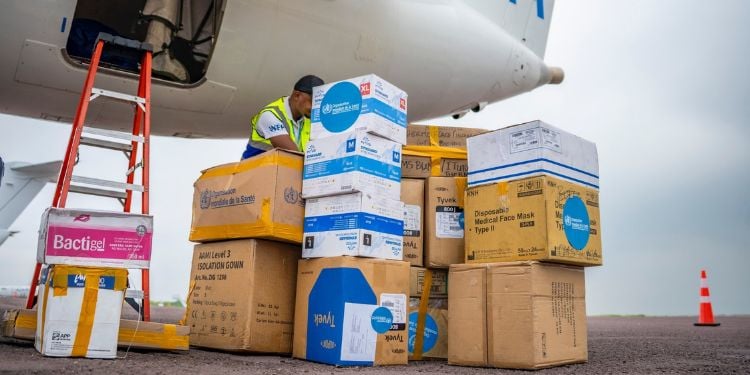
PHOTO | WHO