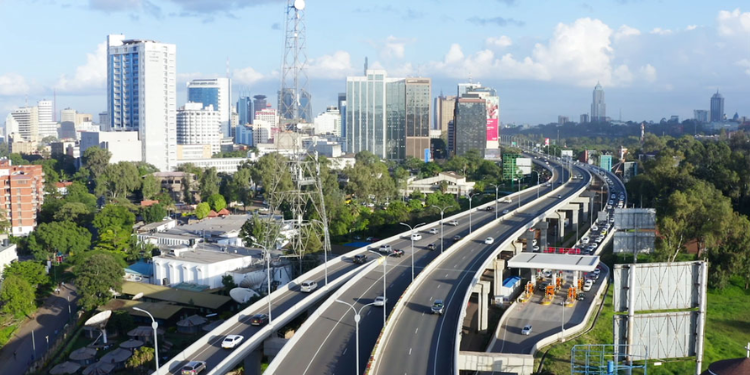

The National Transport and Safety Authority (NTSA) has explained the reasoning behind the 80 kilometres per hour(km/h) speed limit on the Nairobi Expressway and key sections of the Southern Bypass.
In an interview on March 12, NTSA Director General Nashon Kondiwa stated that the decision is based on engineering safety and not on how modern or straight the road appears.
He explained that the expressway’s design carries risks that may not be obvious to motorists, especially at higher speeds.
Why the Nairobi Expressway Cannot Go Beyond 80km/h
According to the NTSA boss, the speed limit was set by road engineers who designed and built the expressway, guided by scientific assessments of vehicle movement, curves, elevation, and safety barriers.
“I think the road engineers who designed this road and who constructed it know the dangers that you face if you drive on that road beyond 80 kph,” he told NTV.
According to NTSA, factors such as curves, elevation, vehicle dynamics, and the risk of losing control at high speed all inform the final speed limit.
Also Read: Traffic Offences That Will Attract Instant Fines of Ksh10,000 from NTSA
The authority noted that expressways amplify crash impacts due to height, barriers, and limited escape routes.
“Maybe I will also challenge them to explain much deeper, in an easier way to understand, because this is a very complex matter. They are looking at the forces, the curves, and you know, you can possibly fly out of that expressway,” Kondiwa stated.
Kondiwa warned that crashes on elevated roads can be fatal even at moderate speeds, and higher limits would significantly increase the risk of vehicles breaching barriers.
Lessons From Past Black Spots
Kondiwa linked the expressway decision to past accidents on Kenyan roads where drivers ignored limits they considered unreasonable.
Using Nithi Bridge as an example, the official said road designers had long warned of dangers at higher speeds.
“In Nithi Bridge, it kills a lot of people, but the designers are saying if you go beyond 60 km/h, you will actually not make the curve,” he said.
However, according to the NTSA DG, despite many warning signs, many drivers still exceed the recommended speeds.
“Even with speed signs, the same ignorant drivers go 80 km/h, they go 100 km/h, and they fly out of the bridge,” Kondiwa said.
Also Read: NMG Warns Shareholders After Tanzanian Billionaire’s Takeover
He noted that Nithi Bridge is currently being redesigned at a cost of about Sh7 billion after years of fatal crashes, showing the consequences of failing to respect engineering limits.
Kondiwa insisted that speed limits on major highways are not meant to punish drivers or generate fines.
NTSA on Southern Bypass Speed Changes
Kondiwa also addressed complaints from motorists using the Southern Bypass, especially around the Kikuyu side, the Virtual Way Bridge and the Ngong Road Interchange.
Some drivers reported receiving speeding fines when limits suddenly shift from 110km/h to 80km/h over short distances.
Kondiwa explained that speed limits on the bypass change depending on road shape, visibility and accident risk.
“The section of the Southern Bypass that they were in, there are certain sections that there is a bend, and there are certain sections that are straight. The speed limit in Southern Bypass changes, depending on where you are,” he explained.
The NTSA DG admitted that missing or unclear signage in some areas has caused confusion, especially near speed camera zones, and said improvements are being reviewed.
“I am not a road engineer, and I have never designed any road. But that is the science behind these speed limits and it will for our own good that we should follow these instructions,” he concluded.
Kondiwa urged motorists to respect posted limits, warning that high-speed crashes on expressways and bypasses leave little room for survival.