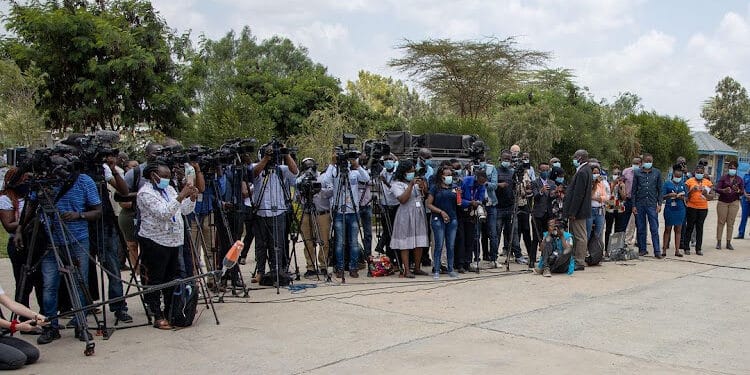

Every year on May 3, the world marks World Press Freedom Day. It is a day set aside to reflect on the gains made in protecting media freedom and the challenges that continue to threaten it, but also to question how free it truly is. It is a day not just of celebration, but of honest reckoning and accountability.
The commemoration traces back to the 1991 Windhoek Declaration, endorsed by UNESCO, which called for a free, independent, and pluralistic press. Decades later, that call remains as urgent as ever.
Press Freedom: Global and Local Realities
Globally, journalism is increasingly becoming a dangerous profession. From conflict zones in Eastern Europe and the Middle East to politically volatile regions, journalists are paying the ultimate price for doing their work.
According to the Committee to Protect Journalists, dozens are killed, injured, and deliberately targeted every year, with recent conflicts in the Gaza Strip marking one of the deadliest periods for media workers in modern history.
Newsrooms have been bombed, reporters targeted, and truth itself caught in the crossfire. Yet, the threat to media freedom is no longer confined to war zones.
Increasingly, it is found within borders, in the everyday interactions between journalists, the state, and the public.
The State of the Kenyan Media
Closer home, in Kenya, the media has long stood as one of the most trusted institutions, a watchdog that informs, questions, and holds power to account.
Over the years, the industry has grown in leaps and bounds, earning both regional respect and public confidence.
Also Read: Kabogo Threatens Advertising Cuts for Media Houses Hitting Govt
Yet beneath this progress lies a growing unease. The political class still maintains a transactional relationship with the press, quick to embrace journalists when coverage is favorable, and equally quick to discredit and attack them when it is not.
This inconsistency has created an environment where hostility toward journalists is not only tolerated but, in some cases, encouraged.
The Culture of Impunity
The consequences are visible. Journalists covering protests have faced police brutality.
Reporters at political events have been harassed by supporters. Online, media practitioners, particularly women, are subjected to relentless abuse.
These are not isolated incidents; they reflect a broader culture where attacks on the press are rarely met with accountability.
Impunity remains one of the greatest threats to media freedom today. When those who intimidate, assault, or obstruct journalists face no consequences, it sends a dangerous message that silencing the press comes at little to no cost.
I experienced this hostility firsthand in 2024 while covering the Finance Bill protests. Three times I almost lost my life: twice at the hands of the police and once by a street mob.
In subsequent protests, I was stopped and arbitrarily searched even though I provided all necessary documents proving my identity.
Shadows Over the 2027 Elections
This concern is particularly urgent as Kenya gradually moves toward the 2027 general elections.
Early signs are troubling; rising insecurity, increasing political tension, and a charged public atmosphere are creating a hostile environment.
Also Read: CS Murkomen Pressured to Issue Apology
Election periods have historically heightened tensions, and we are seeing a rise in reports of intimidation by both police and political actors.
This is a path we have walked before, yet it seems we have not yet learned the necessary lessons to avoid repeating it.
Constitutional Shields vs. Reality
Kenya’s legal framework, including Article 34 of the Constitution of Kenya 2010, guarantees media freedom and independence, while Articles 32, 33, and 35 reinforce those liberties.
Regionally, protections under the African Charter on Human and Peoples’ Rights affirm the right to freedom of expression.
But laws on paper are not enough. Without enforcement and political goodwill, these protections risk becoming purely symbolic.
Economic and Technological Disruptions
Beyond physical threats, the media is navigating a rapidly changing economic landscape.
Advertising revenue is shifting away from traditional media toward digital platforms and influencers, placing immense financial strain on newsrooms.
At the same time, delays in payments owed to media houses by government institutions are straining operations and undermining sustainability.
Then there is the rise of Artificial Intelligence. While AI presents new tools for storytelling and efficiency, it also raises serious questions about authenticity, ethics, and the future of narrative.
There is a growing risk that speed and automation could replace depth, context, and the human voice that gives stories meaning.
Journalism, at its core, is a human endeavor grounded in context, nuance, and lived experience. That must not be lost.
Way forward
As we mark World Press Freedom Day, the call is clear. Protecting journalists must go beyond statements and symbolic gestures.
It requires concrete action, including enforcing existing laws, holding perpetrators accountable, safeguarding media independence, and investing in the sustainability of the industry.
The media, for its part, must continue to uphold professionalism and ethical standards, even in the face of adversity.
A society that intimidates its journalists risks silencing itself. Without a free press, accountability fades, truth is compromised, and democracy itself is weakened.