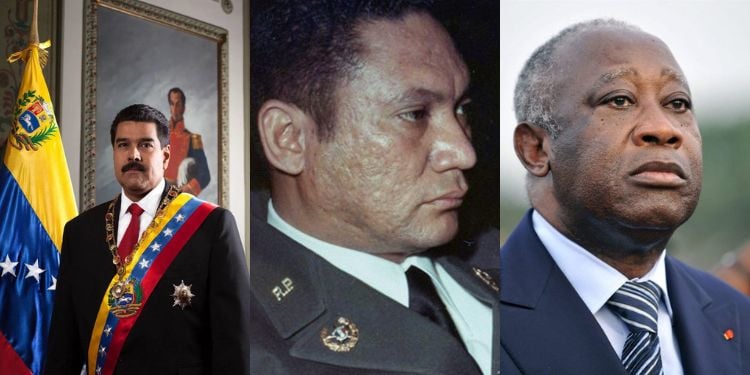
International law establishes that a sitting head of state, such as Venezuela’s President Nicolás Maduro, enjoys broad immunity from arrest and prosecution by other sovereign states.
This protection is part of customary international law. It is reflected in the United Nations Charter, which prohibits the use of force against another state’s territorial integrity or political independence except in self‑defence or when authorised by the UN Security Council.
The Charter’s Article 2(4) states that all UN members must “refrain … from the threat or use of force” against other states, creating a high threshold for lawful military action across borders.
Domestic criminal indictments alone do not confer international authority to arrest a foreign head of state abroad. Even if a government issues a valid arrest warrant in its courts, the use of military force on another state’s territory to execute that warrant without the host state’s consent is regarded as unlawful.
2026 Venezuela Case: Nicolás Maduro
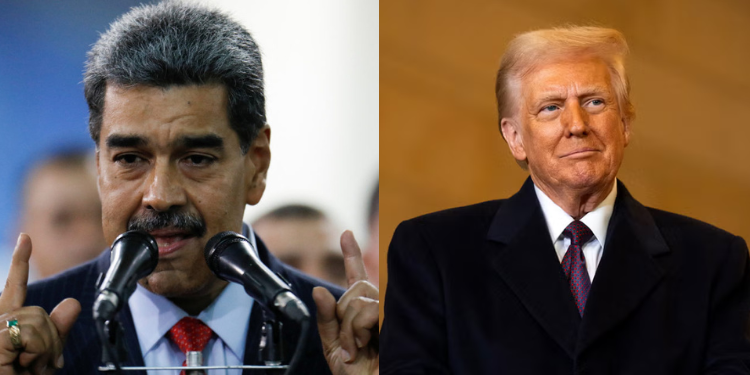
On January 3, 2026, U.S. forces conducted a military operation in Venezuela, resulting in the capture of President Nicolás Maduro and his wife, Cilia Flores, and their transfer to New York to face federal charges, including alleged narcoterrorism and drug trafficking.
The U.S. government characterised the mission as a law enforcement operation and asserted Maduro’s illegitimacy following disputed elections.
International legal experts and numerous states strongly criticised the operation as a violation of international law and Venezuelan sovereignty.
Michael Schmitt, an international law professor, called the action a “clear violation” of international law, noting the absence of Venezuelan consent or UN Security Council authorisation.
Additionally, he noted that drug trafficking allegations do not justify military action under the UN Charter’s restrictions on the use of force.
Russia and China condemned the capture as a breach of sovereignty and demanded measures through the UN Security Council.
The United Nations described the operation as a dangerous precedent, while the European Union urged respect for international law and diplomacy rather than the use of force.
Latin American governments, including Brazil and Colombia, criticised the intervention as aggression against regional sovereignty and contrary to international norms.
Other Presidents and Heads of State Captured by Other Countries
Also Read: Trump Announces Capture of Venezuela’s President Nicolas Maduro
Manuel Noriega, Panamá (1989–1990)
Manuel Noriega, the military ruler of Panama, was captured by U.S. forces during a military invasion in December 1989.
The operation took place in Panama City, where Noriega surrendered after weeks of conflict. He was transported to the United States, tried on drug trafficking charges, and ultimately convicted.
The intervention drew international criticism, with the United Nations General Assembly and other global bodies calling it a violation of Panama’s sovereignty. However, the U.S. justified it on grounds of regional security and the protection of American citizens.
Laurent Gbagbo, Côte d’Ivoire (2011)
Laurent Gbagbo was captured in April 2011 following post-election violence in Côte d’Ivoire.
Forces loyal to internationally recognised President Alassane Ouattara, supported by French and UN troops, detained Gbagbo in Abidjan after he refused to relinquish power following the disputed 2010 presidential elections.
He was later transferred to the International Criminal Court in The Hague, where he faced charges of crimes against humanity for acts committed during the conflict.
Omar al‑Bashir, Sudan (2009–2010)
Omar al‑Bashir, the President of Sudan, was indicted by the International Criminal Court for alleged war crimes and crimes against humanity in Darfur.
Although another country did not physically capture him, the ICC issued arrest warrants in 2008 and 2009.
Several states refused to detain him during official visits due to his status as a sitting head of state, demonstrating the limits of international law in enforcing warrants against incumbent leaders despite serious allegations of mass atrocities.
Also Read: Benin Soldiers Claim to Have Toppled President Talon in Coup Attempt
Augusto Pinochet, Chile (1998)
Augusto Pinochet, the former Chilean dictator, was arrested in London in October 1998 on an international warrant for human rights abuses.
Pinochet faced charges of torture, forced disappearances, and killings of political opponents during his rule.
While he was ultimately released on health grounds, his detention established an important precedent in international law, showing that former heads of state can be held accountable for human rights violations even outside their home country.
Jean‑Bertrand Aristide, Haiti (2004)
Jean‑Bertrand Aristide, the President of Haiti, was forced into exile in February 2004 amid political unrest and armed opposition in Port-au-Prince.
He claimed that U.S. forces effectively removed him from power, a claim denied by the United States.
Aristide’s departure remains a controversial case, illustrating the complex intersection of foreign intervention, political instability, and the contested legality of removing a sitting president.
Follow our WhatsApp Channel and X Account for real-time news updates.