
The United Kingdom’s Foreign, Commonwealth and Development Office (FCDO) has issued a travel warning for several parts of Kenya, advising British nationals not to visit areas considered to pose security risks.
In its travel advisory, the FCDO advised against all travel to Mandera County, parts of Wajir County, Garissa County and sections of Lamu County.
“Due to the risk of terrorism from groups based in Somalia, FCDO advises against all travel to:,” the alert read in part.
The warning covers Tarbaj and Wajir East constituencies in Wajir County, except Wajir Town, as well as areas within 60km of Kenya’s border with Somalia.
In Garissa County, the advisory excludes Garissa Town, Lagdera Constituency and specified areas of Balambala Constituency from the all-travel warning.
FCDO also advised against all travel to Lamu County, except Lamu Island and Manda Island.
FCDO Areas Under Essential-Travel Warning
FCDO advised against all but essential travel to Garissa Town and Tana River County north of the Tana River up to Saka.
The advisory also covers areas within 15km of the east coast between the Tana River and the Galana (Athi-Galana-Sabaki) River.
Moyale Town and areas within 5km of it, including the border with Ethiopia, were also placed under the all-but-essential-travel warning.
FCDO warned that travellers who ignore its advice risk invalidating their travel insurance.
The advisory urged British nationals planning to visit Kenya to read the full travel guidance and obtain appropriate insurance covering their destinations, planned activities and emergency expenses.
“If you choose to travel, research your destinations and get appropriate travel insurance. Insurance should cover your itinerary, planned activities and expenses in an emergency.”
Moyale Fighting Intensifies, Truck Drivers Stranded at Border
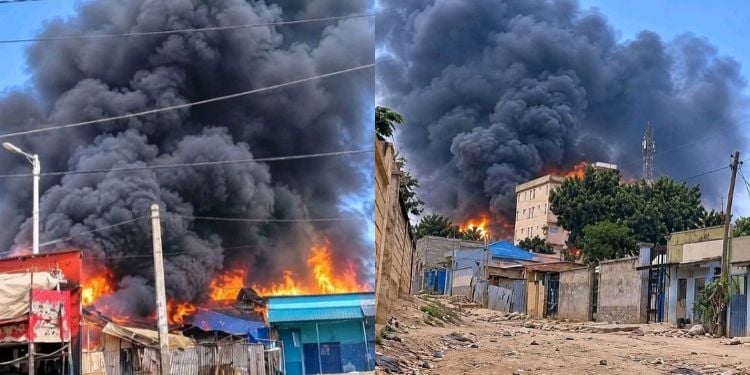
Fighting in Ethiopia’s Moyale region intensified on November 16, 2026, with homes and businesses reportedly burned as thousands more residents fled the violence.
On November 17, Al Jazeera reported that the clashes had disrupted livelihoods and worsened the humanitarian crisis as the territorial dispute continued.
By November 19, sporadic gunfire was still being reported in Moyale town, while long-distance truck drivers remained stranded at the Kenya-Ethiopia border.
Several drivers who had travelled into Ethiopia in mid-October to deliver goods in towns such as Jigjiga have been unable to complete their journeys following the outbreak of violence.
Some have crossed back into Kenya, abandoning their trucks and cargo as insecurity worsened on the Ethiopian side.
Drivers have also reported gunfire and explosions near areas where their vehicles were parked, making attempts to return to Ethiopia increasingly dangerous.
Why the Fighting Started
Clashes in Ethiopia’s Moyale region began escalating on October 18, 2026, after Somali regional authorities opened an administrative office and raised the Somali Regional State flag in a disputed section of Moyale town.
Also Read: Police Officers Among 8 Feared Dead After Gunmen Attack
Oromia officials reportedly viewed the move as a provocation because they consider the area part of their administrative territory.
The dispute escalated into armed confrontations involving Somali regional security forces and Oromo militia groups.
The fighting stems from a longstanding boundary dispute between Ethiopia’s Oromia and Somali regional states.
The conflict also involves competition between the Borana Oromo and Garre Somali communities over land, water points and grazing areas.
Moyale is jointly administered by the two regional states, making control of the town a longstanding political and administrative dispute.
Impact and Kenya’s Response
By November 3, 2026, approximately 50,000 people had crossed into Moyale in Marsabit County, Kenya, fleeing the violence.
Most of those displaced were sheltering with host communities, with women and children accounting for many of the arrivals.
On November 5, the United Nations in Kenya appealed for US$8.9 million to support critical life-saving needs over three months.
Also Read: KCSE Exams Disrupted After School Is Hit by Stray Bullets
Cross-border trade has been disrupted as trucks remain stranded at the Kenya-Ethiopia border.
Pastoralist livelihoods, local businesses and daily economic activities have also been affected by the fighting.
Kenya has received Ethiopians displaced by the clashes through Moyale in Marsabit County.
On November 10, 2026, Cabinet Secretary for Foreign Affairs Musalia Mudavadi said Ethiopia had promised to restore calm in the conflict-hit Moyale region.
“The issue is that from the Ethiopian side, they have been having a little bit of tension over there. So, the problem has caused about 40,000 people to evacuate to Kenya,” Mudavadi said.
He said he had asked his counterpart to step in and ease the situation so that no more people would be driven out.
“I told him to try and calm the situation in their country so that the refugees return to their homes,” he said.
Follow our WhatsApp Channel and X Account for real-time news updates and subscribe to our YouTube Channel for in-depth interviews.