
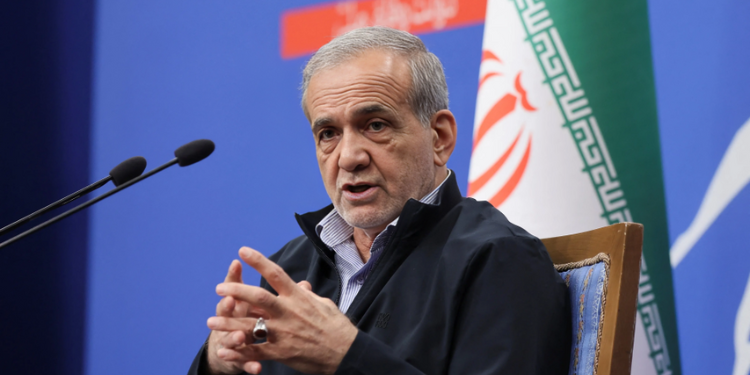
Iran’s President Masoud Pezeshkian has rejected US assertions that Washington can dictate Tehran’s nuclear activities, saying Iran will continue to exercise what it calls its lawful rights while insisting it does not seek to attack any country.
In a statement issued on April 19, Pezeshkian said Iran’s position was rooted in international law and the principle of self-defense, responding directly to statements by US President Donald Trump questioning Iran’s right to pursue nuclear technology and threatening further military action.
Pezeshkian said no foreign power had the authority to deny Iranians access to peaceful nuclear technology, stressing that Iranian policy was focused on maintaining regional stability rather than widening the conflict.
“Trump has no right to prevent people from their rights and to say that Iran cannot use its nuclear rights. Our core position is based on maintaining peace, stability, and security in the region,” Pezeshkian said.
The U.S. and Israel say their operations are intended to degrade Iran’s military capabilities and prevent what they describe as nuclear escalation.
Tehran rejects those claims and says its actions have been retaliatory.
Iran Nuclear Stance and Regional Security
Pezeshkian said Iran’s nuclear program was being pursued within what he called the country’s legitimate rights and cannot be halted through pressure or threats.
He said linking military action to nuclear demands undermines international law and existing diplomatic frameworks.
“The enemy’s statements about destroying our civilization and returning Iran to the stone age show the intentions and goals of the aggressors,” Pezeshkian added.
Iran continues to insist its enrichment activities are for civilian purposes, a claim disputed by the United States and several of its allies, who say Tehran’s stockpile and enrichment levels exceed civilian needs.
Also Read: Middle East Tensions Rise as Pressure Shifts to a Second Critical Red Sea Strait
Indirect talks earlier this year, facilitated by third parties, failed to reach an agreement.
Since then, military hostilities have intensified, including attacks affecting shipping lanes and energy infrastructure, contributing to volatility in global markets.
US officials have said any future deal would require Iran to halt uranium enrichment entirely, a condition Tehran has repeatedly rejected. Iranian authorities say negotiations cannot proceed under the threat of force.
Pezeshkian stressed that Iran does not seek war with other countries and that its military actions have been confined to what it considers lawful self-defense following strikes on its territory.
Iranian authorities say civilian infrastructure has been damaged in recent attacks, allegations the U.S. denies, as Washington maintains that its targets are military-related.
Also Read: Australia Signals Intent to Join Strait of Hormuz Operation
Pezeshkian has said Iran would consider ending hostilities if international guarantees are provided to prevent future attacks and its rights are formally recognized.
No New Talks Scheduled
As of April 19, no new nuclear talks between Iran and the U.S had been scheduled, and no formal diplomatic engagement was underway.
Officials on both sides have confirmed that indirect contacts remain suspended after the escalation of military exchanges and the collapse of earlier mediation efforts.
Iranian authorities have said negotiations cannot resume while military strikes continue and have linked any return to talks to guarantees against future attacks and recognition of Iran’s nuclear rights.
U.S officials have maintained that diplomacy can proceed only after Iran meets security and nuclear conditions, including halting uranium enrichment.
No date, venue, or mediator has been announced for renewed discussions, and neither side has shown flexibility on core demands.
Third‑party intermediaries involved in earlier talks have not publicly confirmed new initiatives.
The absence of a negotiating framework has left diplomatic channels dormant, with positions restated but no mechanism in place to restart dialogue.