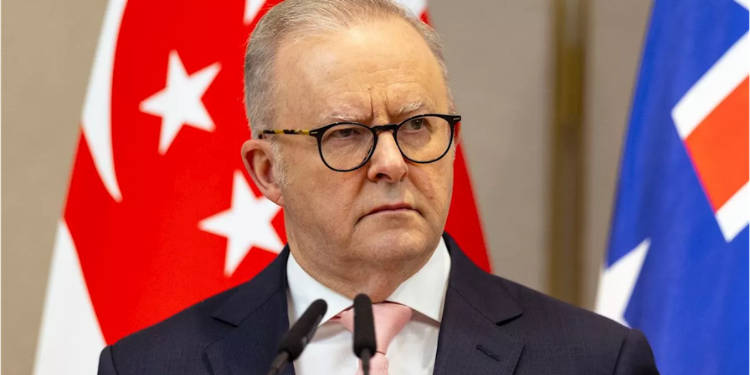

Australia is considering participating in an international naval operation in the Strait of Hormuz as tensions between the U.S and Iran continue to disrupt global oil markets and push up fuel prices.
Prime Minister Anthony Albanese confirmed the issue is under active consideration after warnings that any prolonged disruption to shipping through the strait could further raise petrol prices in Australia.
He said the government was assessing requests and developments as international efforts focus on restoring shipping access through the strategic waterway.
Recent US-Iran clashes and threats to shipping prompted sharp increases in oil prices, with ripple effects for countries reliant on imported fuel.
US President Donald Trump has linked the reopening of the strait to pressure on Iran, saying any disruption is a direct result of Tehran’s actions.
He has argued that restoring shipping routes would stabilize energy prices and global markets, positioning the potential reopening as a success for his administration.
Fuel prices emerge as Australia’s Central Issue
Australia’s PM, Anthony Albanese, acknowledged that Australians were already feeling the impact of higher fuel costs and said events in the Middle East were directly influencing prices at the pump.
He stressed that Australia had not sought the conflict but was being affected economically by rising oil prices linked to the Strait of Hormuz.
Also Read: Two Nations Raise Alarm After North Korea Fires Multiple Missiles Seventh Time This Year
Treasurer Jim Chalmers has also warned that escalation in the region poses risks to inflation and household costs.
Fuel prices are a key concern for the Australian government as global oil benchmarks remain volatile after weeks of restricted tanker movement.
The federal government has said Australia’s fuel supply remains secure, pointing to increased fuel reserves and incoming shipments.
Officials confirmed that petrol stockpiles had been lifted to more than 40 days’ supply during recent disruptions.
The government has noted that price relief at the pump lags behind movements in oil markets due to shipping timelines and existing supply contracts.
Australia Weighs Strait of Hormuz Operation
Australia is now weighing whether to contribute to a multinational effort aimed at protecting shipping and ensuring freedom of navigation through the strait.
The government has not committed forces and has downplayed any suggestion of an imminent deployment.
Albanese said Australia would only act in line with its national interests and in consultation with partners, including the U.S.
“We spoke about the full range of support that could be required, now that could be diplomatic measures. We will continue to be a constructive contributor to that debate… Australia is a long way away as well from the Strait compared to European nations,” he said.
He rejected claims that Australia had been asked to take on a combat role, insisting that discussions remain in their early stages.
The US has increased its naval presence in the region and imposed restrictions on Iranian shipping as part of broader pressure on Tehran.
Also Read: U.S. Moves That Could Change Global Shipping Overnight
Iran has responded by warning that it could again restrict access to the waterway if the blockades remain in place.
Oil prices briefly fell after Iran announced a limited reopening of the strait during a ceasefire.
However, shipping traffic remains inconsistent, with reports of vessels turning back due to ongoing security concerns.
Situation at Strait of Hormuz
The Strait of Hormuz remains unstable and intermittently closed.
Iran reversed a short-lived reopening of the strait on April 18, saying it would remain closed until the US lifts its naval blockade of Iranian ports.
Iranian military commanders said control of the waterway had returned to the Islamic Revolutionary Guard Corps (IRGC), warning that vessels attempting to transit without approval risk being targeted.
The US Navy has maintained a blockade preventing Iranian‑linked vessels from entering or leaving ports, while allowing some third‑party shipping to proceed under strict monitoring.
Diplomatic efforts continue through intermediaries, with US‑Iran talks expected to resume, but officials on both sides have said no final deal has been reached.