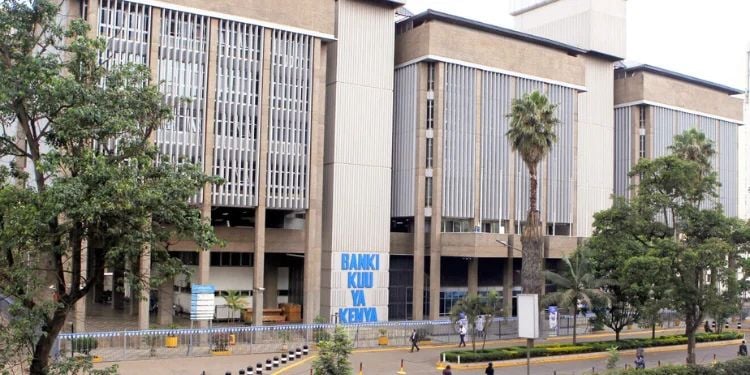

The Central Bank of Kenya (CBK) has listed sectors with the highest hiring demand in 2026, highlighting uneven employment prospects across key areas of the economy.
According to the May 2026 Market Perceptions Survey, certain sectors are more likely to hire than others, despite the finding that overall employment growth is expected to moderate due to digital transformation and automation.
“Bank respondents expect higher growth of private sector credit in 2026 compared to 2025,” the survey read in part.
CBK Lists Sectors with High Hiring Demand in Kenya 2026
Based on the hiring outlook for 2026 relative to 2025, the sectors with the most active demand include banking and financial services, which recorded the strongest hiring intentions among all sectors.
The survey showed that 36% of respondents in the sector indicated they would “definitely” hire in 2026, while 39% said they would “probably” hire.
The CBK survey linked this demand to the expansion of digital lending products, increased fintech collaborations, and rising need for cybersecurity infrastructure to support ongoing digital transformation within the financial sector.
The agriculture sector also reported resilient hiring prospects. According to the survey, 13% of respondents expected to “definitely” hire, while 44% indicated they would “probably” hire in 2026.
The outlook was supported by above-normal rainfall, government fertilizer subsidy programmes, and continued expansion across agricultural value chains, which contributed to improved productivity and sustained sectoral growth.
Also Read: CBK Reveals Number of Kenyan Banks Yet to Meet Ksh3 Billion Capital Requirement
Further, the survey confirmed that tourism and hospitality showed moderate but improving hiring sentiment.
Although only 5% of respondents stated they would “definitely” hire, while 26% indicated “probably” hiring intentions, the sector recorded stronger activity in Nairobi, driven by increased forward bookings compared to previous years.
“Hotel forward bookings The Survey indicated improved average forward hotel bookings for May to August 2026 compared to the same period in the previous year, suggesting a stronger tourism outlook,” CBK noted.
The survey largely attributed this growth to a rise in business tourism, particularly Meetings, Incentives, Conferences and Exhibitions (MICE), supporting demand through August 2026.
The ICT and digital economy sector, although not listed separately in the hiring chart, was consistently identified as a key driver of economic resilience.
Firms continued to invest heavily in artificial intelligence, fintech solutions and automation. While automation reduced demand for large-scale hiring through efficiency gains, it increased the need for specialized, technology-skilled labour to support digital transformation across industries.
Workforce Trends in 2026
The CBK survey highlighted key workforce trends shaping hiring decisions across sectors.
Also Read: CBK Explains Why It Has Paused Interest Rate Changes
One major trend was a shift toward permanent employment, with firms increasingly converting contract workers into permanent roles. This approach was linked to efforts to strengthen staff retention and improve operational stability rather than expanding headcount through large-scale recruitment.
The survey also noted that automation continued to influence hiring patterns across the economy. Businesses were increasingly adopting technology to enhance efficiency and reduce production costs, which, in turn, moderated overall hiring growth despite ongoing expansion in some sectors.
At the same time, the report identified weaker hiring conditions in select sectors. Transport and construction recorded no respondents indicating “definite” hiring plans, with low demand attributed to high fuel costs and weak aggregate demand, reflecting continued pressure on these segments of the economy.
Follow our WhatsApp Channel and X Account for real-time news updates.