The government will roll out the enterprise support component of the Kenya Jobs and Economic Transformation (KJET) programme in October, targeting micro and small enterprises seeking to expand production.
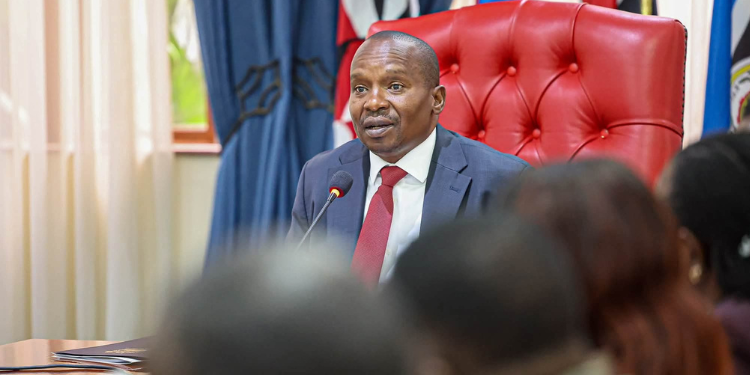
On September 9, 2026, Deputy President Kithure Kindiki said that under the planned support, selected enterprise clusters will receive common-user equipment through a matching-grant arrangement, in which KJET will finance 50 per cent of the equipment cost.
The programme is designed to reach businesses across the country, with a particular focus on rural entrepreneurs who have struggled to access formal business support because of the nature of their operations.
KJET Equipment Support and 50% Matching Grant
KJET is a five-year Government of Kenya project funded by the World Bank and running from 2024 to 2029.
World Bank committed a total of US$150 million (Ksh19.42 billion) to the KJET Project. The financing is structured as an Investment Project Financing (IPF) and supports the project’s four components, including MSME cluster competitiveness, business and investment reforms, and green financing.
Its objective is to increase private-sector investment, access to markets and sustainable finance while creating and improving jobs.
Also Read: NYOTA Outlines Next Steps For 122,000 Youth After Disbursing Funds
The project targets at least 45,000 Kenyans, including 6,800 women, through new or improved employment opportunities.
The equipment component falls under KJET’s second component, Enhancing MSME Cluster Competitiveness, which is implemented by the Micro and Small Enterprises Authority (MSEA).
The programme uses a cluster model rather than giving individual entrepreneurs cash.
A cluster can comprise micro, small and medium enterprises organised as a cooperative, association or other legally registered cluster-based entity operating within the same value chain.
According to MSEA, the co-investment model supports the purchase of production machinery, equipment and installation services.
A qualifying cluster must raise and contribute 50 per cent of the total equipment cost in cash, with KJET matching the contribution. the support does not cover construction works, land, vehicles or operating expenses.
Who Qualifies for KJET Support?
The programme is not open to individual businesses applying independently for equipment support. MSEA says applicants must be registered cooperatives, associations or cluster-based MSME entities.
Eligible clusters must have operated for more than two years, be actively involved in value addition, and have products already in the market.
They must also operate within one of KJET’s priority value chains or, in exceptional circumstances, another sector that aligns with the project’s objectives and demonstrates potential for employment and economic impact.
The priority areas include dairy, coffee, tea, leather, edible oils, textiles, construction materials, rice, blue economy and minerals.
Kindiki said the government will select clusters equitably across counties, constituencies and wards, with the latest rollout preparations aimed to ensure support reaches enterprises outside major urban centres.
MSEA also says KJET applications are free and warns businesses against individuals or organisations demanding payment or promising guaranteed selection. Submission of an application does not automatically guarantee funding because applications are subject to eligibility checks, verification and assessment.
Also Read: Ruto Reveals Why Kenya Wants to Host the Grammy Awards
How the Programme Will Support Small Businesses
Beyond equipment, KJET’s MSME component includes Business Development Services intended to improve the management, productivity and competitiveness of participating enterprises.
MSEA says 1,200 MSME clusters are targeted for general and specialised training and capacity building, while selected clusters can receive investment support for machinery and other productive assets.
The equipment model is intended to let several enterprises within a cluster share productive machinery, reducing the cost individual small businesses would face if they had to purchase similar equipment independently.
For example, dairy enterprises may use shared equipment for milk processing, while coffee or tea businesses could use machinery for processing and packaging.
KJET covers reforms to improve the business and investment environment, green financing and climate resilience for SMEs, and project management and monitoring.
Kindiki has directed relevant State departments to expedite preparations for the enterprise support rollout ahead of the first October cohort.
Follow our WhatsApp Channel and X Account for real-time news updates.