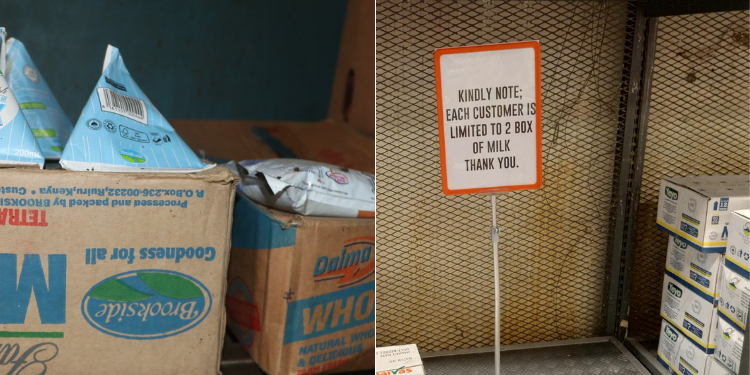
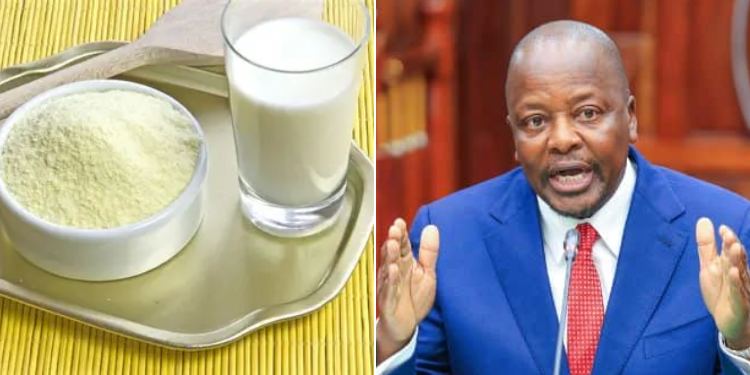
Agriculture Cabinet Secretary (CS) Mutahi Kagwe has outlined measures to address the ongoing milk shortage, including efforts to lower animal feed costs and ensure farmers continue supplying milk to processors.
Addressing the press on September 3, Kagwe said the government is implementing duty-free yellow maize imports for animal feed to increase availability and reduce feeding costs, which have contributed to declining milk production.
He urged dairy cooperatives to pass the financial benefits of the current milk market to farmers, warning that failure to do so could leave supermarkets with limited milk supplies while farmers continue selling milk informally in rural areas.
“So that the farmer can continue taking the milk to the cooperatives and the cooperatives can take it to the processors. If that does not happen, you’ll find a shortage of milk in supermarkets, but in the villages there is still milk being sold in small bottles and so on and so forth.
So in order to address that, that is one of the things that we are appealing to cooperatives to make sure that they pass the monetary advantages that are currently being felt back to the farmers,” he said.
Kagwe Says El Niño Rains Could Ease Milk Shortage
The CS said Kenya is facing the shortage alongside neighbouring countries including Tanzania and Uganda, which are also dealing with the effects of unpredictable climate conditions.
Kagwe said the expected El Niño rains could improve fodder availability within weeks of the rains beginning, allowing farmers to return to higher milk production.
He said the government is also considering importing powdered milk to address the shortage but cautioned that large imports could create a glut if milk production rebounds after the rains.
At the same time, Principal Secretary for Livestock Development Jonathan Mueke said the government was implementing immediate and long-term measures to restore milk supplies and protect farmers from losses caused by changing weather patterns.
Mueke said the priority was to ensure dairy farmers had enough feed to sustain milk production during the dry season.
“The real issue is fodder pressure due to lack of rains, and we need to ensure that our cows do not go hungry,” Mueke said.
Also Read: Govt Explains Current Milk Shortage in Kenya
He said the government had agreed during a drought mitigation meeting chaired by President William Ruto to allow yellow maize to supplement maize supplies used in animal feeds.
The government is also seeking to ensure farmers receive better returns for their milk to discourage them from selling through informal channels.
Mueke said the Kenya Dairy Board would monitor milk movement and ensure more milk reaches consumers through formal markets.
He said the shortage highlights the vulnerability of Kenya’s dairy sector to changing weather patterns, with milk production declining during dry seasons and rising when rains return.
Also Read: Milk Shortage in Kenya? Supermarkets Limit Purchases as Popular Brands Disappear From Shelves
Other Measures
To cushion the country against future milk shortages, the government is considering ways to preserve excess milk during periods of high production for use when supplies decline.
Mueke said the government was exploring milk preservation options, including processing milk into powder, to help stabilize supply throughout the year.
The government is also reviewing the operations of dairy cooperatives amid concerns over governance and the share of milk revenues reaching farmers.
Mueke said some cooperatives were buying milk at about Ksh60 per litre but passing only a small portion of the proceeds to farmers, a situation he said was discouraging production.
The PS said he had engaged the Principal Secretary responsible for cooperatives and that a circular would be issued to ensure the cooperatives operate within regulations.
Follow our WhatsApp Channel and X Account for real-time news updates.