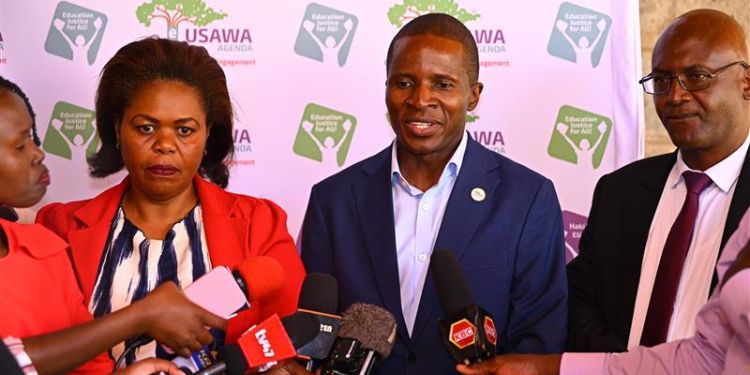
The Foundational Literacy and Numeracy Assessment (FLANA) 2025 report has provided new insights into the distribution of teachers, headteachers, and chairs of Boards of Management (BoM) in Kenyan primary schools.
In a report released by the Usawa Agenda, the findings show gender distribution, leadership qualifications, training, and experience, offering a roadmap for improving school leadership and learning outcomes across the country.
The assessment took place between June and July 2025 across all the counties in Kenya
FLANA Report on Teacher and Leadership Gender Distribution
According to the report, women dominate the teaching profession in Kenya, accounting for 6 in 10 teachers nationally and 7 in 10 in urban schools.
Also Read: Govt Terminates Diploma in Early Childhood Education, Orders Immediate Suspension of Admissions
Regarding gender representation in leadership, women are underrepresented, as most positions are held by men.
Only 3 in 10 headteachers are women, and 1 in 10 BoM chairs are female.
In urban primary schools, 4 in 10 heads are women, and 2 in 10 BoM chairs are women.
The data shows persistent gender gaps in school leadership and governance, despite high female representation among teachers.
Headteacher Qualifications, Training, and Experience
Academic qualifications of headteachers vary significantly across schools.
Nationwide, two in five headteachers hold a bachelor’s degree, while one in five holds a master’s degree, and only 2% have doctorates, and 6% hold a P1 certificate.
In host community schools, bachelor’s degrees are most common, while in refugee community schools, most of the heads have a diploma qualification, most of them being men. Among the five teachers in refugee communities, one is a woman.
Professional development has improved, with 8 in 10 headteachers trained in management over the past two years.
Male headteachers are more likely to have undergone training than female headteachers in refugee and host communities.
Virtually, all headteachers in refugee community schools have received management training.
Experience levels among headteachers show that half have served 1–3 years at their current schools, while three in ten have more than 11 years of experience as heads.
5% of them have served this long in their current schools, and 1 in 5 has been at their current school for more than 5 years.
Also Read: Ministry of Education Allows Application for Grade 10 Placement Review at Senior School of Interest
This variation indicates frequent leadership changes, which may impact continuity and school performance.
Teacher Employment and Implications for Learning
FLANA report reveals that public primary school teachers are permanent and pensionable, accounting for 8 in 10 teachers.
The Teachers Service Commission (TSC) employs 87% of all public-school teachers, with 82% on permanent terms and 5% as interns.
FLANA also notes that 10% of teachers are employed directly by parents or BoMs.
Follow our WhatsApp Channel and X Account for real-time news updates.