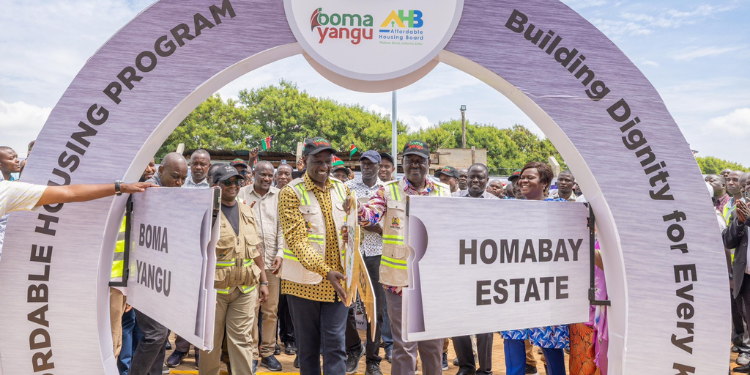
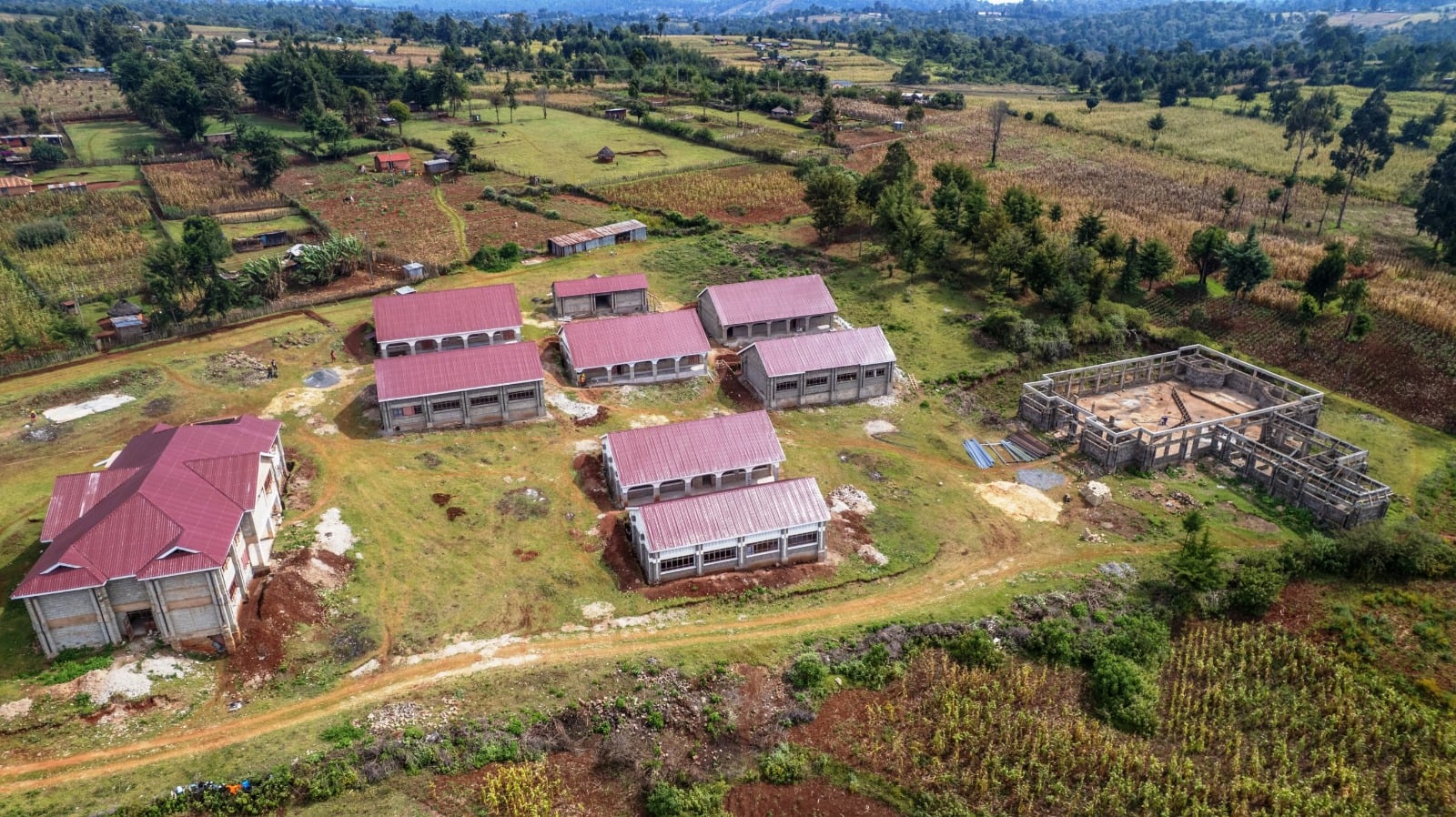
A special audit by the Auditor General, Nancy Gathungu, has raised questions on the legal ownership rights of the multi-billion-dollar ongoing affordable housing projects countrywide.
According to the audit for the FY2022/2023 to April 30, 2025, on the Kenya Affordable Housing Program, there are currently 394 ongoing government housing and infrastructure projects.
However, 269 projects lack complete and verifiable land ownership documents and equivalent legal proof, accounting for approximately 68% of the total projects.
At the time of the audit, the report indicates that a small faction of up to 14 projects had valid title deeds, while others relied on letters of allotment and certificates of search.
Housing Principal Secretary Charles Hinga, however, appearing before the National Assembly Public Accounts Committee, argued that the number of projects with valid title deeds has improved compared with the time of the previous audit.
“Of the 394 projects since reviewed by the board, 125 are now confirmed to hold valid land documentation, a near three-fold increase from the 48 verified at the audit stage,” Housing Principal Secretary Charles Hinga stated.
Also Read: Homeownership Within Reach as Affordable Housing Project Spurs Growth in Iten
Affordable Housing Audit
During the audit, only fourteen projects had title deeds, nine had letters of allotment, and twenty-three were operating with certificates.
In addition to a lack of verification documents and proof of legal ownership, two projects were noted to have been built on community land without legal approval.
According to the Auditor General, a lack of proof of legal ownership could lead to future ownership risks and disputes.
Further, the audit established that no formal cost-benefit analysis and project appraisal framework documentation was done before launching most of the flagship projects.
Additionally, before commencing the projects, there was no provision of the affordability threshold analysis informing on the pricing and beneficiary targeting of the projects.
Among the 68% of projects affected were the affordable housing units, social housing projects, markets built under the Economic Stimulus Program, floodlight installations, sheds, and some of the infrastructure development projects under the Ruto government.
According to the audit the some of the projects have been started on community land without formal registration.
Additionally, some projects are set on customary tenure land, while others are based on county government lands, without proof of a clear transfer record legalizing the projects on the land.
Also Read: How Kenyans Will Withdraw Affordable Housing Savings if They Opt Out, PS Hinga
Unlawful Rent Revenue Collection From Government Houses
The audit of the Department of Housing and Urban Development further revealed underperformance in the collection of rent revenue from government-owned houses.
According to the audit, the State Department has 50,749 houses across the country that have an expected monthly rental income of KSh. 112,303,369 and an annual rent potential of KSh. 1,347,640,428 when fully occupied.
However, during the audit, the rent collection was at KSh. 1,037,863,565, leading to an underperformance of KSh. 309,776,863, that is 23% of the expected rent collection.
In addition, the State Department had unremitted rent revenue, with receipts and payment statements showing discrepancies.
The State Department submitted a receipt amount of KSh. 1,037,863,565, in the Note 2 financial statement, despite the deductions amounting to KSh. 1,052,934,555.
Hence, the department failed to remit KSh. 15,070,990.