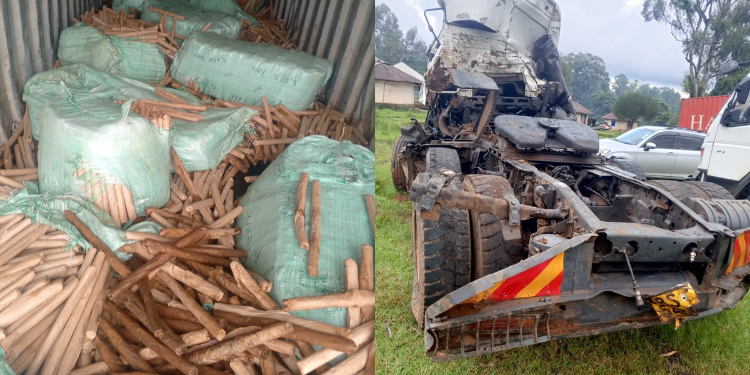
Cannabis, known locally as bhang, is illegal in Kenya. Possession or use carries a penalty of up to 10 years in prison; unlicensed cultivation can carry a penalty of up to 20 years. That has been the law, in substance, since 1994 under the Narcotic Drugs and Psychotropic Substances (Control) Act, and prohibition goes back even further, to a colonial-era ordinance of 1914.
The Recent Cannabis Ruling
On July 15, 2026, the High Court gave that law its clearest recent test. Justice Bahati Mwamuye dismissed a constitutional petition by the Rastafari Society of Kenya, which had asked for a narrow religious exemption allowing members to use cannabis privately during worship. The judge found the petitioners had not shown that cannabis use was an essential, consistently practiced element of Rastafari doctrine, and held that the law’s public health rationale justified whatever incidental burden it placed on their religious freedom. The ban stands, unmodified.
But Mwamuye did something else in the same ruling. Without endorsing legalization, he said Kenya needs a “full and frank conversation” about cannabis policy, pointing out that cannabinoid products are already sold openly in mainstream shops, that cannabis use has become a mainstream phenomenon rather than a Rastafarian one, and that police and prosecutors might be better used against violent crime than against people caught with small amounts of a drug. A sitting judge, ruling against the petitioners, still arrived at nearly the same question this piece is asking.
The Parliamentary Debate
That question predates the ruling. It surfaced again recently when Members of Parliament opened a public debate on cannabis in the National Assembly, and the country reacted almost exactly as one would expect.
Some accused them of opening the door to moral decay, addiction, indiscipline and broken families. Others welcomed the discussion as long overdue, in a country where bhang is already used quietly by many people despite its illegal status.
Ugenya MP David Ochieng described using bhang for a year to manage severe back pain after being told he was too young for surgery, and argued that decades of impounding the drug since the colonial period haven’t stopped its use.
Also Read: Court Rules on Rastafarians Petition to Legalise Marijuana in Kenya
Nairobi Woman Representative Esther Passaris recalled visiting the late MP Ken Okoth, who used cannabidiol oils to ease pain during cancer treatment, and noted that bhang is now easy to order and have delivered.
Kilifi North MP Owen Baya pushed back sharply, calling the case for tolerance defeatist and challenging Ochieng to sponsor an actual bill, which, in fact, already exists: the Marijuana Control Bill, 2023. Predictably, the debate quickly settled into familiar camps.
One side sees cannabis as social poison; the other sees medicine, freedom and economic opportunity.
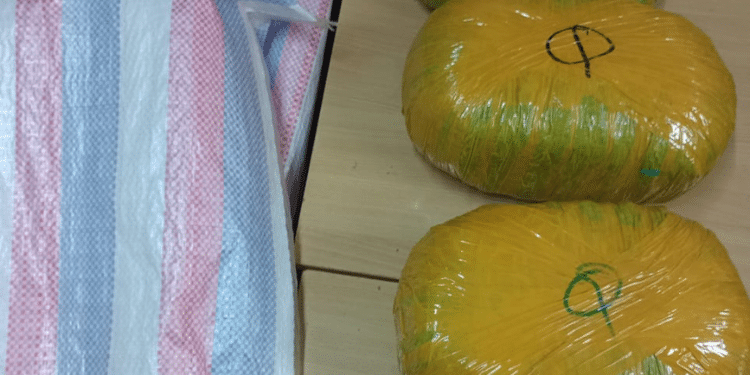
The Core Inconsistency: Alcohol vs Cannabis
Both sides, and the court in its own way, are circling the more uncomfortable question. Why does Kenya treat cannabis as a criminal threat while treating alcohol as a normal part of social life, despite modern public health evidence showing that alcohol causes far more documented harm?
That question does not make cannabis harmless. Heavy use can impair memory, attention, and judgment. It can increase dependency risk and worsen mental health outcomes among vulnerable people.
Young users face particular risks because the brain continues developing well into early adulthood. Any serious cannabis policy must begin by admitting these dangers plainly; otherwise, the debate becomes dishonest before it starts.
Alcohol: The Greater Documented Harm
But once we accept that public policy should be guided by evidence about harm, consistency becomes unavoidable. We must then ask whether we apply the same standard to all substances, or whether some substances have simply been accepted by society because they are familiar, profitable and culturally embedded.
Alcohol is where that contradiction becomes impossible to ignore. For decades, many people believed moderate drinking carried little risk and might even have health benefits. That assumption has weakened sharply as evidence has developed.
In 2023, the World Health Organization stated that no level of alcohol consumption can be considered safe for health. The organization linked alcohol to cancers, cardiovascular disease, liver damage and other serious conditions. Alcohol is also classified as a Group 1 carcinogen, meaning there is sufficient evidence that it causes cancer in human beings. The risk does not begin only after years of abuse. According to the WHO, it begins with consumption itself.
Societal Acceptance of Alcohol
One would expect such a finding to shake public debate in the country… Yet when the WHO said no level of alcohol consumption can be considered safe, society largely carried on as before.
Millions of Kenyans consume alcohol openly and legally. Alcohol companies sponsor concerts, sporting events and entertainment. Alcohol appears at weddings, funerals, political meetings, business functions and weekend gatherings.
Government taxes it and depends on the revenue. Society accepts it as normal even though alcohol is linked to road accidents, domestic violence, lost productivity, chronic disease, family breakdown, and major health costs.
The Hypothetical Reversal
Now imagine cannabis carried the same record. Imagine researchers concluded that cannabis caused thousands of road deaths, contributed heavily to domestic violence, damaged the liver, increased cancer risks, and filled hospitals with long-term disease.
Imagine cannabis companies sponsored concerts and sporting events while the government collected billions from its sale. Many people who currently defend the legality of alcohol would probably demand an immediate ban.
Why the Inconsistency Exists
That inconsistency does not prove cannabis should be legalized. It only shows that Kenya’s drug policy is not driven by science and evidence alone. It is also shaped by colonial legacy, habit, culture, moral memory, politics and money.
Also Read: The Case of Marijuana in Kenya: Time to Regulate, Not Prohibit
Most drug laws are not born in a clean scientific room where experts compare every intoxicating substance and rank them according to harm. They emerge from fear, culture, colonial histories, international pressure, moral assumptions and political convenience.
Once those assumptions harden into law, people begin defending them as though they were obvious truths.
What Has Prohibition Actually Achieved?
So what has cannabis prohibition actually achieved? Cannabis remains illegal; the courts just confirmed it again this week… Yet available data suggests that cannabis use has continued to rise over the years.
If the goal was to eliminate use, the outcome is not convincing. The practical Kenyan consequences are not abstract. A poor young man caught with bhang may enter the criminal justice system… while a wealthier drinker can leave a bar legally after consuming a substance whose public health burden is far better documented.
The Economics of Prohibition
The economics are also worth confronting. When the government bans a product that people continue to demand, the market does not simply disappear. It moves underground… This is why prohibition can sometimes strengthen the very networks it claims to destroy.
A Cautious Way Forward
That does not mean Kenya should rush blindly into legalization. A country with weak enforcement, corruption, poor youth protection and limited treatment services must move carefully. Portugal offers one useful lesson, though it should not be copied blindly… The lesson is that outcomes can differ from slogans.
Kenya should therefore widen the conversation beyond politicians, moral commentators and, now, the courts. Addiction specialists, psychiatrists, economists, criminologists, farmers, public health researchers and police officers should be heard more clearly. Industrial hemp should be examined separately from recreational cannabis. Medical cannabis should be studied separately from street bhang. Youth protection should be treated as a serious design question, not as a slogan shouted whenever reform is mentioned.
Conclusion
The options are not limited to full legalization or total prohibition… Before Parliament or the courts settle this by default, Kenya should answer a more basic question. Why does it criminalize one substance while normalizing another that modern science increasingly regards as more harmful?
Until that question is answered honestly, the cannabis debate will remain incomplete. This week’s ruling did not close it. If anything, coming from the bench that upheld the ban, it confirmed the question remains open.
The issue is not bhang alone. The issue is whether Kenya can make public policy using evidence, consistency, and measurable outcomes, or whether it will continue to inherit old assumptions and defend them as wisdom.
This article was written by George Nyongesa, a lecturer of philosophy and logic at the University of Nairobi and Chuka University.
Follow our WhatsApp Channel and X Account for real-time news updates.