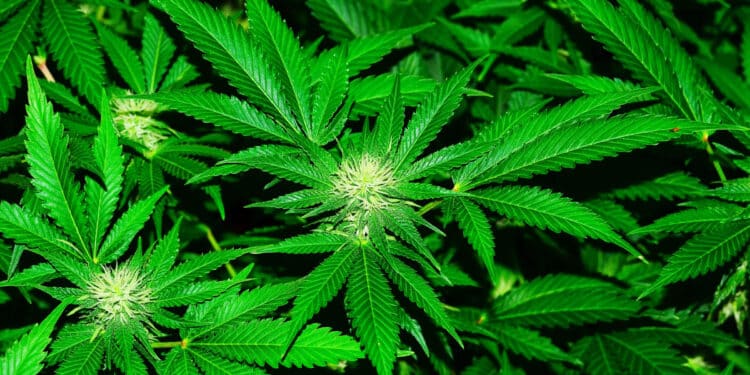
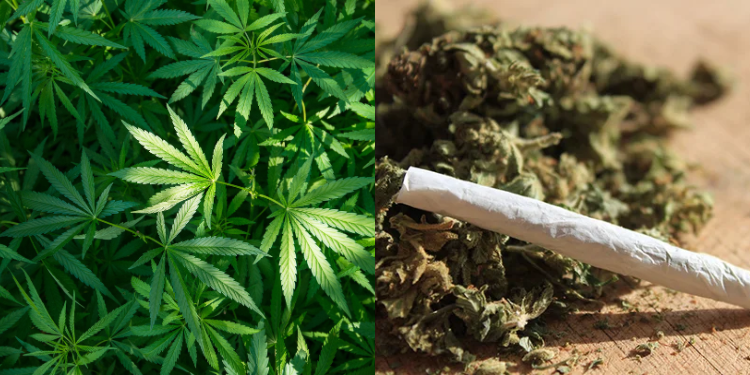
During the 2022 general election campaigns, one presidential aspirant, George Wajackoyah, ignited one of the most polarizing debates on Marijuana in recent Kenyan politics.
In his manifesto, he proposed the legalization of marijuana cultivation for export, a proposal met with support and condemnation in equal measure.
To its advocates, the proposal was a bold act of pragmatism. A chance to transform cannabis into a high-value commodity capable of shoring up the economy, catalysing job growth, and boosting foreign exchange earnings.
To its detractors, it was a reckless gamble, an “unrealistic” experiment that risked fraying the moral and social fabric of the nation.
Yet beneath the noise, one fact remains: Kenya’s current prohibitionist approach is neither fully effective nor entirely coherent.
The question is no longer whether cannabis exists in Kenyan society; it clearly does, but whether the state’s response should evolve to reflect that reality.
The Legal Landscape
Marijuana remains strictly prohibited under the Narcotic Drugs and Psychotropic Substances (Control) Act of 1994, which criminalizes possession, cultivation, sale, and consumption, often with severe penalties.
This framework, notably, traces its roots to colonial-era legislation, including Britain’s 1922 Dangerous Drugs Ordinance.
Despite these stringent laws, cannabis use persists widely. This contradiction raises a fundamental question: if prohibition were effective, would usage continue to rise?
At present, the High Court is considering a significant constitutional challenge. A petition by the Rastafari Society of Kenya seeks to suspend provisions criminalizing cannabis, for religious use.
The case raises deeper constitutional issues around freedom of religion, privacy, and the limits of state control. A ruling expected in May 2026 could prove pivotal.
The Case for Regulation
Proponents of reform argue that the status quo is not only ineffective but economically and socially self-defeating.
Economically, the global cannabis industry is expanding rapidly, with projections placing the African market in the billions.
Countries such as South Africa have already begun positioning themselves within this space. Kenya, with its favourable climate and agricultural base, risks being left behind.
A regulated industry could generate tax revenue, create jobs, and help ease fiscal pressures.
Religiously, the ban raises legitimate constitutional concerns. The Rastafarian community argues that criminalization infringes upon their freedom of worship.
Their position draws on broader jurisprudence around religious expression, including past legal recognition of cultural practices.
Also Read: Study Shows Significant Health Impact of marijuana on Fetal Development
Medically, the case is equally compelling. The late Kibra MP, Ken Okoth spoke candidly about using cannabis to manage pain during cancer treatment, reflecting a global shift toward medical marijuana.
Today, cannabis-derived treatments are used internationally for chronic pain, epilepsy, and chemotherapy-related side effects.
Culturally, Kenya already accommodates certain stimulants within legal and social frameworks. Miraa (khat), for instance, is widely consumed and culturally embedded in parts of the country.
A consistent policy approach would require acknowledging similar traditional and medicinal uses of cannabis across communities.
Statistically, data from NACADA indicates that cannabis use is rising, particularly among young people. This reality underscores a critical point: prohibition has not eliminated access.
Instead, it has ceded control to informal and unregulated markets. Regulation, through age restrictions, licensing, and controlled distribution, would provide tools currently absent in a black-market environment.
The Case Against Legalization
Opponents, however, raise legitimate concerns that cannot be dismissed.
Public health risks remain central. Long-term cannabis use has been linked to addiction, cognitive impairment, and mental health challenges.
In a country already grappling with high levels of alcohol abuse, there is understandable anxiety about introducing another widely accessible substance.
There are also concerns about institutional capacity. Critics question whether Kenya has the regulatory and enforcement infrastructure necessary to effectively manage a legal cannabis market.
Without strong oversight, legalization could risk becoming a loophole for increased illicit trade.
Socially, many fear that legalization would normalize usage, increasing exposure among minors and eroding societal norms in a largely conservative and religious context.
These concerns are valid, but they are not, in themselves, arguments for maintaining a system that is demonstrably failing.
Also Read: Gachagua Invites Wajackoyah to Enlighten Him on Marijuana Benefits [VIDEO]
A Sober and Necessary Shift
Globally, the trajectory is clear for all to see. Countries such as Canada and Uruguay have adopted regulated frameworks that balance public health safeguards with economic opportunity.
Closer to home, South Africa has moved toward a more permissive regime, reflecting shifting attitudes on the continent.
Even in jurisdictions where cannabis remains partially restricted, the trend is toward regulation rather than outright prohibition.
Meanwhile, in Kenya, thousands continue to face criminal penalties for involvement with a substance that much of the world is beginning to treat as a regulated commodity.
From Prohibition to Policy
Kenya must confront an uncomfortable truth; prohibition has neither eliminated cannabis use nor protected the most vulnerable.
Instead, it has driven the trade underground, empowered illicit markets, and burdened the criminal justice system.
The choice, therefore, is not between a cannabis-free society and a permissive one. It is between an unregulated reality and a regulated framework.
A cautious, phased approach, beginning with strictly controlled medical use and moving toward tightly regulated industrial applications, offers a pragmatic path forward.
Such a model would allow the state to test its regulatory capacity while safeguarding public health.
If the government already regulates substances such as alcohol, it cannot indefinitely justify a blanket prohibition on cannabis without confronting the inconsistencies in its own policy logic.
This is no longer merely a debate about a plant. It is a question of whether Kenya is prepared to replace inherited, colonial-era controls with a modern, evidence-based policy framework.