Friday, October 16, 2026
  • News
    • Latest News
    • Breaking News
    • Fact Check
    • Investigations
    • Explainers
  • Politics
    • Global Politics
    • Elections
    • Government & Policy
    • Diplomacy
    • Conflicts & Security
    • Political Analysis
  • Business
    • Global Economy
    • Markets
    • Technology
    • Startups
    • Energy
    • Finance
  • World News
    • Americas
    • Asia
    • Asia Pacific
    • Africa
    • Europe
    • Middle East
  • Africa
    • Central Africa
    • East Africa
    • West Africa
    • Southern Africa
  • Health
    • Global Health
    • Public Health
    • Health Policy
    • Medical Research
    • Diseases & Conditions
    • Mental Health
    • Nutrition
    • Climate & Health
    • Health Explainers
  • Sports
    • World Cup 2026
    • Athletics
    • Basketball
    • Boxing
    • Cricket
    • Football
    • Formula 1
    • Golf
    • Rugby
  • Weather
    • Climate Business
    • Climate Change
    • Climate Solutions
    • Living Green
  • Culture
    • Arts
    • Film & TV
    • Food and Recipes
    • Music
    • Lifestyle
    • People
    • Travel
  • Opinion
    • Editorials
    • Letters
  • Behind The Brand
REGISTER
LOGIN
No Result
View All Result
The Kenya Times
  • News
    • Latest News
    • Breaking News
    • Fact Check
    • Investigations
    • Explainers
  • Politics
    • Global Politics
    • Elections
    • Government & Policy
    • Diplomacy
    • Conflicts & Security
    • Political Analysis
  • Business
    • Global Economy
    • Markets
    • Technology
    • Startups
    • Energy
    • Finance
  • World News
    • Americas
    • Asia
    • Asia Pacific
    • Africa
    • Europe
    • Middle East
  • Africa
    • Central Africa
    • East Africa
    • West Africa
    • Southern Africa
  • Health
    • Global Health
    • Public Health
    • Health Policy
    • Medical Research
    • Diseases & Conditions
    • Mental Health
    • Nutrition
    • Climate & Health
    • Health Explainers
  • Sports
    • World Cup 2026
    • Athletics
    • Basketball
    • Boxing
    • Cricket
    • Football
    • Formula 1
    • Golf
    • Rugby
  • Weather
    • Climate Business
    • Climate Change
    • Climate Solutions
    • Living Green
  • Culture
    • Arts
    • Film & TV
    • Food and Recipes
    • Music
    • Lifestyle
    • People
    • Travel
  • Opinion
    • Editorials
    • Letters
  • Behind The Brand
No Result
View All Result
The Kenya Times ~ Trending, Breaking News and Videos
No Result
View All Result
ADVERTISEMENT

How Some Kenyan Families Use Orphan Tag for Survival

The ConversationbyThe Conversation
May 31, 2025
Reading Time: 7 mins read
Former Kenya'S President Uhuru Kenyatta Hosting Children In December 2022. Photo/State House.

Former Kenya's President Uhuru Kenyatta hosting children in December 2022. PHOTO/State House.

FacebookTwitterLinkedInRedditWhatsApp
Advertisement

We often think of “orphans” as children who have lost both parents and who lack kin networks. One might ask why someone would “opt in” to orphan status when they do not fall within the classical definition of the term.

In my paper I look at the issue of orphanhood over the last 160 years. Case studies from Kenya I examine illustrate that the practice I define as “opting in” to orphanhood has precolonial roots. I define “opting in” as choosing to take on the label of being an orphan. This can be done by parents, relatives or even, in some instances, the child. This is because the label “orphan” has come to confer unique opportunities.

The practice became increasingly popular in the mid-1990s, when parents in eastern and southern Africa who had contracted HIV began to die in large numbers. Activists feared many children would be left without caregivers.

In response, the number of orphanages proliferated as humanitarian actors, churches and states inundated east Africa with orphan-focused NGOs.

In 2020, officials in Kenya estimated that there were at least 910 residential institutions for children in the country (of which 581 were registered), housing between 26,198 and 85,733 Kenyan children.

The predicted “orphan crisis” never materialised, partly because families and communities stepped in to care for newly parentless children. But the idea of an “orphan crisis” remained, and so did the funding and infrastructure.

This phenomenon occurred across the continent, not just in Kenya. However, its effects were felt particularly acutely in eastern and southern Africa where HIV/Aids prevalence rates were higher and where there was more western tourism.

Today, many African families see orphan-focused NGOs as a path to access education and improve their lives. My research shows that children themselves sometimes affiliate with an institution that provides shelter, food and schooling. Children facing abuse from caregivers may also prefer the relative anonymity and safety of an institution.

In some cases, receiving orphan services actually raises the status of the “orphan” child above that of other children. They have access to more material resources than they might have had in their villages or at home. Moreover, they might have more leisure time and less work. They may have access to better bedding, shoes and clothing. They are also likely able to attend school more consistently and have a real opportunity to attend university.

Does ‘opting in’ have a long history?

Yes, it does.

In the precolonial period, most parentless or vulnerable children were cared for through lasting community support systems. Orphanhood, as it exists today as a child lacking support, protection, or care from kin, was largely avoided.

However, the late 19th to mid-20th centuries brought new actors to the east African region. The practice of “opting in” became a strategic, temporary option used by families to access services from western humanitarians.

The earliest example of this shift I found in my research is from the 1890s. Fearing their children would be caught in the Indian Ocean slave trade, African parents sometimes chose to send their children to British missions until the region was safe. They knew the missionaries opposed the slave trade and knew they offered food and medical care.

African parents thought they were making temporary arrangements to keep their children safe. Missionaries, however, understood parents to have abandoned their children. When parents returned to repay the debt – with agricultural produce or trade goods – and to reclaim their children, missionaries refused them.

In another example from Kenya in the 1950s, the British colonial government opened “reform schools” for young men. The Wamumu Approved School was renowned for the relative quality of education it provided. But the state admitted only the “most vulnerable” for a free education. Feeling they had no way to access Wamumu, students claimed to be orphans.

What have been the negative effects of Kenya’s orphan system?

There are several problems with creating a situation in which people present themselves as vulnerable just to gain safety or improve their social and economic standing.

First, research has shown that building orphanages in poor communities incentivises parents to abandon their children if they’re not also given the help to remain together.

Second, research shows that children are often put at risk in these institutions. Institutionalisation exposes children to risks such as sexual abuse, gender-based violence and neglect.

Third, orphanages have become so lucrative that African orphanage owners will go to great lengths to fit African children into the categories westerners wish to fund. The phenomenon of “paper orphans” is a prime example.

“Paper orphans” are children who are recruited from their homes by proprietors (or middlemen/brokers) of orphanages and residential-care facilities.

Fraudulent documentation is created for them – often including false death certificates of parents and new identity registration documents – rendering them orphans on paper, and vulnerable in practice.

What should be done?

Governments in Europe, Central Asia, Latin America and the Caribbean are trying to phase out orphanages, as are some African countries.

Based on my research I believe that working with families to support vulnerable children in their homes of origin or with extended families is a better option. This can be done through assistance programmes for vulnerable families as well as child welfare programmes. These allow families to remain intact when experiencing hardship.

Kenya is taking steps to do this by replacing orphanages and other forms of residential children’s homes with family-based, foster and community-based care and other forms of assistance. Family strengthening approaches include positive parenting instruction, life skills training, and income-generating activities, as well as supportive supervision.

In addition to this, missionary and voluntourism trips to orphanages and residential care facilities should be banned or limited.The Conversation

Andreana Prichard, Associate Professor of Honors and African History, University of Oklahoma

This article is republished from The Conversation under a Creative Commons license. Read the original article.

Follow our WhatsApp Channel and X Account for real-time news updates.

Challenges Parents Face While Raising Children
AI-Generated photo of a family. PHOTO/Grok
Tags: NGOs in KenyaPoverty in KenyaUNICEF
The Conversation

The Conversation

The Conversation is an independent news organization that publishes evidence-based articles written by experts to help readers understand diverse topics. We cover a wide range of areas including arts, culture, education, health, politics, science, and more¹. Their content is characterized by in-depth analysis, research, news, and ideas from leading academics and researchers. The Conversation aims to provide academic rigor with journalistic flair.

Related Posts

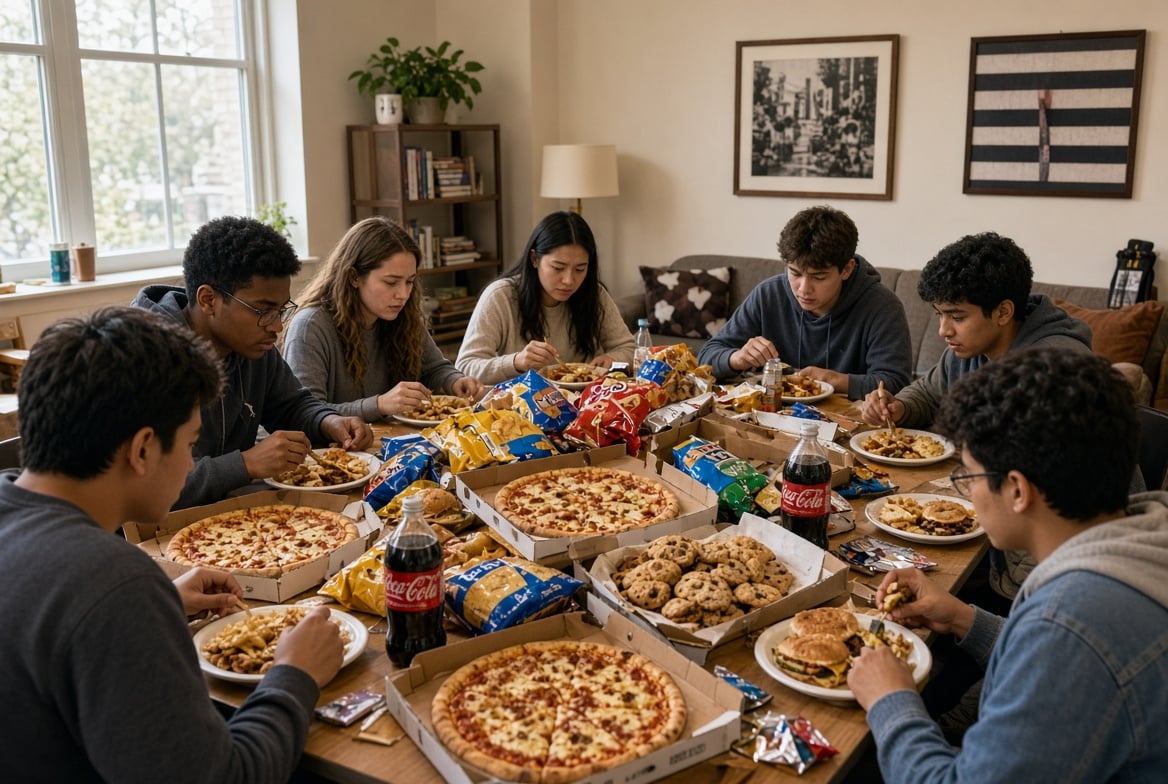
Binge-Eating Among College Students With Abundant Junk Food, A Common Setting Linked To Binge-Eating Risks.

How Globalization and Food Insecurity Fuel Disordered Eating Behavior in Young Adults

October 14, 2026
From Knowledge To Impact: A New Era Of Kenya–Uk Science Diplomacy

From Knowledge Sharing to Innovation: A New Chapter in Kenya–UK Science Diplomacy

October 10, 2026
Kenyan Teaching And Teachers Received Awards For Outstanding Contributions On October 5, At The Kasarani Indoor Arena During National World Teachers’ Day.

What Would a Truly Professional Teaching Profession Look Like in Kenya?

October 7, 2026
Beyond Borders: Why Science Diplomacy Must Drive The Next Era Of Development

Why Science Diplomacy Must Drive the Next Era of Development

October 5, 2026
ADVERTISEMENT

The Kenya Times Facebook

LATEST NEWS

  • Govt Cautions Kenyans Over Jaba-Infused Drinks
  • IEBC Completes Receipt of Authorised Party Officials Ahead of 2027 Polls
  • CBK Reveals What Will Determine When Kenya Gets a New IMF Loan
  • Kenya Met Lists 45 Counties Set to Receive Rain as Weekend Approaches
  • Sanlam Allianz Kenya Announces Major Restructuring
  • Equity Group Appoints New Company Secretary
  • Investors Bid Over Six Times Amount Offered for CBK’s 91-Day Treasury Bill
  • Kabarnet Stadium Nears Year-End Completion as Baringo Expands Sports Infrastructure
  • KSh1.8 Billion Road Project Launched to Link Chepkorio and Kipsaina
  • Oburu Celebrates Birthday at Nairobi Hospital Sends Message to His Wives
  • EPRA Signals Possible Fuel Price Increases in the Coming Months
  • KPSEA 2026 Timetable: Key Dates Parents and Candidates Need to Know
  • Where to Access SHA-Covered Treatment in Lamu County [Full List]
  • KRA Clarifies Invoice Systems Accepted for Government Payments
  • Winnie Odinga Declares Bid for Nairobi Senate Seat
ADVERTISEMENT

Company

About Us

Our Authors

Our Experts

Social Media

Policies

Privacy Policy

House Rules

Standards and Policies

Terms and Conditions

Subscription

My Account

Contact Us

Contact Us

Join Our Team

Advertise With Us

© Copyright 2026 | The Kenya Times | All Rights Reserved

Welcome Back!

Sign In with Facebook
Sign In with Google
Sign In with Linked In
OR

Login to your account below

Forgotten Password? Sign Up

Create New Account!

Sign Up with Facebook
Sign Up with Google
Sign Up with Linked In
OR

Fill the forms below to register

All fields are required. Log In

Retrieve your password

Please enter your username or email address to reset your password.

Log In
Your Privacy and Cookies
We use cookies on our website to give you the most relevant experience by remembering your preferences and repeat visits. By clicking “Accept”, you consent to the use of ALL the cookies.
Do not sell my personal information.
Cookie settingsACCEPT
Privacy & Cookies Policy

Privacy Overview

This website uses cookies to improve your experience while you navigate through the website. Out of these cookies, the cookies that are categorized as necessary are stored on your browser as they are essential for the working of basic functionalities of the website. We also use third-party cookies that help us analyze and understand how you use this website. These cookies will be stored in your browser only with your consent. You also have the option to opt-out of these cookies. But opting out of some of these cookies may have an effect on your browsing experience.
Necessary
Always Enabled
Necessary cookies are absolutely essential for the website to function properly. This category only includes cookies that ensures basic functionalities and security features of the website. These cookies do not store any personal information.
Functional
Functional cookies help to perform certain functionalities like sharing the content of the website on social media platforms, collect feedbacks, and other third-party features.
Performance
Performance cookies are used to understand and analyze the key performance indexes of the website which helps in delivering a better user experience for the visitors.
Analytics
Analytical cookies are used to understand how visitors interact with the website. These cookies help provide information on metrics the number of visitors, bounce rate, traffic source, etc.
Advertisement
Advertisement cookies are used to provide visitors with relevant ads and marketing campaigns. These cookies track visitors across websites and collect information to provide customized ads.
Others
Other uncategorized cookies are those that are being analyzed and have not been classified into a category as yet.
SAVE & ACCEPT
LOGIN | REGISTER
  • Login
  • Sign Up
  • Cart
No Result
View All Result
  • News
    • Latest News
    • Breaking News
    • Investigations
    • Explainers
    • Fact Check
  • Politics
    • Global Politics
    • Conflicts & Security
    • Elections
    • Diplomacy
    • Government & Policy
    • Political Analysis
  • Business
    • Global Economy
    • Markets
    • Technology
    • Startups
    • Energy
    • Finance
  • World News
    • Americas
    • Asia
    • Asia Pacific
    • Africa
    • Europe
    • Middle East
  • Africa
    • East Africa
    • West Africa
    • Southern Africa
    • Central Africa
  • Health
    • Global Health
    • Public Health
    • Health Policy
    • Medical Research
    • Diseases & Conditions
    • Mental Health
    • Nutrition
    • Climate & Health
    • Health Explainers
  • Sports
    • World Cup 2026
    • Athletics
    • Basketball
    • Boxing
    • Cricket
    • Football
    • Formula 1
    • Golf
    • Rugby
  • Weather
    • Climate Business
    • Climate Change
    • Climate Solutions
    • Living Green
  • Culture
    • Arts
    • Film & TV
    • Food and Recipes
    • Lifestyle
    • Music
    • People
    • Travel
  • Opinion
    • Editorials
    • Letters
  • Behind The Brand
  • Contact Us

Not enough quota to unlock this post
Unlock left : 0
Are you sure want to cancel subscription?