Monday, August 31, 2026
  • News
    • Latest News
    • Breaking News
    • Fact Check
    • Investigations
    • Explainers
  • Politics
    • Global Politics
    • Elections
    • Government & Policy
    • Diplomacy
    • Conflicts & Security
    • Political Analysis
  • Business
    • Global Economy
    • Markets
    • Technology
    • Startups
    • Energy
    • Finance
  • World News
    • Americas
    • Asia
    • Asia Pacific
    • Africa
    • Europe
    • Middle East
  • Africa
    • Central Africa
    • East Africa
    • West Africa
    • Southern Africa
  • Health
    • Global Health
    • Public Health
    • Health Policy
    • Medical Research
    • Diseases & Conditions
    • Mental Health
    • Nutrition
    • Climate & Health
    • Health Explainers
  • Sports
    • World Cup 2026
    • Athletics
    • Basketball
    • Boxing
    • Cricket
    • Football
    • Formula 1
    • Golf
    • Rugby
  • Weather
    • Climate Business
    • Climate Change
    • Climate Solutions
    • Living Green
  • Culture
    • Arts
    • Film & TV
    • Food and Recipes
    • Music
    • Lifestyle
    • Travel
  • Opinion
    • Editorials
    • Letters
  • Behind The Brand
REGISTER
LOGIN
No Result
View All Result
The Kenya Times
  • News
    • Latest News
    • Breaking News
    • Fact Check
    • Investigations
    • Explainers
  • Politics
    • Global Politics
    • Elections
    • Government & Policy
    • Diplomacy
    • Conflicts & Security
    • Political Analysis
  • Business
    • Global Economy
    • Markets
    • Technology
    • Startups
    • Energy
    • Finance
  • World News
    • Americas
    • Asia
    • Asia Pacific
    • Africa
    • Europe
    • Middle East
  • Africa
    • Central Africa
    • East Africa
    • West Africa
    • Southern Africa
  • Health
    • Global Health
    • Public Health
    • Health Policy
    • Medical Research
    • Diseases & Conditions
    • Mental Health
    • Nutrition
    • Climate & Health
    • Health Explainers
  • Sports
    • World Cup 2026
    • Athletics
    • Basketball
    • Boxing
    • Cricket
    • Football
    • Formula 1
    • Golf
    • Rugby
  • Weather
    • Climate Business
    • Climate Change
    • Climate Solutions
    • Living Green
  • Culture
    • Arts
    • Film & TV
    • Food and Recipes
    • Music
    • Lifestyle
    • Travel
  • Opinion
    • Editorials
    • Letters
  • Behind The Brand
  • News
    • Latest News
    • Breaking News
    • Fact Check
    • Investigations
    • Explainers
  • Politics
    • Global Politics
    • Elections
    • Government & Policy
    • Diplomacy
    • Conflicts & Security
    • Political Analysis
  • Business
    • Global Economy
    • Markets
    • Technology
    • Startups
    • Energy
    • Finance
  • World News
    • Americas
    • Asia
    • Asia Pacific
    • Africa
    • Europe
    • Middle East
  • Africa
    • Central Africa
    • East Africa
    • West Africa
    • Southern Africa
  • Health
    • Global Health
    • Public Health
    • Health Policy
    • Medical Research
    • Diseases & Conditions
    • Mental Health
    • Nutrition
    • Climate & Health
    • Health Explainers
  • Sports
    • World Cup 2026
    • Athletics
    • Basketball
    • Boxing
    • Cricket
    • Football
    • Formula 1
    • Golf
    • Rugby
  • Weather
    • Climate Business
    • Climate Change
    • Climate Solutions
    • Living Green
  • Culture
    • Arts
    • Film & TV
    • Food and Recipes
    • Music
    • Lifestyle
    • Travel
  • Opinion
    • Editorials
    • Letters
  • Behind The Brand
No Result
View All Result
The Kenya Times ~ Trending, Breaking News and Videos
No Result
View All Result
ADVERTISEMENT

Kenya Violence: 5 Key Drivers of the Decades-Long Conflict in the North and What to do About Them

Oscar Gakuo MwangibyOscar Gakuo Mwangi
November 9, 2022
Reading Time: 8 mins read
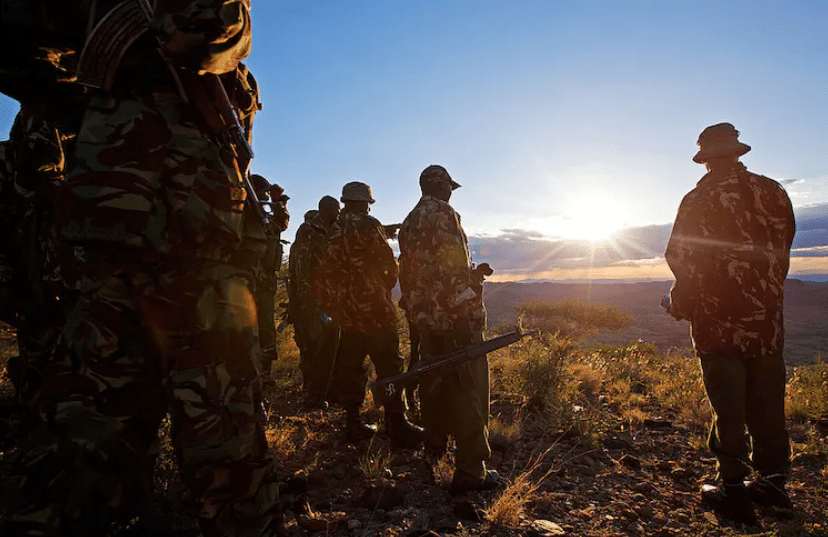
Ivan Lieman | Afp Via Getty Images

Ivan Lieman | AFP via Getty Images

FacebookTwitterLinkedInRedditWhatsApp
Advertisement

Conflict and insecurity are prevalent in northern Kenya. In recent weeks, cases of bandit attacks in the region have left villages terrorised and led to several deaths. In October 2022, the government launched a multi-agency security operation aimed at curbing further attacks.

Northern Kenya is characterized by a wide expanse of wilderness, harsh climate and low levels of development. The region borders Ethiopia, Somalia, South Sudan and Uganda.

Kenya’s Northern Region

Instances of conflict and insecurity range from attacks by armed bandits and cattle rustlers to community disputes over resources and terrorism. The region covers about 60% of Kenya’s geographical territory.

It is occupied by about 18% of the country’s population.
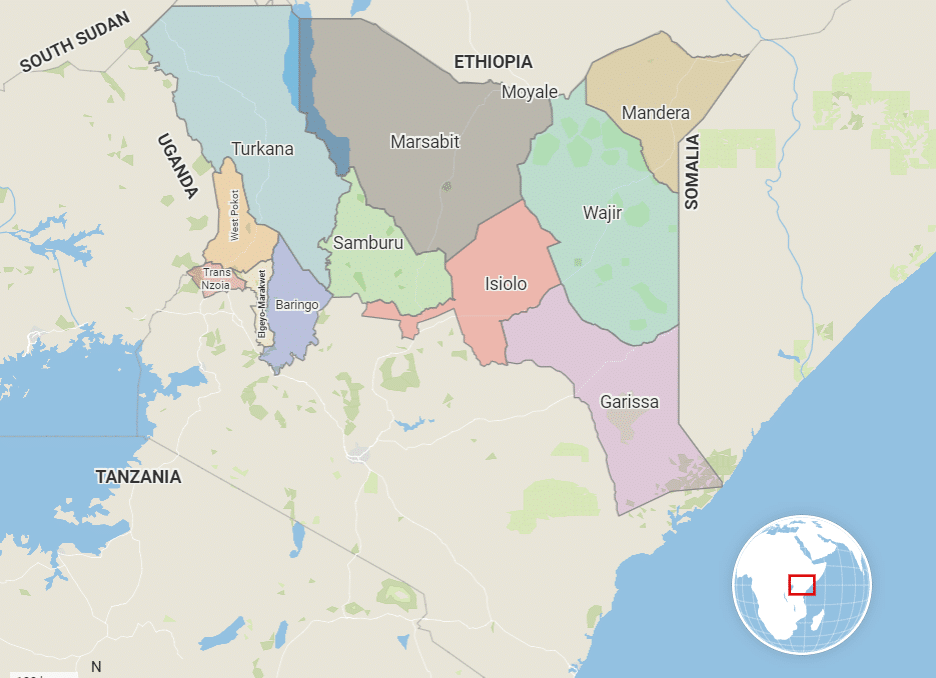
Map: Usifo Omozokpea | Datawrappe

Pastoralism is the main economic activity. Others include irrigated agriculture, small-scale businesses and tourism-related activities.

ADVERTISEMENT

The region is largely isolated from the rest of the country due to poor infrastructure, including roads.

According to National Police Service crime statistics, between January and December 2021, 73% of the country’s stock theft raids occurred in the northern region. Over the same period, 58% of the illegal arms recovered and surrendered to the government were from northern Kenya.

Also Read: President Ruto Says His Govt’ Will Not Condone Cattle Rustling

The government – past and present – has run numerous operations to address the violence in the region, which threatens Kenya’s overall security. But it hasn’t worked.

As a professor of political science who researches conflict, I’ve had the region on my radar for some time. In my assessment, violent conflict in northern Kenya is driven by five key factors that must be addressed by both state and non-state agencies.

1. Regional inequality, exclusion, and marginalization

ADVERTISEMENT

Inequality between regions in Kenya is caused by decades of political, economic, and social exclusion and marginalization. This is a product of colonial and post-colonial state policies that have led to historical injustices and human rights abuses.

Colonial authorities neglected Kenya’s arid and semi-arid regions by prioritizing development in the country’s natural resource-endowed highlands. Successive post-independence governments continued to pursue policies that further marginalised the north. This has damaged trust in state institutions and produced communal grievances that hinder inter-group unity.

Post-colonial state security actors have also disproportionately targeted Somali inhabitants in counterinsurgency and counterterrorism measures in the north. The main terrorist threat comes from the Somalia-based Al-Shabaab group.

In 2010, Kenya decentralised power by allocating funds and responsibilities to its 47 county governments. This was aimed at improving service delivery at the regional level. While this has begun to address northern Kenya’s marginalization, repressive security operations continue to fan inter-group conflicts and radicalization to violent extremism. The use of force in these operations disproportionately targets marginalized communities.

2. Resource and environmental factors

Disputes over land, access to pasture, and conflicts between herders and farmers continue to drive violence in Kenya’s north.

Competition for scarce resources, such as pasture, water and now oil, has worsened these disputes.

Kenya announced it had discovered oil in Turkana County in 2012. Oil exploration has introduced new tensions between resident Turkana and Pokot ethnic groups, and within the Turkana community. Some members of the Turkana believe that the community has not substantially benefited from the resource exploitation.

A rise in crimes like highway robberies is attributed to these communal conflicts.

3. Political power struggles

Power struggles between politicians have fueled conflict along ethnic lines in the north.

Elective political posts are perceived to provide access to economic resources. Devolving power to the counties along with political alliances has helped to decentralize political power and the provision of essential services. However, they have intensified local-level political competition. Politicians incite inter-clan rivalry, escalating tensions and undermining the benefits of devolution. 

4. Cultural practices

Cultural practices contribute to violence in northern Kenya. These practices largely manifest through cattle rustling.

Cattle rustling and stock theft are partly driven by economic motives. These include a desire to restock herds depleted by a lack of pasture and water during droughts. Cattle rustling also provides an opportunity to make money from trading in stolen animals.

Cultural practices such as marriage settlements also drive cattle rustling.

This disrupts community livelihoods, and the use of automatic weapons in raids has led to a high number of deaths. State-led disarmament efforts have had little effect. 

5. Proliferation of small arms and weapons

The proliferation of weapons in the region is, to a large extent, caused by cross-border activities.

Kenya’s borders with Ethiopia, Somalia, South Sudan and Uganda are porous and have contributed to the increase in small arms, illicit trade in cattle, terrorism, and other forms of organized crime.

Efforts by the state to manage domestic and cross-border conflicts through repressive disarmament operations have instead increased tensions between borderland communities and the state.

The way forward

State security agencies have the constitutional mandate to use force to deter and disrupt acts of violence that are a threat to national security. However, their methods are often formal and based on power.

Non-state actors, on the other hand, adopt informal methods that are widely accepted in local communities. They are based on mutual trust and are therefore seen as more legitimate.

Both state and non-state actors have the resources, technical expertise, and experience to address the drivers of conflict in Kenya’s northern region. A flexible approach that involves various actors can broadly contribute to good governance and reduce conflict and security incidences.

This approach would entail all parties working together to promote dialogue, education, and peacemaking. It also would include ensuring inclusive political representation in local-level traditional conflict management approaches.The Conversation

Oscar Gakuo Mwangi, Associate Professor, Political Science, National University of Lesotho

This article is republished from The Conversation under a Creative Commons license. Read the original article.

Tags: CATTLE RUSTLINGDisarmament TurkanaEthiopiaInfrastructureKenyaMarginalisationPastoralismPolitical scienceSamburuSomaliaSouth SudanT&F ResearchUganda
Oscar Gakuo Mwangi

Oscar Gakuo Mwangi

Oscar Gakuo Mwangi is Associate Professor of Political Science in the Department of Political and Administrative Studies, National University of Lesotho. His research interests are comparative politics, especially in the areas of democratization and governance, conflict and security, and environmental politics in eastern and southern Africa.

Related Posts

Parliament Has Allocated Ksh175.5 Billion To Health, Including Ksh19.1 Billion For The Primary Healthcare Fund And Ksh4.0 Billion For Emergencies.

More Revenue for Health Will Not Be Enough Without Budget Credibility

August 31, 2026
A Collage Of Kenya'S Former Deputy President Rigathi Gachagua And Health Cs Aden Duale. Photo/Courtesy

When Political Insults Become Attacks on Entire Communities

August 31, 2026
Ruto Orders Police To Go After Politicians Funding Goons

Why Kenya Never Finishes a Presidential Election 

August 29, 2026
Kenya Politics And Hate Speech: Institutionalize Communication In Leaders’ Offices

Kenya Hate Speech: Why Political Offices Need Professional Communication Units

August 29, 2026
ADVERTISEMENT

The Kenya Times Facebook

LATEST NEWS

  • Jane Kere Imbunya: Profile of Only Female Professor in Ruto’s Top Government
  • Cost of Living Rises in Kenya as Food, Transport and Housing Costs Climb
  • Investors Show Confidence in Kenya as Shilling Holds Steady
  • PHOTO STORY: Chemelil Sugar Revival Breathes New Life Into Kenya’s Sugar Belt
  • Full List of SHA-Accredited Health Facilities in Baringo County
  • More Revenue for Health Will Not Be Enough Without Budget Credibility
  • UK Warns Its Citizens Against Travel to Kenya in Fresh Advisory
  • Why Naming a Next of Kin at Work Won’t Decide Who Gets Your Money After Death
  • Kenya Airways Cancels Flights as JKIA Delays Top Six Hours
  • How AI Is Changing the Way We Write — and Why Knowing What’s Real Matters More Than Ever
  • HELB Begins Sending Upkeep Funds to Students: How to Check
  • KUCCPS Reopens Applications for Select KMTC Courses Ahead of September Intake
  • Drama at Makueni Burial as Heated Exchange Forces Priests to Walk Out
  • Court Issues Way Forward on Possible Exhumation of Rosemary Koech Following Kimwatu’s Submission
  • FKF Premier League Start Further Delayed After Court Clarification in Sharks Appeal
ADVERTISEMENT

Company

About Us

Our Authors

Our Experts

Social Media

Policies

Privacy Policy

House Rules

Standards and Policies

Terms and Conditions

Subscription

My Account

Contact Us

Contact Us

Join Our Team

Advertise With Us

© Copyright 2026 | The Kenya Times | All Rights Reserved

Welcome Back!

Sign In with Facebook
Sign In with Google
Sign In with Linked In
OR

Login to your account below

Forgotten Password? Sign Up

Create New Account!

Sign Up with Facebook
Sign Up with Google
Sign Up with Linked In
OR

Fill the forms below to register

All fields are required. Log In

Retrieve your password

Please enter your username or email address to reset your password.

Log In
Your Privacy and Cookies
We use cookies on our website to give you the most relevant experience by remembering your preferences and repeat visits. By clicking “Accept”, you consent to the use of ALL the cookies.
Do not sell my personal information.
Cookie settingsACCEPT
Privacy & Cookies Policy

Privacy Overview

This website uses cookies to improve your experience while you navigate through the website. Out of these cookies, the cookies that are categorized as necessary are stored on your browser as they are essential for the working of basic functionalities of the website. We also use third-party cookies that help us analyze and understand how you use this website. These cookies will be stored in your browser only with your consent. You also have the option to opt-out of these cookies. But opting out of some of these cookies may have an effect on your browsing experience.
Necessary
Always Enabled
Necessary cookies are absolutely essential for the website to function properly. This category only includes cookies that ensures basic functionalities and security features of the website. These cookies do not store any personal information.
Functional
Functional cookies help to perform certain functionalities like sharing the content of the website on social media platforms, collect feedbacks, and other third-party features.
Performance
Performance cookies are used to understand and analyze the key performance indexes of the website which helps in delivering a better user experience for the visitors.
Analytics
Analytical cookies are used to understand how visitors interact with the website. These cookies help provide information on metrics the number of visitors, bounce rate, traffic source, etc.
Advertisement
Advertisement cookies are used to provide visitors with relevant ads and marketing campaigns. These cookies track visitors across websites and collect information to provide customized ads.
Others
Other uncategorized cookies are those that are being analyzed and have not been classified into a category as yet.
SAVE & ACCEPT
LOGIN | REGISTER
  • Login
  • Sign Up
  • Cart
No Result
View All Result
  • News
    • Latest News
    • Breaking News
    • Investigations
    • Explainers
    • Fact Check
  • Politics
    • Global Politics
    • Conflicts & Security
    • Elections
    • Diplomacy
    • Government & Policy
    • Political Analysis
  • Business
    • Global Economy
    • Markets
    • Technology
    • Startups
    • Energy
    • Finance
  • World News
    • Americas
    • Asia
    • Asia Pacific
    • Africa
    • Europe
    • Middle East
  • Africa
    • East Africa
    • West Africa
    • Southern Africa
    • Central Africa
  • Health
    • Global Health
    • Public Health
    • Health Policy
    • Medical Research
    • Diseases & Conditions
    • Mental Health
    • Nutrition
    • Climate & Health
    • Health Explainers
  • Sports
    • World Cup 2026
    • Athletics
    • Basketball
    • Boxing
    • Cricket
    • Football
    • Formula 1
    • Golf
    • Rugby
  • Weather
    • Climate Business
    • Climate Change
    • Climate Solutions
    • Living Green
  • Culture
    • Arts
    • Film & TV
    • Food and Recipes
    • Lifestyle
    • Music
    • Travel
  • Opinion
    • Editorials
    • Letters
  • Behind The Brand
  • Contact Us

Not enough quota to unlock this post
Unlock left : 0
Are you sure want to cancel subscription?