Tuesday, June 2, 2026
  • News
    • Latest News
    • Breaking News
    • Fact Check
    • Investigations
    • Explainers
  • Politics
    • Global Politics
    • Elections
    • Government & Policy
    • Diplomacy
    • Conflicts & Security
    • Political Analysis
  • Business
    • Global Economy
    • Markets
    • Technology
    • Startups
    • Energy
    • Finance
  • World News
    • Americas
    • Asia
    • Asia Pacific
    • Africa
    • Europe
    • Middle East
  • Africa
    • Central Africa
    • East Africa
    • West Africa
    • Southern Africa
  • Health
    • Global Health
    • Public Health
    • Health Policy
    • Medical Research
    • Diseases & Conditions
    • Mental Health
    • Nutrition
    • Climate & Health
    • Health Explainers
  • Sports
    • Athletics
    • Basketball
    • Boxing
    • Cricket
    • Football
    • Formula 1
    • Golf
    • Rugby
  • Weather
    • Climate Business
    • Climate Change
    • Climate Solutions
    • Living Green
  • Culture
    • Arts
    • Film & TV
    • Food
    • Music
    • Lifestyle
    • Travel
  • Opinion
    • Editorials
    • Letters
  • Behind The Brand
REGISTER
LOGIN
No Result
View All Result
The Kenya Times
  • News
    • Latest News
    • Breaking News
    • Fact Check
    • Investigations
    • Explainers
  • Politics
    • Global Politics
    • Elections
    • Government & Policy
    • Diplomacy
    • Conflicts & Security
    • Political Analysis
  • Business
    • Global Economy
    • Markets
    • Technology
    • Startups
    • Energy
    • Finance
  • World News
    • Americas
    • Asia
    • Asia Pacific
    • Africa
    • Europe
    • Middle East
  • Africa
    • Central Africa
    • East Africa
    • West Africa
    • Southern Africa
  • Health
    • Global Health
    • Public Health
    • Health Policy
    • Medical Research
    • Diseases & Conditions
    • Mental Health
    • Nutrition
    • Climate & Health
    • Health Explainers
  • Sports
    • Athletics
    • Basketball
    • Boxing
    • Cricket
    • Football
    • Formula 1
    • Golf
    • Rugby
  • Weather
    • Climate Business
    • Climate Change
    • Climate Solutions
    • Living Green
  • Culture
    • Arts
    • Film & TV
    • Food
    • Music
    • Lifestyle
    • Travel
  • Opinion
    • Editorials
    • Letters
  • Behind The Brand
  • News
    • Latest News
    • Breaking News
    • Fact Check
    • Investigations
    • Explainers
  • Politics
    • Global Politics
    • Elections
    • Government & Policy
    • Diplomacy
    • Conflicts & Security
    • Political Analysis
  • Business
    • Global Economy
    • Markets
    • Technology
    • Startups
    • Energy
    • Finance
  • World News
    • Americas
    • Asia
    • Asia Pacific
    • Africa
    • Europe
    • Middle East
  • Africa
    • Central Africa
    • East Africa
    • West Africa
    • Southern Africa
  • Health
    • Global Health
    • Public Health
    • Health Policy
    • Medical Research
    • Diseases & Conditions
    • Mental Health
    • Nutrition
    • Climate & Health
    • Health Explainers
  • Sports
    • Athletics
    • Basketball
    • Boxing
    • Cricket
    • Football
    • Formula 1
    • Golf
    • Rugby
  • Weather
    • Climate Business
    • Climate Change
    • Climate Solutions
    • Living Green
  • Culture
    • Arts
    • Film & TV
    • Food
    • Music
    • Lifestyle
    • Travel
  • Opinion
    • Editorials
    • Letters
  • Behind The Brand
No Result
View All Result
The Kenya Times ~ Trending, Breaking News and Videos
No Result
View All Result
ADVERTISEMENT

Kenya’s Opposition Wants to Split up the Country – but Secession Calls Seldom Succeed

John Mukum MbakubyJohn Mukum Mbaku
June 9, 2023
Reading Time: 8 mins read
FacebookTwitterLinkedInRedditWhatsApp
Advertisement

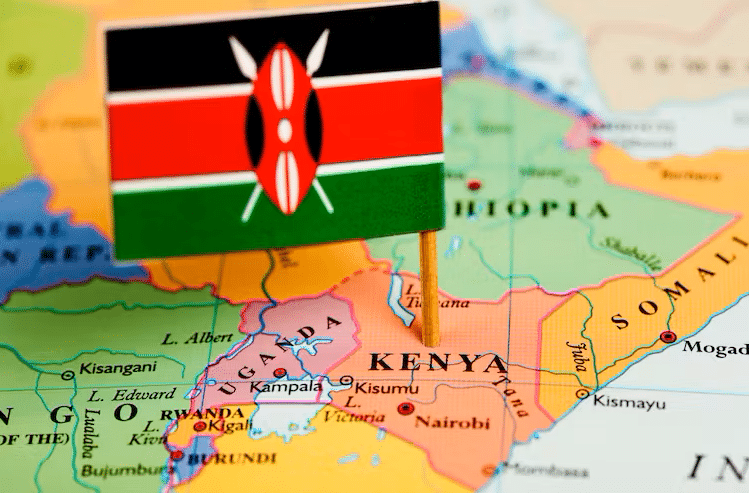
Kenya’s opposition politicians recently called for secession – which is the withdrawal of territory and sovereignty from part of an existing state to create a new state. Led by Raila Odinga, who received 48.8% of the presidential vote in Kenya’s 2022 election, the politicians want the country split into two republics to create a new state for Kenyans unhappy with President William Ruto’s leadership.

Calls for secession are not a new political phenomenon in Kenya.

Even before the territory gained independence from Britain in 1963, some Kenyan Somalis had sought to secede and join neighboring Somalia. And the Mombasa Republican Council, established in the 1990s, has called for an independent state for the coastal people, citing their marginalization.

Opposition groups also made secession calls after Kenya’s 2007-08 post-election violence. These calls were repeated in the run-up to the elections in 2013. Then in 2017, a bill tabled in parliament proposed creating a People’s Republic of Kenya from 40 of the country’s current 47 counties. Geographically, this new republic would retain nearly 87% of Kenya’s population and 97% of the land mass, leaving behind a nation that would not be economically viable.


Also Read: Kenya’s Political Elites Switch Parties with Every Election – How this Fuels Violence


Secessionist movements around the world usually result from the belief by some groups within a region or state that they aren’t able to exercise their right to self-determination. This is their right to determine “their own future, political status and independence”, according to the UN.

ADVERTISEMENT

Self-determination can be external or internal: full independence from other states, or access to political and social rights within a state. The two kinds are related. When governments fail to guarantee internal self-determination, affected groups may seek secession, or external self-determination.

The politicians calling for secession in Kenya argue that some Kenyans have been systematically deprived of the right to participate in the country’s government and economy.

Aggrieved groups may seek to form their own independent sovereign state, like the Biafrans of Nigeria did between 1967 and 1970. Or they may seek to join another independent state, as the Somalis of Kenya did in the 1960s.

In my view as a legal scholar and economist who has studied the political economy in Africa for close to two decades, any group in Kenya that unilaterally declares independence is unlikely to find support on the continent. Additionally, Kenyan politicians have yet to prove that aggrieved groups have been systematically denied the right to participate in the government and the economy in meaningful ways.

Colonial borders

The African Union has been against secession since it was first established as the Organization of African Unity in 1963.

ADVERTISEMENT

The organization refused to intervene in the Nigerian civil war sparked by the Biafran secession of 1967, calling it an internal affair. And in Mali, in response to the declaration of the independent state of Azawad by northern Tuaregs in 2012, the union rejected this, terming it “null and of no value whatsoever”.

The union’s chairperson at the time, Jean Ping, emphasized the

fundamental principle of the intangibility of borders inherited by African countries at their accession to independence.

This echoes Article 4(b) of the Constitutive Act of the African Union. It states that the continental organization shall respect the borders that existed at independence. The act also calls on the union to defend the territorial integrity of its member states. This presents it with a dilemma when it comes to addressing secessionist movements.

The answer to this dilemma is for the African Union to establish a legal mechanism for recognizing legitimate struggles for secession. These include struggles that offer a remedy for grave and systematic injustices.

This was seen in South Sudan in 2011. The South Sudanese people based their push to secede on the argument that since independence in 1956, Khartoum had systematically marginalized them and denied them the right to pursue their political, economic and social development within a united Sudan.


Also Read: Opposition Chief Raila Assures his Supporters that Protests are Still on


At the end of a brutal civil war (1985 to 2005), the warring parties signed a peace agreement. It granted southerners the option to pursue self-determination. Sudan approved of South Sudan’s independence push.

National governments can also establish constitutional processes that allow aggrieved groups to peacefully and constitutionally petition for separation. This has been done in the UK and Canada. Such constitutional mechanisms can encourage aggrieved groups to seek internal instead of external self-determination.

While secession can involve the use of force – as it did in Biafra and South Sudan – it can also be achieved through peaceful means. Scotland’s ongoing bid to become independent of Britain is a case in point.

Kenya’s obstacles

Secession by Kenya’s aggrieved groups or peoples is unlikely to succeed as it faces four major obstacles.

First, as is clear from the African Union’s Constitutive Act, any move to interfere with Kenya’s territorial integrity is unlikely to be supported by the organization.

Second, it’s not likely that the post-secession state will gain the approval of the UN Security Council and then that of two-thirds of the UN General Assembly to be admitted to the UN. This is largely because the secessionists have not yet made a credible case for splitting Kenya into two states.

Third, secession as envisioned by Kenya’s opposition will create two states, one of which is not likely to be economically viable. This could lead to a civil war.

Fourth, the 2010 constitution devolved power from the central government in Nairobi in favor of local communities in 47 regions. This significantly improved the ability of various groups to govern themselves and participate in their own economic, social and cultural development.

Politicians and aggrieved groups need to exercise the right to self-determination through this decentralized governance process. Through it, they can help create a participatory, inclusive and development-oriented government and economy in a united Kenya.The Conversation

John Mukum Mbaku, Professor, Weber State University

This article is republished from The Conversation under a Creative Commons license. Read the original article.

Tags: African UnionColonialismElectionsIndependenceKenyaOppositionSecessionSouth SudanTribalismUnited Nations
John Mukum Mbaku

John Mukum Mbaku

John Mukum Mbaku is a Brady Presidential Distinguished professor of economics and John S. Hinckley Fellow at Weber State University. He is also a nonresident senior fellow at The Brookings Institution in Washington, D.C., and an attorney and counselor at law, licensed to practice in the Supreme Court of the State of Utah, the U.S. District Court for the District of Utah, and the U.S. Supreme Court. He received his PhD in economics from the University of Georgia and his JD in law and graduate certificate in natural resources and environmental law from the S. J. Quinney College of Law at the University of Utah. He is a resource person for the Kenya-based African Economic Research Consortium. Professor Mbaku also holds a B.S. (Chemistry) from Berry College (Mount. Berry, Georgia), a B.A. (French Language and Literature) from Weber State University (Ogden, Utah), and an International MBA (IMBA) from the University of South Carolina. His research interests are in public choice, constitutional political economy, sustainable development, law and development, international human rights, intellectual property, rights of indigenous groups, women and children, trade integration and institutional reforms in Africa. Mbaku is the author of Corruption in Africa: Causes, Consequences, and Cleanups (Lexington Books, 2010) and (with Mwangi S. Kimenyi) of Governing the Nile River Basin: The Search for a New Legal Regime (The Brookings Institution Press, 2015) and Protecting Minority Rights in African Countries: A Constitutional Political Economy Approach (Edward Elgar, 2018). On May 22, 2017, John Mukum Mbaku, was admitted and qualified as an Attorney and Counsellor of the Supreme Court of the United States. At Weber State University, John Mukum Mbaku teaches courses in principles of economics, intermediate microeconomics, international trade, business calculus, and economic development. He also works with international students and helps them adjust to college life in the United States. Professor Mbaku also engages with community groups and helps them understand issues such as globalization, outsourcing, and immigration and how they affect economic activities in the United States. Professor Mbaku also visits local schools to talk to students about the U.S. constitution, constitutionalism and the rule of law in the United States and other countries. He is a consultant to several domestic and international news organizations, as well as multilateral organizations (e.g., the African Development Bank), on governance issues in Africa and has appeared on several domestic and international news programs to discuss elections, corruption, sustainable management of natural resources, including water, and various governance-related issues in Africa.

Related Posts

Treasury Invites Applications For Board Recruitment Across 39 State-Owned Enterprises

Opinion | How New Taxes on Bank Card Transactions Charges Will Raise the Costs for Ordinary Kenyans if Adopted by Parliament

June 1, 2026
Artificial Intelligence Esther Muoria Is A Seasoned Manager And Phd Holder Appointed By President William Ruto As The Tvet Principal Secretary.

Opinion | AI Mistakes That Could Destroy Kenya’s Future — Global Lessons Every Leader, Business and Citizen Must See Now

May 31, 2026
Health Cs Aden Duale Denies Claims Sha Will Shut Down. Ebola Storm Rages On

Opinion | Kenya Should Think Before Rejecting the Laikipia Ebola Facility

May 31, 2026
Low Wages Squeeze Kenyans As As Computer Misuse And Cybercrimes Act Establishes Penalties For Unauthorized Access To Computer Systems, As Well The Legal Cybersecurity Practices.

Opinion | Why Wage Increases Won’t Fix What’s Broken in Kenya’s Economy

May 29, 2026
ADVERTISEMENT

The Kenya Times Facebook

LATEST ARTICLES

  • Nairobi Mentioned as Trump Cut Number of Embassies in Africa
  • Why Transgender Troops Can Now Serve in the U.S. Military
  • “I Couldn’t Care Less” Trump Responds After Iran Ends Talks With US
  • Jill Biden Reveals Regret Over Joe Biden’s 2024 Run in New Interview
  • Stars Abroad: Moses Shumah, Kenyan Striker Breaking Records in Zambia
  • Doctors Question Transparency of Trump’s Heart Test Results
  • Corazone Aquino: Kenyan Star Named After Philippines’ Former President
  • KMA Reveals How to Know Licensed Doctors After Deadly Kitale Surgery
  • Iran Ends All Negotiations With US, Vows to “Completely” Block the Strait of Hormuz
  • Wise vs Remitly vs Western Union: Best International Transfer in 2026
  • KDF Soldiers Take Charge as Protests Erupt in Nanyuki Over Ebola Quarantine Facility
  • End of an Era as Paris Lounge & Grill Rebrands, Kentwood Address Undergoes Renovation
  • Benny McCarthy Makes Changes to Harambee Stars Squad Days After Unveiling 24 Players
  • Ruto Delivers Weighty Apology During Madaraka Day Speech [FULL TEXT SPEECH]
  • Njeri Maina Explains Why President Ruto Can’t Be Impeached
ADVERTISEMENT

Company

About Us

Our Authors

Our Experts

Social Media

Policies

Privacy Policy

House Rules

Standards and Policies

Terms and Conditions

Subscription

My Account

Contact Us

Contact Us

Join Our Team

Advertise With Us

© Copyright 2026 | The Kenya Times | All Rights Reserved

Welcome Back!

Sign In with Facebook
Sign In with Google
Sign In with Linked In
OR

Login to your account below

Forgotten Password? Sign Up

Create New Account!

Sign Up with Facebook
Sign Up with Google
Sign Up with Linked In
OR

Fill the forms below to register

All fields are required. Log In

Retrieve your password

Please enter your username or email address to reset your password.

Log In
Your Privacy and Cookies
We use cookies on our website to give you the most relevant experience by remembering your preferences and repeat visits. By clicking “Accept”, you consent to the use of ALL the cookies.
Do not sell my personal information.
Cookie settingsACCEPT
Privacy & Cookies Policy

Privacy Overview

This website uses cookies to improve your experience while you navigate through the website. Out of these cookies, the cookies that are categorized as necessary are stored on your browser as they are essential for the working of basic functionalities of the website. We also use third-party cookies that help us analyze and understand how you use this website. These cookies will be stored in your browser only with your consent. You also have the option to opt-out of these cookies. But opting out of some of these cookies may have an effect on your browsing experience.
Necessary
Always Enabled
Necessary cookies are absolutely essential for the website to function properly. This category only includes cookies that ensures basic functionalities and security features of the website. These cookies do not store any personal information.
Functional
Functional cookies help to perform certain functionalities like sharing the content of the website on social media platforms, collect feedbacks, and other third-party features.
Performance
Performance cookies are used to understand and analyze the key performance indexes of the website which helps in delivering a better user experience for the visitors.
Analytics
Analytical cookies are used to understand how visitors interact with the website. These cookies help provide information on metrics the number of visitors, bounce rate, traffic source, etc.
Advertisement
Advertisement cookies are used to provide visitors with relevant ads and marketing campaigns. These cookies track visitors across websites and collect information to provide customized ads.
Others
Other uncategorized cookies are those that are being analyzed and have not been classified into a category as yet.
SAVE & ACCEPT
LOGIN | REGISTER
  • Login
  • Sign Up
  • Cart
No Result
View All Result
  • News
    • Latest News
    • Breaking News
    • Investigations
    • Explainers
    • Fact Check
  • Politics
    • Global Politics
    • Conflicts & Security
    • Elections
    • Diplomacy
    • Government & Policy
    • Political Analysis
  • Business
    • Global Economy
    • Markets
    • Technology
    • Startups
    • Energy
    • Finance
  • World News
    • Americas
    • Asia
    • Asia Pacific
    • Africa
    • Europe
    • Middle East
  • Africa
    • East Africa
    • West Africa
    • Southern Africa
    • Central Africa
  • Health
    • Global Health
    • Public Health
    • Health Policy
    • Medical Research
    • Diseases & Conditions
    • Mental Health
    • Nutrition
    • Climate & Health
    • Health Explainers
  • Sports
    • Athletics
    • Basketball
    • Boxing
    • Cricket
    • Football
    • Formula 1
    • Golf
    • Rugby
  • Weather
    • Climate Business
    • Climate Change
    • Climate Solutions
    • Living Green
  • Culture
    • Arts
    • Film & TV
    • Food
    • Lifestyle
    • Music
    • Travel
  • Opinion
    • Editorials
    • Letters
  • Behind The Brand
  • Contact Us

Not enough quota to unlock this post
Unlock left : 0
Are you sure want to cancel subscription?