Wednesday, June 17, 2026
  • News
    • Latest News
    • Breaking News
    • Fact Check
    • Investigations
    • Explainers
  • Politics
    • Global Politics
    • Elections
    • Government & Policy
    • Diplomacy
    • Conflicts & Security
    • Political Analysis
  • Business
    • Global Economy
    • Markets
    • Technology
    • Startups
    • Energy
    • Finance
  • World News
    • Americas
    • Asia
    • Asia Pacific
    • Africa
    • Europe
    • Middle East
  • Africa
    • Central Africa
    • East Africa
    • West Africa
    • Southern Africa
  • Health
    • Global Health
    • Public Health
    • Health Policy
    • Medical Research
    • Diseases & Conditions
    • Mental Health
    • Nutrition
    • Climate & Health
    • Health Explainers
  • Sports
    • World Cup 2026
    • Athletics
    • Basketball
    • Boxing
    • Cricket
    • Football
    • Formula 1
    • Golf
    • Rugby
  • Weather
    • Climate Business
    • Climate Change
    • Climate Solutions
    • Living Green
  • Culture
    • Arts
    • Film & TV
    • Food
    • Music
    • Lifestyle
    • Travel
  • Opinion
    • Editorials
    • Letters
  • Behind The Brand
REGISTER
LOGIN
No Result
View All Result
The Kenya Times
  • News
    • Latest News
    • Breaking News
    • Fact Check
    • Investigations
    • Explainers
  • Politics
    • Global Politics
    • Elections
    • Government & Policy
    • Diplomacy
    • Conflicts & Security
    • Political Analysis
  • Business
    • Global Economy
    • Markets
    • Technology
    • Startups
    • Energy
    • Finance
  • World News
    • Americas
    • Asia
    • Asia Pacific
    • Africa
    • Europe
    • Middle East
  • Africa
    • Central Africa
    • East Africa
    • West Africa
    • Southern Africa
  • Health
    • Global Health
    • Public Health
    • Health Policy
    • Medical Research
    • Diseases & Conditions
    • Mental Health
    • Nutrition
    • Climate & Health
    • Health Explainers
  • Sports
    • World Cup 2026
    • Athletics
    • Basketball
    • Boxing
    • Cricket
    • Football
    • Formula 1
    • Golf
    • Rugby
  • Weather
    • Climate Business
    • Climate Change
    • Climate Solutions
    • Living Green
  • Culture
    • Arts
    • Film & TV
    • Food
    • Music
    • Lifestyle
    • Travel
  • Opinion
    • Editorials
    • Letters
  • Behind The Brand
  • News
    • Latest News
    • Breaking News
    • Fact Check
    • Investigations
    • Explainers
  • Politics
    • Global Politics
    • Elections
    • Government & Policy
    • Diplomacy
    • Conflicts & Security
    • Political Analysis
  • Business
    • Global Economy
    • Markets
    • Technology
    • Startups
    • Energy
    • Finance
  • World News
    • Americas
    • Asia
    • Asia Pacific
    • Africa
    • Europe
    • Middle East
  • Africa
    • Central Africa
    • East Africa
    • West Africa
    • Southern Africa
  • Health
    • Global Health
    • Public Health
    • Health Policy
    • Medical Research
    • Diseases & Conditions
    • Mental Health
    • Nutrition
    • Climate & Health
    • Health Explainers
  • Sports
    • World Cup 2026
    • Athletics
    • Basketball
    • Boxing
    • Cricket
    • Football
    • Formula 1
    • Golf
    • Rugby
  • Weather
    • Climate Business
    • Climate Change
    • Climate Solutions
    • Living Green
  • Culture
    • Arts
    • Film & TV
    • Food
    • Music
    • Lifestyle
    • Travel
  • Opinion
    • Editorials
    • Letters
  • Behind The Brand
No Result
View All Result
The Kenya Times ~ Trending, Breaking News and Videos
No Result
View All Result
ADVERTISEMENT

Truth Behind East African Countries’ Open Borders and Underlying Bottlenecks 

The ConversationbyThe Conversation
July 18, 2025
Reading Time: 8 mins read
Truth Behind East African Countries' Open Borders And Underlying Bottlenecks.

Presidents and Head of States during a joint EAC-SADC Summit on the situation in DRC at State House, Dar es Salaam, Tanzania. PHOTO/PCS.

FacebookTwitterLinkedInRedditWhatsApp
Advertisement

It’s not uncommon to find a Ugandan taxi driver in Rwanda’s capital, Kigali, just as one regularly meets Zimbabwean Uber drivers in South Africa. But there is a big difference. A Ugandan working in Rwanda most likely has a secure legal right to be there, whereas Zimbabweans working in South Africa are often uncertain of their current or future legality.

East Africa has made greater strides towards the free flow of people crossing borders and seeking work than most of Africa. Only the Economic Community of West African States (ECOWAS) is in the same league.

While the African Union’s Free Movement of Persons protocol has faltered at a continental level, some of the regional economic communities have made progress.

The Southern African Development Community (SADC) allows visa-free travel across almost all its borders.

ECOWAS and the East African Community (EAC) have driven ambitiously towards regional common markets including the freeing up of job-seeking, residential settlement and business development across the borders of member states.

The New South Institute, a think-tank focused on governance reforms in the global south, is nearing the end of a research programme on migration governance reform in Africa. Our new report is on East Africa.

We have found that unlike much of the global north, the African continent is moving towards more open borders for people.

In some of the global south the promise of economic growth outweighs political fears. Yet progress is slow, and not coordinated. Mostly migration reform happens in regions and between neighbours.

The progress in EAC is particularly notable compared with other African regional communities. We identify a number of reasons for this, including strong leadership and co-operation between state and non-state actors.

The commitment to free movement in East Africa

EAC adopted its Common Market Protocol in 2010. The bloc is made up of Tanzania, Uganda, Kenya, Rwanda, Burundi, South Sudan, the DRC and Somalia.

The regional body’s common market pact includes the movement of goods, services, capital and people. It gives people the right – on paper at least – to find employment across borders, the right to reside and the right to establish a business.


Also Read: Concern as Kenyans Rush to Uganda for Primary School Education


There is also a commitment to the harmonisation and mutual recognition of academic and professional qualifications and labour policies to ease mobility.

Even before the common market protocol, the regional bloc began to establish one-stop border posts on many of its internal borders to facilitate the flow of goods and people. Though they don’t all operate the same way or equally well, they have been successful at easing movement.

Uneven outcomes

The common market’s impact on the movement of people has been uneven within the region. Most integrated are Uganda, Kenya and Rwanda, which allow the cross-border movement of citizens with standardised identity documents – they do not need passports.

It is also relatively easy to get jobs across these borders.

Tanzania and Burundi are close to the inner circle but still require passports, though no visas. The three states which joined more recently, South Sudan, the DRC and Somalia, are all fragile states with governance systems that do not always meet the standards needed for acceptance into all the privileges of the regional bloc.

In practice there is differential treatment. Generally, it is more difficult for citizens of the three latecomers to get regular access and jobs in their regional partners.


Also Read: Uganda, UAE, and Pakistan Top Export Destinations for Kenyan Goods


Another limitation when it comes to the mobility of people is that little progress has been made in the formal harmonisation of education, health and social welfare systems between member states. This inhibits job seeking across borders.

In addition, national labour laws, which tend to require permits for foreigners, still apply to varying degrees in the region.

Some countries are more permissive. For example, Kenya, Uganda and Rwanda have a reciprocal no-fee work permit agreement.

Another shortcoming has been that the outcomes of court processes in enforcing the freedom of movement have been disappointing.

This is so even though the regional bloc has an active East African Court of Justice (EACJ). Its legal mandate includes the enforcement of the bloc’s treaty and its protocols.

In some cases the court has found that national actions inhibiting the movement of persons were trumped by the regional protocol. It has instructed the errant governments to comply. But its ability to enforce the decisions is minimal.

Reasons for success

Leadership has been important. The fact that the strongest economy in the region, Kenya, has been part of the leading echelon is significant.

Rwanda and Uganda have led by example too. Rwanda was one of the first countries on the continent to offer visa-free entry to all other African countries. For its part, Uganda is widely admired for its refugee inclusion programmes.
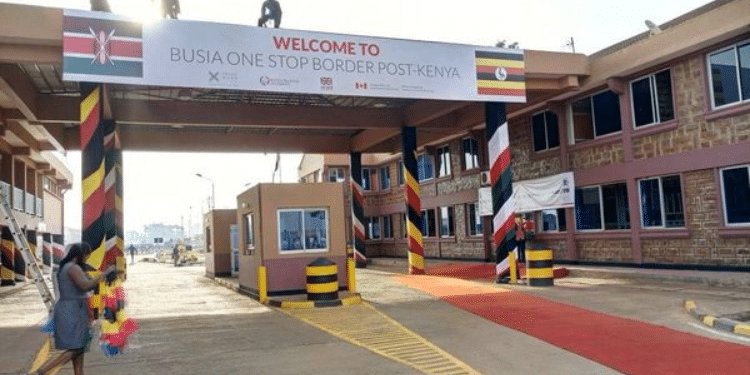
Truth Behind East African Countries' Open Borders And Underlying Bottlenecks 
An entrance at the Busia One Stop Border Post. Photo/The New Vision

Another factor outlined in our report has been the opportunity for collaboration fostered by relationships between formal institutions, such as governments, and non-state actors such as the International Organisation for Migration.

Interactions between these various players have created opportunities for officials and policymakers from states of the region to meet, discuss issues of concern, and develop relationships of trust and understanding.

Another non-state donor-funded actor, TradeMark Africa, which was established in 2010 to support in the implementation of the common market in east Africa, provided considerable support.

For example it supported the implementation of the regional One-Stop Border Post programme.

Way forward

Based on our report we identified changes that could make a positive difference.

Firstly, the development of reliable, harmonised systems in the region to collect and manage data on population mobility and employment. This would build confidence that policy was being made on the basis of reliable information.

Secondly, reducing friction in cross-border monetary transactions, including migrants’ remittances. This would make it easier for migrants to send some of their income to their countries of origin.

Thirdly, improvements to population registers, identity documents, passports and cross-border migration management systems.

Improvements would build mutual trust in the integrity of systems and pave the way for further commitments to lowering migration barriers.

Fourth, cooperation on cross-border access to social services such as health and education. This is one of the most important intermediate steps towards freeing up mobility for the citizens of the region.

Fifth, reconsidering some of the amendments made to weaken the East African Court of Justice in 2007. This would strengthen the de jure powers of the court, adding considerably to the entrenchment of cross-border rights in the region.

Ultimately, the key constraint in the region is political and security instability, which holds back social and economic development.

Nevertheless, incremental progress on mobility is possible despite issues in the fragile states, even though it may result in asymmetric progress within the EAC.The Conversation

Alan Hirsch, Senior Research Fellow New South Institute, Emeritus Professor at The Nelson Mandela School of Public Governance, University of Cape Town.

This article is republished from The Conversation under a Creative Commons license. Read the original article.
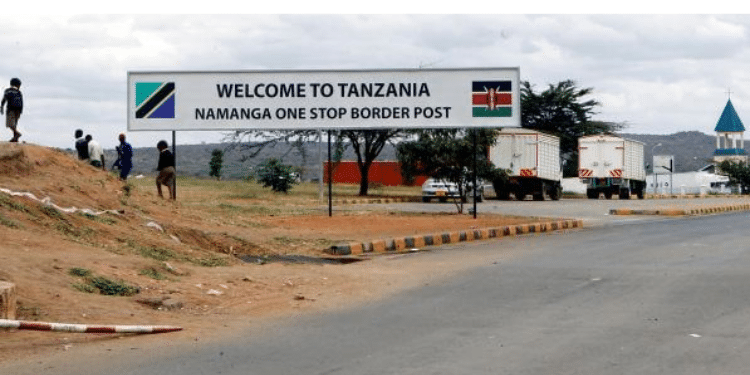

Truth Behind East African Countries' Open Borders And Underlying Bottlenecks 
The Namanga One Stop Border Post. PHOTO/Trademark Africa
Tags: EACEast AfricaKenyaTanzaniaUganda
The Conversation

The Conversation

The Conversation is an independent news organization that publishes evidence-based articles written by experts to help readers understand diverse topics. We cover a wide range of areas including arts, culture, education, health, politics, science, and more¹. Their content is characterized by in-depth analysis, research, news, and ideas from leading academics and researchers. The Conversation aims to provide academic rigor with journalistic flair.

Related Posts

Majority Of The Msmes In Kenya Today Are In The Informal Sector. Many Do Have Credit Scores Or Sme Ratings From Credit Reference Bureaus.

Why So Many MSMEs Fail to Get Bank Loans in Kenya – Advice by a Banking Economist

June 16, 2026
Dcp National Chairman David Ole Parseina Asks Pastoralists And Minority Communities To Join Dcp.

Opinion | Why Pastoralist and Minority Communities in Kenya Need Stronger Political Voice

June 15, 2026
Making Water Accessible. South Africa’s President Cyril Ramaphosa Carrying A Child In 2018. Photo/Anc Party.

Opinion | Why Water is the Hidden Key to Every Child’s Future

June 15, 2026
Vinícius Júnior Delivers Brilliant Equalizer As Resilient Morocco Holds Brazil To Hard-Fought World Cup Draw

How The US Border Crackdowns Are Tarnishing the World Cup

June 15, 2026
ADVERTISEMENT

The Kenya Times Facebook

LATEST ARTICLES

  • No Israel, No America? Marjorie Taylor Greene Blasts Mike Huckabee Over Biblical Israel Comments
  • U.S. Indo-Pacific Command Reverts to Historic USPACOM Name After 2018 Rebrand
  • New York Orders Judges to Visit Prisons Annually to Check on Inmates
  • Whoopi Goldberg Presses JD Vance on Claims Black Americans Are Being Left Behind During Heated “The View” Clash
  • Trump Moves to Dismantle Education Department, Transfers Disability Programs and Civil Rights Enforcement
  • Four Republicans Join Democrats in Failed Senate Bid to Rein In Trump’s Iran War Powers
  • Trump Spotted with New Mark on Hand During G7 Summit, Fueling Online Buzz
  • DOJ Announces Charges Against 15 Members of Left-Wing Anti-ICE Group Direct Action Minnesota
  • Hillary Clinton: Biden’s 2024 Run Was a ‘Terrible Mistake’ That Handed Trump the White House
  • How Jeffrey Epstein Planned to Take Down Trump Before His Suicide-Report
  • Best Budget-Friendly Kenyan Meals to Cook at Home for Under KSh 500
  • How Kenyan Students Can Secure Scholarships to Study in the United States
  • How to Download Kenyan Music for Free in 2026
  • Court Rules on Lawyers’ Representation in Govt’s Sale of Safaricom Stake
  • Gatonye Wa Mbugua’s Journey From KSh600 Weekly Pay to Media Executive
ADVERTISEMENT

Company

About Us

Our Authors

Our Experts

Social Media

Policies

Privacy Policy

House Rules

Standards and Policies

Terms and Conditions

Subscription

My Account

Contact Us

Contact Us

Join Our Team

Advertise With Us

© Copyright 2026 | The Kenya Times | All Rights Reserved

Welcome Back!

Sign In with Facebook
Sign In with Google
Sign In with Linked In
OR

Login to your account below

Forgotten Password? Sign Up

Create New Account!

Sign Up with Facebook
Sign Up with Google
Sign Up with Linked In
OR

Fill the forms below to register

All fields are required. Log In

Retrieve your password

Please enter your username or email address to reset your password.

Log In
Your Privacy and Cookies
We use cookies on our website to give you the most relevant experience by remembering your preferences and repeat visits. By clicking “Accept”, you consent to the use of ALL the cookies.
Do not sell my personal information.
Cookie settingsACCEPT
Privacy & Cookies Policy

Privacy Overview

This website uses cookies to improve your experience while you navigate through the website. Out of these cookies, the cookies that are categorized as necessary are stored on your browser as they are essential for the working of basic functionalities of the website. We also use third-party cookies that help us analyze and understand how you use this website. These cookies will be stored in your browser only with your consent. You also have the option to opt-out of these cookies. But opting out of some of these cookies may have an effect on your browsing experience.
Necessary
Always Enabled
Necessary cookies are absolutely essential for the website to function properly. This category only includes cookies that ensures basic functionalities and security features of the website. These cookies do not store any personal information.
Functional
Functional cookies help to perform certain functionalities like sharing the content of the website on social media platforms, collect feedbacks, and other third-party features.
Performance
Performance cookies are used to understand and analyze the key performance indexes of the website which helps in delivering a better user experience for the visitors.
Analytics
Analytical cookies are used to understand how visitors interact with the website. These cookies help provide information on metrics the number of visitors, bounce rate, traffic source, etc.
Advertisement
Advertisement cookies are used to provide visitors with relevant ads and marketing campaigns. These cookies track visitors across websites and collect information to provide customized ads.
Others
Other uncategorized cookies are those that are being analyzed and have not been classified into a category as yet.
SAVE & ACCEPT
LOGIN | REGISTER
  • Login
  • Sign Up
  • Cart
No Result
View All Result
  • News
    • Latest News
    • Breaking News
    • Investigations
    • Explainers
    • Fact Check
  • Politics
    • Global Politics
    • Conflicts & Security
    • Elections
    • Diplomacy
    • Government & Policy
    • Political Analysis
  • Business
    • Global Economy
    • Markets
    • Technology
    • Startups
    • Energy
    • Finance
  • World News
    • Americas
    • Asia
    • Asia Pacific
    • Africa
    • Europe
    • Middle East
  • Africa
    • East Africa
    • West Africa
    • Southern Africa
    • Central Africa
  • Health
    • Global Health
    • Public Health
    • Health Policy
    • Medical Research
    • Diseases & Conditions
    • Mental Health
    • Nutrition
    • Climate & Health
    • Health Explainers
  • Sports
    • World Cup 2026
    • Athletics
    • Basketball
    • Boxing
    • Cricket
    • Football
    • Formula 1
    • Golf
    • Rugby
  • Weather
    • Climate Business
    • Climate Change
    • Climate Solutions
    • Living Green
  • Culture
    • Arts
    • Film & TV
    • Food
    • Lifestyle
    • Music
    • Travel
  • Opinion
    • Editorials
    • Letters
  • Behind The Brand
  • Contact Us

Not enough quota to unlock this post
Unlock left : 0
Are you sure want to cancel subscription?