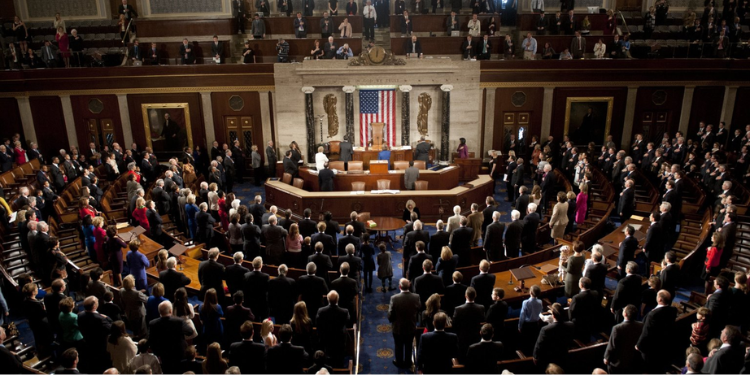
A group of Senate Republicans is writing legislation that would give President Trump congressional approval for military action against Iran while blocking U.S. ground troops and setting a time limit on the conflict.
Sen. Lisa Murkowski of Alaska is leading the effort. The draft authorization for the use of military force, or AUMF, comes as the United States approaches the 60-day mark under the War Powers Resolution since the start of major hostilities with Iran.
Limited Authorization
The measure would provide formal approval for continued strikes if needed, but would include clear restrictions. It is expected to bar large-scale ground operations or the deployment of occupation forces and to set a specific time window for authorized hostilities.
Murkowski has said the bill is both an authorization and a restraint. “This is an authorization, but it is also a restraint. It’s not a blank check,” she stated in a recent floor speech.
She added that it would require the administration to present defined political and military objectives, success metrics, and exit criteria.
The senator has indicated she plans to introduce the bill when the Senate returns from recess the week of May 11 if the Trump administration does not provide a clear plan.
Congressional Tension Over War Powers
The push reflects divisions within the Republican Party. Many GOP senators have voted repeatedly against Democratic efforts to invoke the War Powers Resolution and force an end to U.S. involvement.
Also Read: Hakeem Jeffries Fires Back at Trump With ‘Do You Need a Hug?’ Clapback, Invokes Melania’s ‘Be Best’
At the same time, some express concern about entering a long-term conflict without defined limits.
Murkowski has said Trump should have sought congressional approval before launching strikes on this scale. However, she has argued that once U.S. forces are engaged, Congress cannot simply withdraw support and leave partners exposed.
Other Republicans, including Sen. Todd Young of Indiana, have acknowledged the need for Congress to address the 60-day deadline and consider an authorization. Senate Majority Leader John Thune has so far indicated no immediate plans for a vote on the matter.
The Trump administration has not sought formal congressional approval and has shown no sign of requesting one.
Why This Matters
This effort marks a notable attempt by members of the president’s own party to set boundaries on military action while still backing it. Past authorizations, such as those for Iraq and against al-Qaeda, granted broad and lasting powers.
Also Read: Republicans Save Trump Against Democratic Push to End Iran War
This proposal aims for narrower terms focused on avoiding a prolonged ground war.
The outcome could influence how long the United States remains involved in the Iran conflict and in what form. It also tests whether Congress will reassert a role in decisions about war after months of limited involvement.
The bill’s success depends on support from Republican leadership and the administration’s response once the Senate returns.