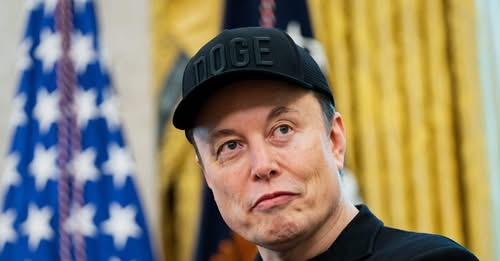
Businessman and billionaire Elon Musk has publicly criticized South Africa after his satellite internet company, Starlink, was denied a license to operate in the country.
According to the businessman, the decision is linked to regulatory requirements rather than technical or commercial grounds.
“South Africa won’t allow Starlink to be licensed, even though I was born there, simply because I am not Black,” said Elon Musk.
The remarks have sparked renewed debate over the country’s telecom policies and alleged racism claims.
Elon Musk was born in Pretoria, South Africa, on June 28, 1971, to a Canadian mother and a South African father. He left South Africa in 1988 at age 17 to Canada and later the United States.
Elon Musk’s Claims on Starlink Licensing Restrictions
Elon Musk said that Starlink is being blocked from entering the South African market due to ownership rules and racism claims.
Also Read: DHS Funding Blocked Again as White House Rejects Elon Musk Offer to Pay TSA Agents
Musk also revealed that they were offered the opportunity to bribe and pretend to be black in order to obtain a license, which he refused.
The billionaire has publicly condemned racism, accusing South Africa’s leaders of being behind it.
“We were offered many times the opportunity to bribe our way to a license by pretending that a Black guy runs Starlink SA, but I have refused to do so on principle. Racism should not be rewarded no matter to which race it is applied. Shame on the racist politicians in South Africa. They should be shown no respect whatsoever anywhere in the world and shunned for being unashamedly racist,” added Musk.
South Africa’s Regulatory Framework
South Africa’s Broad-Based Black Economic Empowerment (B-BBEE) framework requires companies in key sectors, including telecommunications, to meet local ownership and empowerment thresholds to obtain operating licenses.
Telecom licensing is regulated by the Independent Communications Authority of South Africa (ICASA).
Under this framework, foreign satellite providers such as Starlink must either meet ownership requirements or structure partnerships with local firms to qualify for operational approval.
Accessing and operating Starlink in South Africa through unofficial means poses a serious legal risk.
“Should the investigation yield any breach withn regulatory and legislative frameworks, the Authority will explore the applicable enforcement actions within its disposal which may include amongst others lodging a formal complaint with the International Telecommunication Union (ITU),” said Mothibi Ramusi ICASA Chairperson.
Also Read: Elon Musk Bows to Kenya’s Pressure as Starlink Warns Customers of Service Cut-Off
Starlink Local Ownership Requirement in South Africa
To operate legally in South Africa, Telecom operators must have at least 30% ownership by historically disadvantaged South Africans.
This includes Black African, Coloured, Indian, and other groups defined under the B-BBEE law. It applies to companies seeking national electronic communications licences.
A company like Starlink must obtain two key approvals:
- Communications Network Service (ECNS) license to build or operate telecom infrastructure
- Electronic Communications Service (ECS) license to sell internet services to customers