Israeli forces have killed at least eight Palestinians in the Gaza Strip, marking another serious breach of the ceasefire, which has officially been in place since last October.
The killings were reported on April 15 amid ongoing Israeli military activity in Gaza, highlighting the truce’s fragility and raising fresh concerns about its viability.
The incidents occurred despite the ceasefire, which was intended to halt all ground and air attacks.
Although large-scale battles have largely ceased, the ceasefire has not brought sustained calm.
Huge Setback for Palestine and Gaza
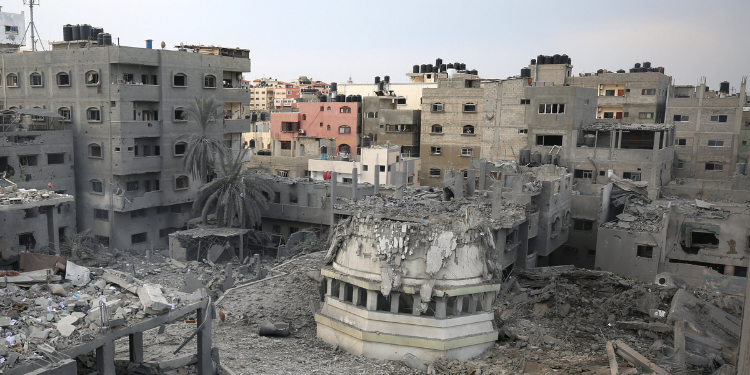
Israeli military strikes in Palestinian areas, especially in the Gaza Strip, have had long‑lasting effects on civilians, infrastructure, and daily life.
Even during periods officially described as ceasefires, continued Israeli fire has deepened the humanitarian crisis and weakened the possibility of recovery.
Many people remain in temporary shelters, tents, or overcrowded buildings.
Also Read: Strait of Hormuz: Why the US and Iran Are Sailing in Very Different Legal Waters
Living conditions are difficult, with limited access to clean water, poor sanitation, and exposure to the elements.
Because strikes continue after the main fighting stopped, repair work has been delayed, and in some cases, newly repaired structures have been damaged again.
Hospitals and clinics were weakened during the war and remain under pressure.
Israeli strikes and restrictions have affected the supply of fuel, medicines, and medical equipment.
Hamas continues to operate inside Gaza, both militarily and politically, though in a reduced and more fragmented form.
It has not been removed from the territory and still maintains fighters, weapons, and underground infrastructure, according to Israeli officials, the United Nations (U.N), and international media reports.
Israel Remain Defiant
Israel has continued military attacks in Gaza despite the ceasefire for several stated reasons, according to Israeli officials and security statements.
Israeli authorities say the main reason is security. Israel argues that armed groups in Gaza, including Hamas and other factions, still pose a threat.
Israeli officials say fighters remain active, weapons are still present, and attacks could be planned from within Gaza.
Also Read: Boost for Zelensky as UK Sends 120,000 Drones to Counter Russia
On this basis, Israel says it reserves the right to act to prevent what it calls imminent threats, even during a ceasefire.
Israel has also said that some areas of Gaza remain restricted security zones.
These include buffer areas near the border and zones inside the territory where Israeli forces operate.
Israeli forces have repeatedly said that Palestinians entering or approaching these areas may be targeted.
Many of the reported killings since the ceasefire have occurred near such zones.
Another reason cited is the absence of a full political settlement. The ceasefire reached in October 2025 was not a permanent peace agreement.
It was designed to stop large‑scale fighting, but it did not resolve core issues such as governance in Gaza, disarmament of armed groups, or long‑term security arrangements.
Israeli officials say this leaves open the possibility of continued military action.
Israel has also argued that the ceasefire allows for enforcement actions.
Israeli leaders have maintained that the agreement does not require complete military withdrawal or prohibit all forms of force.
They say their actions are limited and targeted, rather than a return to full war.
Regional factors have also played a role.
Israel is currently engaged in fighting on other fronts, including hostilities with Hezbollah in Lebanon.
Israeli officials say threats from multiple directions require heightened military readiness, including in Gaza.
The broader regional conflict has heightened tensions and reduced incentives for restraint.
From the Palestinian side, Gaza officials say Israel is using the ceasefire to manage the conflict rather than end it.
They argue that ongoing strikes weaken the truce and harm civilians.
International humanitarian groups have also warned that repeated violations undermine the ceasefire’s purpose.