In a stunning reversal that has left Washington stunned, President Donald Trump announced a two-week ceasefire with Iran late Tuesday night, less than two hours before his own self-imposed deadline to unleash devastating strikes on the Islamic Republic.
The deal, dependent on Iran reopening the Strait of Hormuz for the safe passage of oil tankers, has been celebrated by Tehran as a victory and sparked jubilation in the streets of the Iranian capital.
However, inside the White House, the mood seems far from triumphant.
Trump Ceasefire Triggers White House Tensions
Sky News captured the raw tension unfolding in real time.
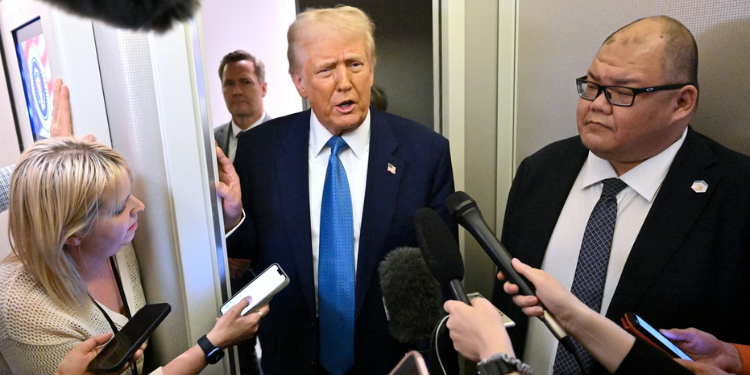
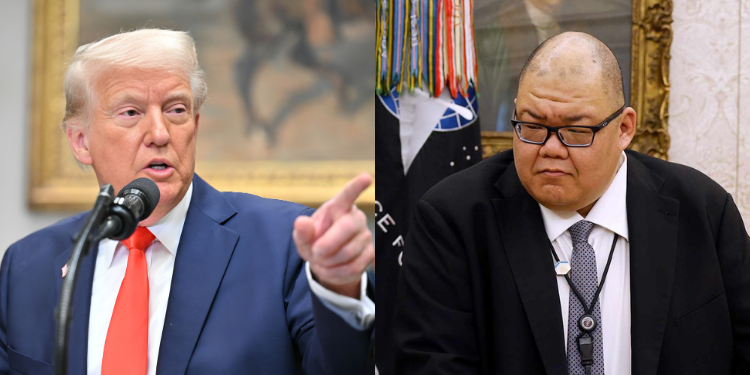
As analysts debated whether the agreement was a humiliating climbdown for the United States, Trump’s Communications Director Steven Cheung lashed out online in a profanity-filled tirade against a journalist who dared call the ceasefire the “biggest strategic defeat” for America.
Cheung was responding to Owen Jones, a British journalist, columnist, author, and political activist.
“Have no doubt, this is the biggest strategic defeat suffered by the US since its emergence as a superpower,” Jones posted on his official X account that has gained one million followers.
The exchange quickly went viral, drawing attention not only to the ceasefire itself but to the strain the decision has placed on the Trump administration.
Also Read: Twist as Iran Considers Breaking Ceasefire After Israeli Strikes in Lebanon
Cheung’s outburst came as Iranian officials publicly framed the pause in fighting as a victory, saying Washington had accepted Tehran’s conditions under pressure.
Trump’s communications director issued a heated online response, using personal insults to dismiss claims that the ceasefire represented a major strategic defeat.
Why Some in the White House Oppose the Ceasefire
Some influential figures around the White House are opposed to the ceasefire with Iran because they believe it weakens US leverage and rewards pressure from Tehran.
Their main concern is that the pause in fighting was announced before Iran made clear, enforceable commitments, especially on uranium enrichment and sanctions relief.
Iranian officials quickly claimed victory, saying Washington had accepted Iran’s conditions. For hardline US officials and allies, that public narrative is damaging.
They argue it causes the US to seem like it has backed down after making military threats, which could weaken deterrence in future crises.
Senator Lindsey Graham, a key Trump ally and long‑time Iran hawk, cautiously welcomed diplomacy but warned against rewarding Iran.
Also Read: Inside the meeting that convinced Donald Trump to go to war with Iran
He has publicly said Iran must not be allowed to resume uranium enrichment or benefit from closing the Strait of Hormuz.
Another concern is trust. Conservative commentators like Mark Levin, who has direct influence within Trump’s political base, have warned that Iran has a long history of violating agreements and may use the ceasefire to regroup militarily.
Finally, Iran’s decision to re‑close the Strait of Hormuz only hours after the ceasefire began has reinforced doubts among sceptics that the pause can hold or deliver real gains for the US.
Iran Re‑Closes Strait of Hormuz Hours After Ceasefire
The fragile ceasefire suffered a major blow on Wednesday after Iran moved to block oil tankers from passing through the Strait of Hormuz again, only hours after agreeing to reopen the vital waterway.
Iranian state‑linked media said tanker traffic was suspended in response to continued Israeli airstrikes in Lebanon, which Tehran says violate the conditions under which it agreed to pause hostilities.
Iranian authorities warned that vessels attempting to transit the strait without coordination with Iran’s armed forces would not be permitted safe passage.
Negotiations arranged by Pakistan are still expected to continue during the two-week ceasefire period, although officials on all sides have recognized that the truce is now under serious strain.