


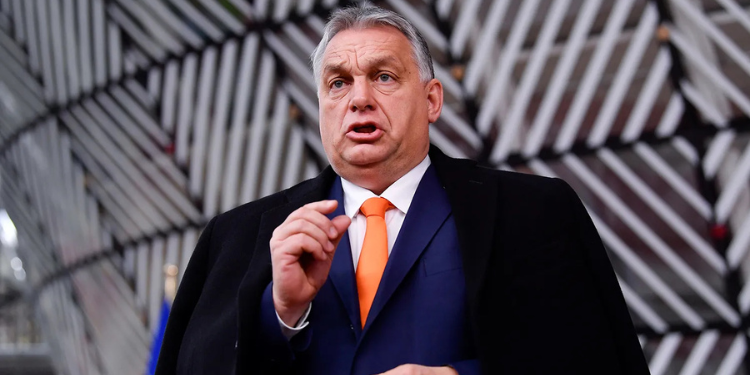
The Prime Minister of Hungary, Viktor Orbán, has ordered the European Union (EU) to ease sanctions on Russian “cheap oil,” following the temporary lifting of sanctions on Russia by United States President Donald Trump.
In a statement on March 14, Orbán expressed frustration over the ongoing Ukrainian oil blockade, which has denied Hungarian experts access to the Druzhba “Friendship” pipeline.
“Our experts are still denied access to the Friendship pipeline while Brussels still refuses to face reality,” said Viktor Orbán
Orban argued that Europe’s energy crisis cannot be resolved without access to affordable Russian oil.
Russian oil has not been flowing to Hungary since January 27.
Viktor Orbán Pressures EU to Reduce Restrictions on Russian “Cheap Oil”
Orbán previously demanded that President Volodymyr Zelensky allow Hungarian inspectors to access the Druzhba pipeline, which has been blocked amid claims of damage from Russian drone strikes on pumping stations in western Ukraine.
The Hungarian government formed a commission, headed by State Secretary of the Ministry of Energy Gabor Czepek and including employees from MOL, the oil and gas company that processes Russian crude in Hungary and Slovakia, to verify the pipeline’s operational status.
Also Read: Trump Rejects Putin Offer in High-Stakes Iran War Talks
However, Ukraine denied the commission access.
“Experts from this commission are ready to travel to Ukraine at any time to verify that Ukrainian claims about the pipeline’s inoperability are false. This is likely why they are being blocked,” said Viktor Orbán.
In response, Hungary and Slovakia requested that Croatia allow Russian crude to be transported via the Adriatic Pipeline to the Croatian port of Omisalj as an alternative.
Hungary maintains that the Druzhba pipeline is operational and accuses Kyiv of politically blocking the resumption of Russian oil transit.
“Until Ukraine reopens the Druzhba pipeline, the Hungarian government will block any Brussels decisions favoring Ukraine.”
Trump Temporarily Lifts Sanctions for Russian Oil
The President of the United States (US), Donald Trump, previously authorized the temporary sale of certain Russian oil shipments following the issuance of General License 134 by the U.S. Department of the Treasury’s Office of Foreign Assets Control (OFAC).
According to Trump, under the new authorization, companies are allowed to carry out activities that are related to transport and deliver the cargo.
Also Read: Explosion Reported Near US Embassy in European Nation
These include vessel docking and anchoring, ensuring the health and safety of ship crews, emergency repairs, and environmental protection measures.
Additionally, related services such as vessel management, crewing, bunkering, piloting, registration, insurance, classification, and salvage operations are permitted to complete the shipments.
The license applies to crude oil and petroleum products originating from the Russian Federation, including those produced by entities already sanctioned under U.S. regulations related to Russia’s foreign activities and the conflict in Ukraine.
These transactions are permitted until April 11, 2026, allowing companies to complete deliveries that were already in transit when the measure was issued.


