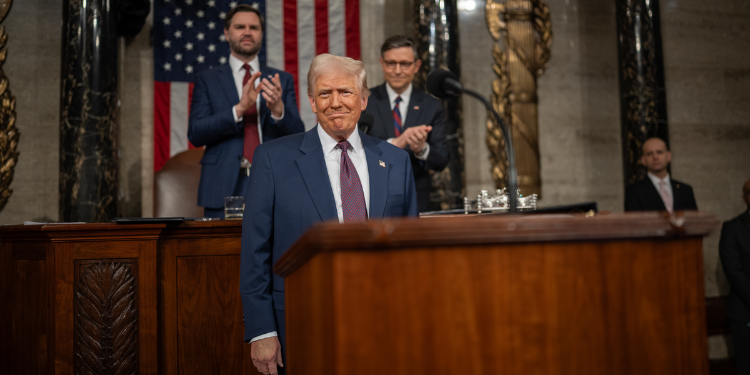
President Donald Trump signed an executive order that reclassifies approximately 8,000 federal workers as at-will employees, making them significantly easier to dismiss.
The order places senior policymakers into a new “Schedule Policy/Career” category established earlier this year by the Office of Personnel Management. Employees in this category can be terminated without cause or the due process protections that apply to most civil service positions.
Expansion of At-Will Authority
The move triples the number of federal positions subject to at-will employment from roughly 4,000 to 12,000. Administration officials described the action as a targeted effort to address long-standing difficulties in removing underperforming or problematic employees in policy-influencing roles.
James Sherk of the Domestic Policy Council, who attended the signing ceremony in the Oval Office, said the previous system made it “almost impossible to fire a federal employee, even in cases of serious misconduct.” He called the change a step toward treating senior federal workers more like employees in the private sector.
Trump signed two executive orders during the ceremony as part of ongoing efforts to reduce the size of the federal bureaucracy.
Also Read: Trump Privately Signals He Won’t End Iran Ceasefire Unless American Troops Die
Link to DOGE Initiative
The order forms part of the Trump administration’s broader push to cut federal workforce numbers since the president’s inauguration in January. The effort has involved the Department of Government Efficiency, led in part by Elon Musk.

Musk has described the DOGE project as only partially successful, noting court challenges that have forced some rehiring of dismissed employees. Despite those setbacks, the administration has continued to pursue structural changes to civil service rules.
A White House fact sheet stated that any firings under the new order would occur “without respect to political affiliation.”
Also Read: Congress Revolts Against Trump as House Moves to Block Iran Military Action
Spoils System Concerns
Opponents argued the policy opens the door to political patronage. Max Stier, CEO of the Partnership for Public Service, called the order a return to the 19th-century spoils system, in which incoming presidents replaced large numbers of federal workers with political loyalists.
“This administration is hiding the ball in claiming that this new schedule will address the challenge of poor performers in our government,” Stier said in a statement. “Loyalty to the president rather than effective service to the public will be the new coin of the realm.”
Miles Taylor, who served as chief of staff at the Department of Homeland Security during Trump’s first term, wrote on X that the order violated civil service law and “tripled the size of his personal political army inside the government.”
The number of affected workers, 8,000, is substantially lower than initial projections. In February, the Office of Personnel Management estimated that as many as 50,000 positions could eventually fall under the new rules.