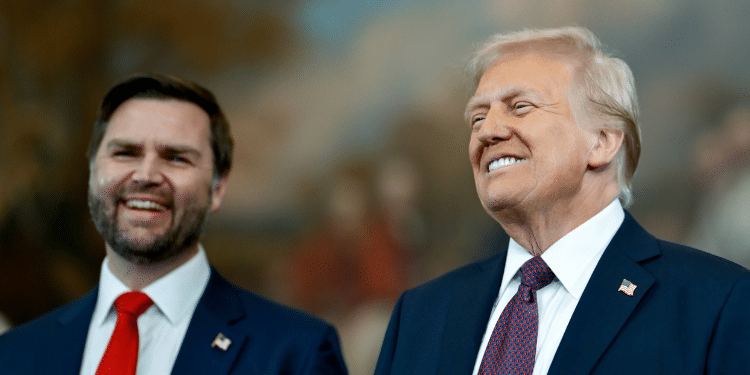
The U.S. government, led by President Donald Trump, has decided that Vice President JD Vance will not travel to Pakistan for the next round of United States–Iran talks, citing security concerns.
Trump said the decision was made solely for safety reasons and was not connected to policy disagreements or changes in the U.S. negotiating position.
The talks, hosted by Pakistan, are aimed at extending a fragile ceasefire between the U.S and Iran following weeks of military escalation in the Middle East.
Trump Omits JD Vance
Trump confirmed the decision in media interviews, saying Vance would not attend because of security risks associated with travel to Pakistan at this stage.
He stressed that the vice president remains fully involved in the diplomatic process and continues to play a role in decision‑making from Washington.
The U.S. president said the change was based on security assessments rather than political considerations.
Also Read: Pezeshkian Rejects US Nuclear Demands Amid Fading Hopes for Talks
Earlier planning for the talks had included Vance as the head of the U.S. delegation.
Senior administration officials, including the U.S. ambassador to the UN and the energy secretary, had publicly indicated that Vance was expected to travel to Islamabad.
Those statements reflected the situation at the time and followed Vance’s participation in previous negotiations held in Pakistan earlier this month.
Vance previously led the U.S. delegation during face‑to‑face talks with Iranian officials in Islamabad that lasted about 21 hours.
Those discussions ended without an agreement, with both sides remaining divided on key issues, including Iran’s nuclear program and freedom of shipping through the Strait of Hormuz.
After returning to the United States, Vance said progress had been made, but not enough to secure a deal.
Security Reviews Shape Delegation Makeup
According to U.S. officials, Secret Service assessments played a central role in the decision to keep Vance out of the upcoming talks.
As negotiations continued and regional tensions remained high, security planners reviewed the risks linked to the presence of the vice president in Pakistan.
The outcome of that review led to a recommendation to exclude Vance from the trip this time.
Meanwhile, Pakistan has significantly tightened security in Islamabad ahead of the talks.
Authorities have increased police and military deployments in government zones, restricted movement in key areas, and coordinated closely with U.S. security teams.
Advanced U.S. security and tactical units have already arrived to secure venues and review protection arrangements for visiting officials.
Despite these measures, U.S. officials concluded that the security environment posed heightened risks for a vice‑presidential visit.
Also Read: Islamabad Under Heavy Security as Pakistan Prepares to Host Fresh Iran‑US Talks
Trump said similar concerns had been raised earlier during planning discussions and were revisited as talks approached.
JD Vance on the Iran War
Vice President J.D. Vance has maintained a clear and consistent public position on the war in Iran, outlining limited U.S. objectives focused on security and diplomacy.
He has said the U.S is not seeking a broad or open‑ended war with Iran, nor a change in Iran’s political leadership.
According to Vance, U.S. military action was aimed at degrading Iran’s nuclear‑related and military capabilities, which Washington views as an immediate threat.
Vance has emphasized the importance of preventing Iran from developing a nuclear weapon and protecting freedom of navigation, particularly in the Strait of Hormuz, a key global shipping route.
He played a direct role in ceasefire efforts and led U.S. negotiators during talks with Iran in Pakistan earlier this month, which ended without an agreement.
After the talks, Vance said diplomacy remains possible if Iran provides firm commitments on its nuclear program.
He has supported a strategy combining diplomatic engagement with military and economic pressure and remains involved in Iran policy discussions from Washington.