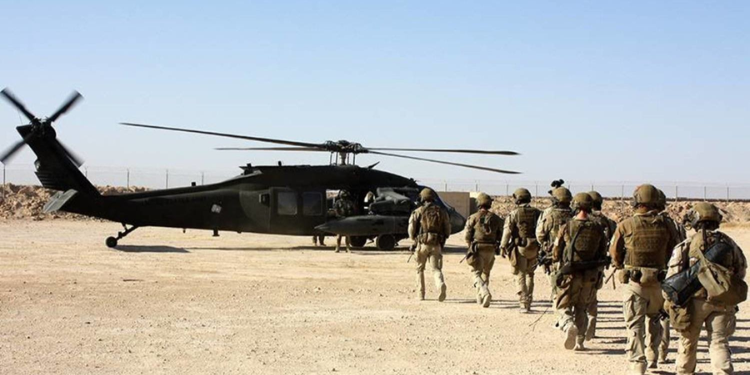
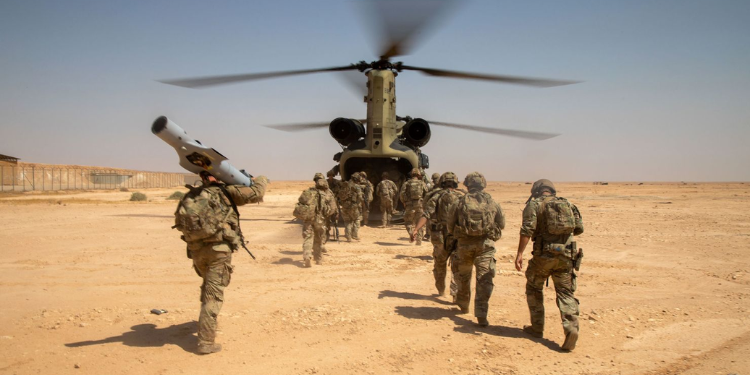
U.S and NATO forces have been granted a 24-hour ceasefire to withdraw from the Victoria Base Complex near Baghdad International Airport after a sharp escalation in attacks by Iraqi armed groups.
The temporary truce was agreed following mediation through the Iraqi government, according to statements by factions operating under the Islamic Resistance in Iraq (IRI).
Iraqi armed groups said the request for a ceasefire came directly from the United States and NATO through Iraqi officials.
Ceasefire Reached After Formal Request
In a statement by the military spokesperson for Awliyaa Al-Dam Brigades, Abu Mahdi Al-Jaafari, U.S. and NATO requested a 24-hour pause in attacks to allow forces to exit safely through Baghdad International Airport before moving toward Turkey.
Several resistance factions agreed to the truce under strict conditions, demanding that no Popular Mobilization Forces (PMF) positions be targeted during the ceasefire, specifically along the Samarra–Karbala belt.
All the groups warned that any violation would immediately end the truce, adding that NATO aircraft failed to land at the facility a day earlier due to heavy fire.
Victoria Base Complex, located next to the airport, has been under repeated drone and missile attacks in recent days.
The base has served as a logistical and support hub for US and coalition forces since the 2003 invasion.
Also Read: U.S. Military Breaks Silence on Iran F-15 Jet Shootdown Claim
Its evacuation would effectively end the foreign military presence in central Baghdad, leaving only limited deployments in Iraq’s Kurdistan Region.
NATO Jets Grounded in Crisis
According to resistance statements, several NATO transport aircraft failed to land at Victoria Base due to continued strikes around the perimeter.
This disruption is cited as a key reason for the urgent request for a ceasefire window.
NATO later confirmed that it had withdrawn all mission personnel from Iraq to Europe, citing deteriorating security conditions.
The alliance did not give operational details but acknowledged that its training and advisory mission could no longer function.
The Islamic Resistance in Iraq said it carried out at least 21 drone and missile attacks within 24 hours against what it described as U.S‑linked targets across Iraq adding that these attacks sharply reduced the ability of US forces to move and defend facilities.
The resistance claims that American troops had already been forced out of most federal Iraqi territory, with remaining elements concentrated at heavily defended sites before the ceasefire request.
Accelerated U.S Withdrawal Amid Unrest in Iraq
Iraqi officials have publicly framed the withdrawal as a sovereign decision tied to earlier agreements.
The truce occurs as part of a wider withdrawal plan agreed upon in 2024 between Iraq and the U.S.
Under that deal, the U.S-led coalition was expected to gradually conclude its mission and fully withdraw by 2026.
However, armed factions within in Iraq portray it as the result of sustained military pressure.
U.S military troops’ withdrawal pace has accelerated since late 2025 due to rising regional tensions, repeated attacks on coalition sites, and growing domestic pressure inside Iraq to end the foreign military presence.
The Victoria Base withdrawal follows earlier exits from Ain al‑Asad air base in Anbar Province and other installations.
Iraq’s government faces competing pressures, balancing demands by Iran‑aligned political blocs for a faster exit with concerns from other factions over security gaps and the future fight against Islamic State remnants.
The nation is a crucial corridor for monitoring Syria, Iran, and Islamic State activity, and the limited military personnel reduce surveillance and counterterrorism flexibility.