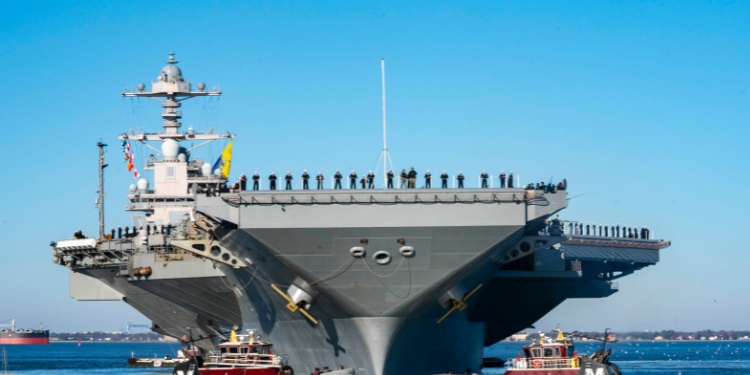
The United States (U.S) Navy aircraft carrier USS Gerald R. Ford has arrived in Israel amid the rising tensions between the US and Iran.
The world’s largest aircraft carrier departed from the Greek island of Crete on February 26, following a supply stop at a US naval base, and passed through the Strait of Gibraltar towards the Mediterranean.
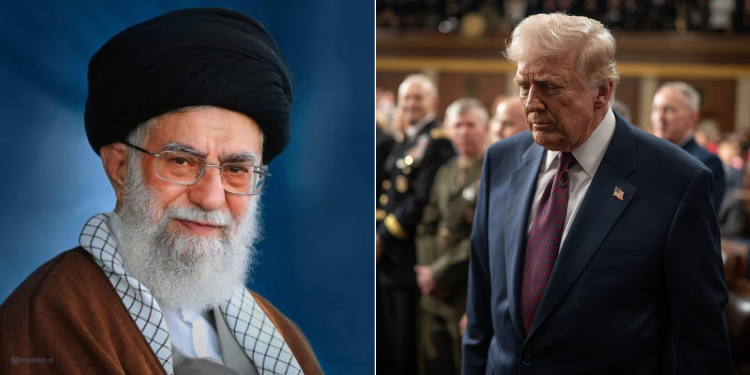
US President Donald Trump ordered the carrier strike group to sail to the Middle East as part of a massive military buildup as he weighs whether to take military action against Iran amid discussions over curbing its nuclear and ballistic missile programmes.
The USS Mahan, one of the destroyers in the warship’s strike group, also passed through the Strait.
The USS Gerald R. Ford and its supporting warships were to take about three weeks to return to the region to join the USS Abraham Lincoln, increasing the military firepower.
Trump Sends USS Gerald R. Ford Carrier to the Middle East
Earlier, Trump stated that he would send a second carrier strike group to the Middle East, arguing that he believed Tehran was willing to strike a nuclear deal.
Also Read: US Embassy Directs American Citizens to Leave Israel, Cites Safety Reasons
The departure of the USS Gerald R. Ford was part of an ongoing buildup of military hardware in the region, with the Abraham Lincoln carrier, several guided-missile destroyers, fighter jets, and surveillance aircraft sent in recent weeks.
Iran, however, indicated it was willing to curb its nuclear enrichment programme in return for sanctions relief, but has rejected other demands.
Israel also wants Iran to limit its ballistic missile programme and cut support for Hezbollah and other proxy groups.
US Hold Second Talks With Iran
The US and Iran have held a round of indirect negotiations in Oman, and further discussions were expected to follow.
During their second talk in Switzerland, the countries made progress in talks over Tehran’s nuclear program, but hours of negotiation ended with no sign of a breakthrough that could avert potential U.S. strikes amid a massive military buildup.
Also Read: Trump Steps in to Free University Student Arrested by ICE After Mamdani Push
The Omani minister’s upbeat assessment followed indirect talks between Iranian Foreign Minister Abbas Araqchi and U.S. envoys Steve Witkoff and Jared Kushner in Geneva, with two sessions: one in the morning and the second in the afternoon.
The two sides plan to resume negotiations soon after consultations in their countries’ capitals, with technical-level discussions scheduled for next week in Vienna, Omani.
Any substantial move toward an agreement between longtime foes Washington and Tehran could reduce the possibilities of Trump carrying out a threatened attack on Iran that many fear could escalate into a wider war.
Follow our WhatsApp Channel and X Account for real-time news updates.