New York City Mayor Zohran Mamdani has announced the intervention by U.S. President Donald Trump in the controversial arrest of a Columbia University student by U.S. Immigration and Customs Enforcement (ICE) agents.
Mamdani, in a statement on Thursday, February 26, announced that the student will be released after discussions with the president at the White House, where the two leaders spoke directly.
“Just got off the phone with President Trump. In our meeting earlier, I shared my concerns about Columbia student Elmina Aghayeva, who was detained by ICE this morning. He has just informed me that she will be released imminently.”
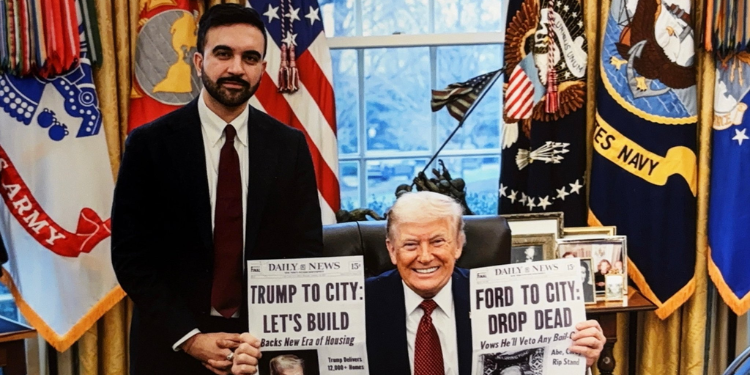
Earlier in the day, Mamdani said he held what he described as a productive meeting with Trump. The mayor in a post accompanied by a photograph showing him alongside the president inside the Oval Office, noted that he was looking forward to working with the administration on housing development projects in New York City.
After his statement on the Columbia University student arrest, the institution confirmed that she had been released from detention.
“The University is relieved and thrilled that our student, Ellie, has been released from detainment. We will share additional details this evening.”
The arrest of the student had quickly sparked political backlash and protests, after the university accused U.S. immigration agents of misleading staff to gain access to a student residence.
Columbia accuses Federal agents of misrepresentation
Columbia University said immigration enforcement officers entered one of its residential buildings early Thursday morning after allegedly misrepresenting the purpose of their visit.
According to a statement issued by Columbia’s acting president, Claire Shipman, federal agents from the Department of Homeland Security entered the building at approximately 6:30 a.m.
“Our understanding at this time is that the federal agents made misrepresentations to gain entry to the building to search for a ‘missing person’,” Shipman said, adding that the university was working to gather more information about the incident.
Shipman emphasized that law enforcement agencies must present judicial warrants or subpoenas to access restricted university areas, including housing facilities.
“All law enforcement agents must have a judicial warrant or judicial subpoena to access non-public areas of the University, including housing, classrooms, and areas requiring identification badge swipe access,” the acting president said.
She further noted that administrative warrants — which are internal immigration documents not approved by a judge — are not sufficient for such access. Rights groups have criticized the use of administrative warrants in immigration enforcement operations and have described the practice as unlawful.
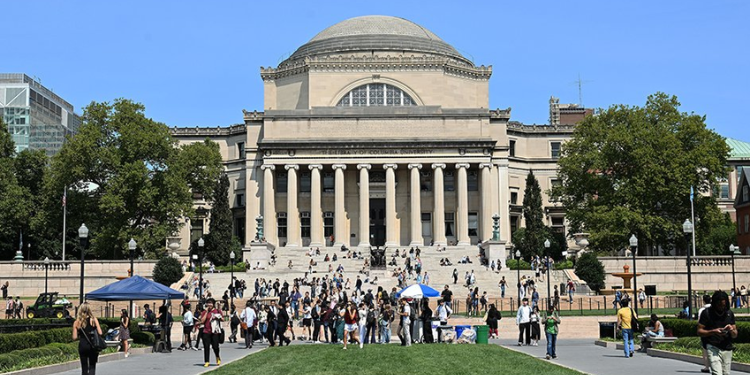
While Columbia University initially did not identify the detained student, the Columbia Spectator reported that the person targeted was a neuroscience researcher affiliated with the university. ICE later confirmed the student’s identity as Elmina Aghayeva.
According to a statement provided to NBC News, immigration authorities said Aghayeva’s student visa had been terminated in 2016 for failing to attend classes.
ICE also said that building personnel and the student’s roommate allowed officers into the apartment.
The agency did not immediately respond to allegations that officers misrepresented themselves to gain entry.
Shortly after her detention, Aghayeva reportedly sent urgent messages to fellow students describing the arrest.
In a student group chat cited by the Columbia Spectator, she wrote:
“DHS illegally arrested me. Please help.” “They are trying to take me away. Can someone help me?”
The arrest quickly triggered protests on the Columbia University campus, which had previously been the center of large pro-Palestine demonstrations in 2024.
Immigration crackdown
The arrest comes amid an intensified immigration enforcement campaign by the Trump administration, which has pursued a broad deportation drive since Trump returned to office in January 2025.
Immigration advocates say the administration has increasingly relied on aggressive tactics to meet detention targets.
Several Columbia University students have been targeted in immigration enforcement actions over the past year, including U.S. residents Mahmoud Khalil and Mohsen Mahdawi. The two were investigated following pro-Palestine activism.
Also Read: Blow to Trump as Court Blocks Third-Country Deportations of Migrants
The detention of Aghayeva marked the first time since Khalil’s arrest in March that immigration agents detained a Columbia-affiliated individual at a university-owned property, according to student reports.
Political Backlash
The arrest drew sharp criticism from Democratic lawmakers and state officials including New York Governor Kathy Hochul who accused immigration agents of deceiving university staff to access the student residence.
“Let’s be clear about what happened: ICE agents didn’t have the proper warrant, so they lied to gain access to a student’s private residence.”
Governor Hochul urged state lawmakers to pass legislation banning immigration enforcement agents from entering sensitive locations, such as schools and dormitories.
Representative Jerry Nadler also condemned the operation, accusing federal agents of targeting students and immigrant communities.
“ICE is terrorising our neighbours and ripping students from their homes,” Nadler said, adding that officials were working to secure the student’s release.
The incident comes months after tensions between Columbia University and the Trump administration over campus protests and federal funding.
In June, Columbia reached an agreement with the administration after the federal government threatened to withhold $1.3 billion in funding over the university’s handling of pro-Palestine protests and diversity initiatives.
The detention of Aghayeva comes as immigration enforcement remains a central element of Trump’s domestic agenda.
Follow our WhatsApp Channel and X Account for real-time news updates.