Cabinet Secretary (CS) for Roads and Transport, Davis Chirchir, has confirmed that the government is reviewing speed limit regulations following the expiry of the 2016 rules.
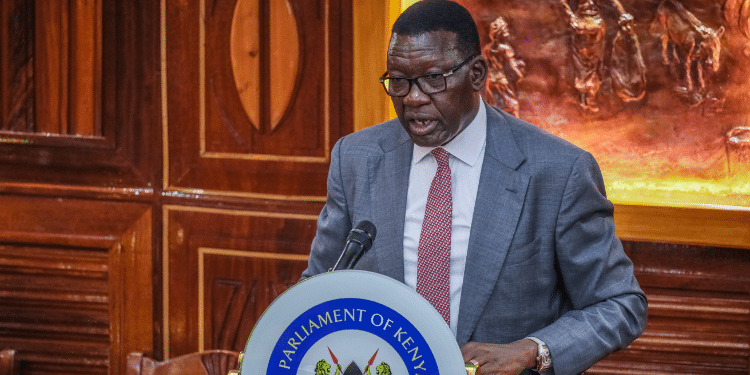
Speaking before the Senate on March 18, CS Davis Chirchir addressed the question of whether he knew that the NTSA 2016 speed limits had expired.
He said he has been advised by NTSA that significant work is underway, with the authority reviewing speed limits and collaborating with relevant stakeholders to ensure that updated regulations are in place.
“On whether NTSA 2016 speed limits have expired, I have been advised by NTSA that a lot of work is being done. They are reviewing speed limits and are working with relevant stakeholders to ensure that the speed limit regulations are in place,” he said.
The Traffic Minor Offences Rules 2016 covered offences such as driving without a licence, exceeding speed limits, obstructing traffic, and failing to carry proper vehicle documents.
Under the Act, the speed limit for private motor vehicles on dual-carriage highways is 110 km/h, while on single-carriage highways it is 100 km/h.
On any road, commercial vehicles, matatus, omnibuses, and other public service vehicles are restricted to a maximum speed of 80 km/h.
CS Davis Chirchir Explains Measures to Curb Road Accidents
Lawmakers also sought to know whether the Ministry has implemented strategies to curb road accidents, especially those involving long-distance travel.
In response, CS Davis Chirchir said the government has deployed a multi-agency team to address the rising number of fatal accidents involving long-distance passenger buses.
The multi-agency will conduct urgent audits and enforce stricter measures.
Also Read: Locations of Speed Cameras and Speed Limits Across Major Highways
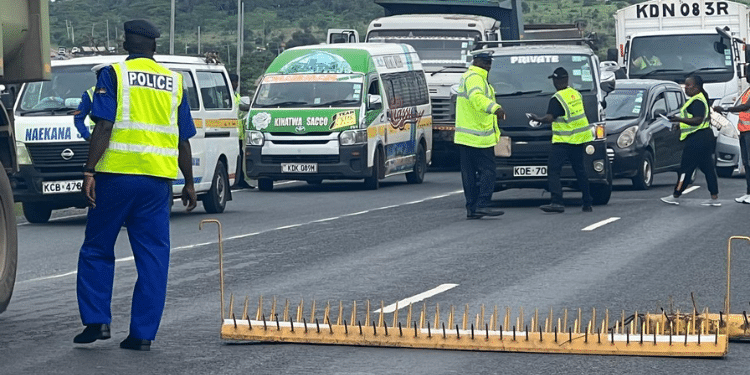
He said the measures include enhanced enforcement along high-risk routes, mandatory vehicle inspections, driver sensitization programmes, and tighter regulations on driving hours for public service vehicle operators.
The CS added that enforcement will ensure long-distance PSV drivers adhere to limits on continuous driving, observe mandatory rest periods, and comply with the requirement for two drivers on long-haul journeys.
“Enforcement of journey plans will ensure that long-distance PSV drivers do not exceed a maximum of four hours of continuous driving. Drivers, including night operators, will also be required to take a mandatory rest break of up to eight hours before the next shift. Mr. Speaker, I submit,” Chirchir said.
Also Read: Process of Paying Instant Fines After Being Flagged by NTSA
CS Cites Budget Delays in Road Safety Upgrades
The CS attributed delays in key road safety upgrades to budget constraints, even as it moves to prioritize funding in the current financial cycle.
However, he noted that interim safety measures have been put in place, including installation of crash barriers, improved road markings and retroreflective studs, while right-turning at the junction remains prohibited.
He added that multiple audits have been conducted along key corridors leading to Kisumu, including the Kisumu–Busia, Kisumu–Kakamega and Kisumu–Kericho highways, with further inspections targeting accident-prone areas and major roundabouts.
The CS’s remarks came days after the Courts stopped the instant fines for traffic offences that NTSA had rolled out.