Tensions in the Middle East remain high even after the United States and Iran reached a two-week ceasefire on Tuesday, April 7. The deal, aimed at pausing direct U.S. and Israel strikes against Iran, reopening the Strait of Hormuz, and ending earlier military actions, has quickly run into complications over its scope, notably about Lebanon.
The ceasefire experienced an unexpected turn on Wednesday, April 8, after Israel struck several targets in Lebanon. The strikes reportedly triggered Iran to close the Strait of Hormuz after accusing Israel of violating the deal. Israel also vowed to continue striking Hezbollah until the group stops targeting its civilians.
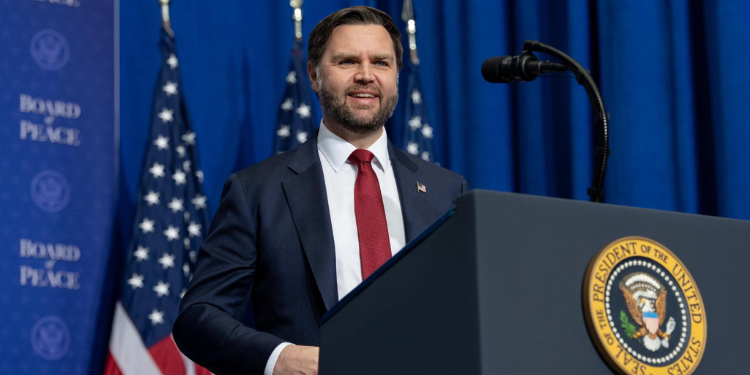
Vice President JD Vance has since addressed the uncertainty during remarks in Budapest. He described Iran’s expectation that the truce would cover Lebanon as stemming from “a legitimate misunderstanding.”
According to Vance, the United States never promised or indicated that the agreement would extend to operations involving Hezbollah or Israeli actions there.
“I think this comes from a legitimate misunderstanding. I think the Iranians thought the ceasefire included Lebanon, and it just didn’t. We never made that promise, we never indicated that was gonna be the case,” he said, implying the ceasefire focused narrowly on the U.S.-Iran dynamic and the reopening of key shipping lanes.
Also Read: Israel Issues Bold Statement as Iran Closes Strait of Hormuz After IDF Strikes in Lebanon
This clarification comes after important parties made statements that were not the same. Pakistani Prime Minister Shehbaz Sharif, whose government helped mediate the talks, said that the ceasefire was “effective immediately” and “everywhere, including Lebanon.”
Sharif’s statement made it sound like there was going to be a big de-escalation in the region involving the U.S., Iran, and their allies, like Israel and Lebanon.
Iran initially appeared to agree with this view, raising hopes that fighting might wind down across multiple fronts.
Israel, however, took a different position almost immediately, with Prime Minister Benjamin Netanyahu’s office issuing a statement supporting President Donald Trump’s decision to suspend U.S. strikes on Iran for two weeks, but strongly maintaining that the IDF’s operations against Hezbollah were still on.
Netanyahu praised the effort to curb Iran’s nuclear, missile, and terror threats to the region and beyond. But he was explicit: the truce “does not include Lebanon.”
Israeli officials stressed that any pause in operations against Iran was conditional on Tehran reopening the Strait of Hormuz and halting attacks on the U.S., Israel, and neighboring countries.
Lebanon’s National News Agency reported continued Israeli military activity in southern Lebanon, including strikes on the town of Srifa near Tyre and evacuation warnings for nearby buildings.
Al-Jazeera reports that the Lebanese army asked residents to avoid going back to southern villages due to the risks posed by ongoing Israeli advances and potential attacks.
Hezbollah’s entry into the U.S.-Israel war with Iran.
Hezbollah, which is closely tied to Iran, had been drawn into the wider conflict earlier when it launched attacks on Israel, pulling Lebanon deeper into the fray starting in early March.
Hezbollah transformed the conflict into a multifront crisis, especially for Israel, yet the conflict started as a U.S.-Israel operation against Iran.
With the two-week time frame set aside for diplomatic engagement, the big question is whether these emerging misinterpretations might obstruct efforts towards enduring peace in the Middle East.
Also Read: IDF Halts Iran Operation, Maintains Readiness Amid Ongoing Lebanon Missions
Vance portrayed the overall ceasefire as “fragile,” noting that while some Iranian officials had responded constructively, others seemed to be misrepresenting the terms.
He suggested the U.S. retain leverage, military, diplomatic, and economic, to enforce compliance if Iran “lies and cheats.”
At the same time, President Trump has described the Lebanon situation as something of a “separate skirmish,” indicating Washington’s willingness to let Israel handle that front independently while concentrating on the bigger picture with Tehran.
Israel is ready to neutralize any threat.
Netanyahu’s office has emphasized Israel’s pledge to neutralize threats from Iran and its proxies, even as it backs the temporary pause with Tehran.
For its part, the Lebanese government has welcomed the U.S.-Iran deal as a potential step toward calm.
If Vance’s comments are anything to go by, the U.S. view is that the core ceasefire stands, but expectations about Lebanon were overstated on the Iranian side. In other words, Israel’s strikes on Hezbollah cannot be termed as a ceasefire violation.