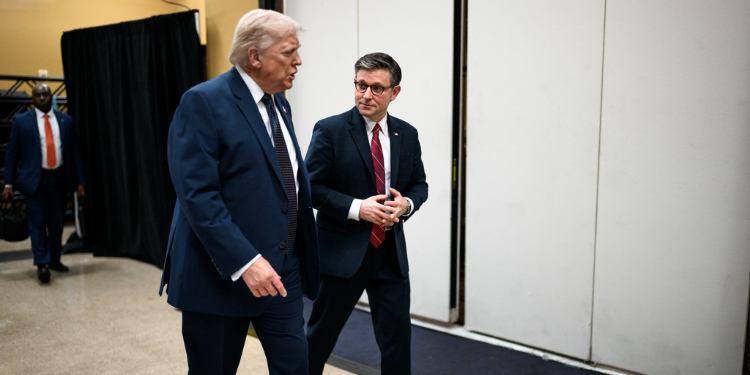
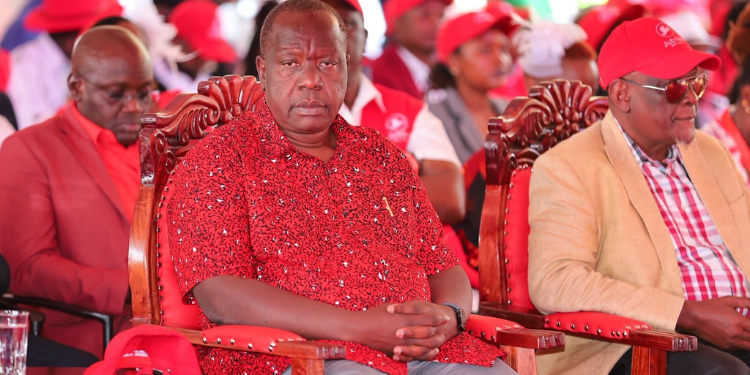
President Trump clashed with Sen. Bill Cassidy during a closed-door Senate Republican lunch on Wednesday, June 24, raising his voice at the Louisiana senator over a vote to limit presidential authority in the war with Iran.
GOP senators who attended the lunch event described Trump as “mad as a murder hornet.”
Trump Confronts Bill Cassidy Over Iran War Powers Vote
The exchange grew heated after Trump confronted Cassidy for joining three other Republicans in backing a war powers resolution. Cassidy tried to defuse the situation by repeatedly calling the president “my brother.”
The lunchtime meeting on Capitol Hill got tense as the president voiced his frustration with the Senate vote.
Cassidy, who lost his reelection bid this year after Trump endorsed his primary challenger, stood his ground during the back-and-forth.
Sen. Roger Marshall of Kansas called the scene “very pleasant” with clear sarcasm when speaking to reporters afterward.
Marshall likened it to “a hospital board meeting when a bunch of doctors are yelling at each other.” “But at the end of the day, we’ll figure out a way to get along,” Marshall added. “Voices were raised. … I think the vote yesterday on the War Powers Act, the president’s very disappointed.”
Also Read: Trump Praises Iran After Tehran Bends on U.S. Demands
Marshall said the administration believes the Republican votes hurt ongoing negotiations for a peace agreement. “Congressional actions disapproving of the Iran war were going to undermine the negotiators,” he explained.
Sen. John Kennedy, another Louisiana Republican, confirmed Trump’s anger. “The president was mad as a murder hornet about the War Powers vote,” Kennedy said, as first reported by the New York Post.
Sen. Jim Justice of West Virginia described the discussion as passionate but not very combative.
“I think both Bill and the president expressed their feelings and didn’t hold back, but at the same time, you know, it ended up respectful,” Justice said.
Trump’s special envoy, Steve Witkoff, joined the roughly two-hour gathering. Senators said they mostly listened while Trump spoke at length.
President Briefs Senator on Iran Situation
Sen. Mike Rounds of South Dakota called it “a good talking to.” He noted that Trump gave lawmakers more details on the situation in Iran than they had previously received.
“He gave us probably more of a briefing in terms of what they were doing over there than we’ve heard to date,” Rounds said.
Cassidy later downplayed the confrontation, joking to reporters that the talks went “swimmingly.”
The war powers dispute was not the only topic; the president also used the meeting to air grievances about several domestic priorities.
Also Read: Speaker Johnson Vows to Advance SAVE America Act Through Reconciliation 3.0
He reiterated his opposition to a bipartisan housing bill, saying he would not sign it without passage of the SAVE Act, the Republican voter ID and election-integrity measure.
Earlier in the day, the president had canceled a planned signing ceremony for the housing package. GOP leaders Sen. John Thune and Speaker Mike Johnson had expected a celebratory event, but Trump announced via Truth Social that he would block the bill until Congress advances proof-of-citizenship requirements for voter registration and tighter rules on mail-in ballots.
Trump also pushed senators to consider using a “talking filibuster” to break Democratic opposition on Capitol Hill.
What the Clash Means for Trump’s Iran Strategy and GOP Unity
The confrontation with Iran stood out as the most personal moment. Cassidy’s vote put him at odds with the White House at a time when Trump is pressing for flexibility in handling the conflict. Administration officials felt the resolution tied their hands during sensitive talks.
Many senators described the meeting as loud but said it did not cross a line. They pointed out that disagreements happen, but the party ultimately works together.
Trump’s forthright style set the mood from the start, with Senators saying he did most of the talking, updating them on Iran while pressing his points on the legislative agenda.