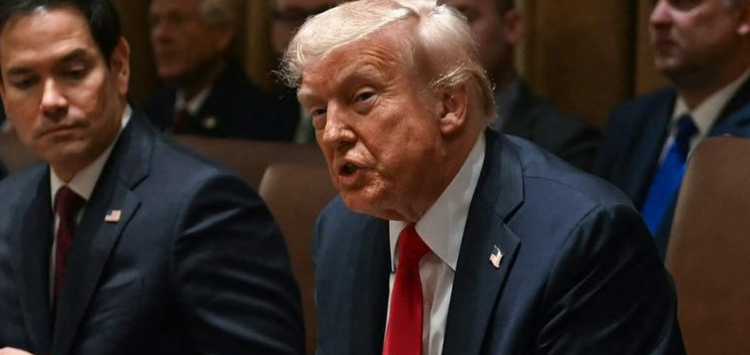
President Donald Trump canceled a planned signing ceremony for a major bipartisan housing bill on Wednesday, June 24, 2026, stating he will not sign it until the Senate passes the Safeguard American Voter Eligibility (SAVE) Act.
Trump announced the decision via Truth Social, calling the SAVE Act a “National Emergency.” The move halts momentum on the 21st Century ROAD to Housing Act, which passed Congress with veto-proof majorities.
Bipartisan Housing Measure in Limbo
The housing bill cleared the House by a vote of 358-32 and the Senate by 85-5. It combines provisions aimed at increasing housing supply, streamlining regulations, modernizing federal housing programs, and limiting purchases of single-family homes by large institutional investors.
The legislation also includes measures related to manufactured housing, rural housing, and mortgage financing.
Lawmakers from both parties have described the package as the most significant housing legislation in decades, coming at a time when the United States faces a housing shortage estimated at more than 4 million units.
Supporters argue the bill would reduce costs by cutting regulatory barriers and encouraging new housing development.
The bill now awaits Trump’s signature. Congress is scheduled to begin a two-week recess on Friday. Although lawmakers are not formally adjourning, the measure could face a pocket veto if it remains unsigned within 10 days under certain circumstances.
Also Read: Federal Judge Blocks Trump Policy Allowing Arrests at Immigration Courts Nationwide
Clash With Senate Republicans
The cancellation further exposes growing tensions between Trump and Senate Republicans. Senate Majority Leader John Thune (R-S.D.) declined to immediately comment on the president’s decision.
Trump has repeatedly urged Thune to eliminate the filibuster to advance the SAVE Act, a proposal Thune has so far resisted.
Republicans currently hold a 53-47 majority in the Senate, including independents who caucus with Democrats. However, the SAVE Act lacks the 60 votes required to overcome a filibuster without Democratic support.
Trump has also tied the SAVE Act to other legislative priorities, including reauthorization of Foreign Intelligence Surveillance Act (FISA) authorities. Some House Republicans had previously signaled opposition to the housing bill unless election-related measures were attached.
Core Provisions of the SAVE Act
The SAVE Act, which passed the House earlier this year, would amend the National Voter Registration Act by requiring documentary proof of U.S. citizenship for federal voter registration.
Acceptable documents would include a passport, birth certificate, or certain naturalization records. The legislation would also require photo identification in many federal elections and tighten rules governing mail-in ballots.
Supporters, including Trump and House Republicans, argue the bill is necessary to prevent non-citizen voting and strengthen election integrity. They point to polling that shows public support for proof-of-citizenship requirements.
Also Read: Trump’s Social Security Tax Cuts Face Scrutiny Over $168 Billion Revenue Loss
Opponents, including Democrats and voting rights organizations, counter that non-citizen voting is already illegal and exceedingly rare.
They argue the documentation requirements could make it harder for millions of eligible voters to register and participate in elections, particularly those who lack easy access to citizenship documents.
Reconciliation or Stalemate
House Speaker Mike Johnson (R-La.) said Wednesday that attaching the SAVE Act to a future budget reconciliation package may provide the best opportunity for passage because reconciliation legislation can bypass the Senate filibuster. Johnson said he discussed the strategy with Trump and emphasized that it would require unified Republican support.