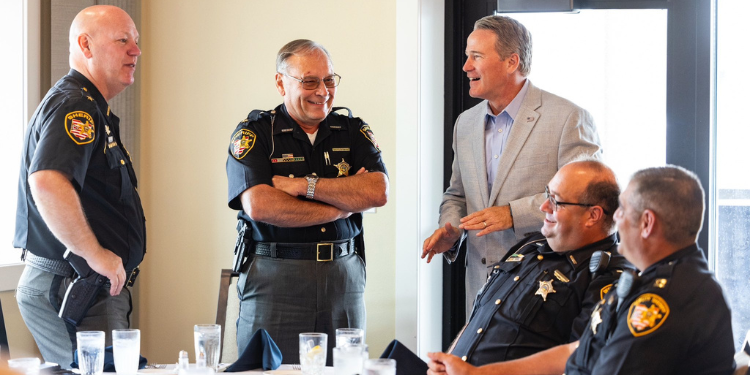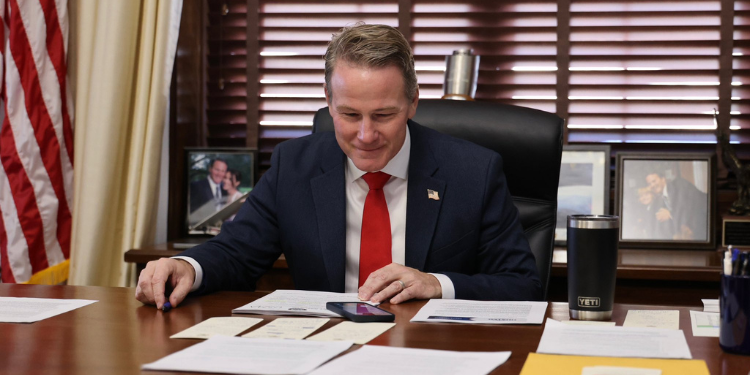
Senator Jon Husted has warned that the United States is facing growing pressure on its labor force because birth rates have fallen to record lows while immigration levels have tightened.
The Ohio senator made the remarks during an event at the American Enterprise Institute on Tuesday, April 28.
He noted that fewer babies, an aging population, and reduced immigration mean the country will have fewer workers available to support economic growth.
Husted’s observation
“We have an aging population, low birth rates, and less immigration,” Husted stated. When those forces combine, existing workers “are going to have to do more work.”
Federal data released in April 2026 confirms the problem with the birth rate. The U.S. general fertility rate dropped to 53.1 births per 1,000 women ages 15 to 44 in 2025.
That marked another record low, with about 3.6 million babies born last year, down slightly from the year before and nearly 20 percent below levels from two decades ago. The total fertility rate now sits well below the replacement level of 2.1 children per woman.
Moreover, the U.S. population is aging rapidly as more baby boomers reach retirement age. The number of Americans over 65 is still climbing.
Labor force participation for people 55 and older stands around 37 percent, much lower than the 84 percent rate for prime working-age adults between 25 and 54.
Also Read: Green Card Applications Restarted for Immigrants After Court Ruled Against Trump
The labor force participation rate for the entire civilian population was held at 61.9 percent in March 2026.
Economists note that aging alone lowers this number, even when prime-age workers remain active in the labor market.
Husted argued that immigration has helped fill gaps in the workforce in recent decades. Many immigrants arrive in their 20s and 30s and enter jobs across construction, health care, transportation, and service industries.
With tighter immigration controls, inflows have slowed, indicating that fewer young workers are entering the workforce to replace retirees.
The result, according to the senator, is a shrinking pool of available labor. Businesses already report difficulty finding workers in certain sectors.
Husted’s remarks come as Republicans in Congress push for firmer border security and limits on both legal and illegal immigration.
The senator did not call for unlimited immigration but stressed the need to face basic demographic math. He suggested the country cannot ignore the combined effects of low fertility and reduced immigration.
What Americans are saying on social media
However, some Americans on social media say raising wages, improving working conditions, or expanding child care and family leave to encourage more Americans to have children or stay in the workforce longer.
Others argue that higher productivity through technology and automation can offset the need for fewer workers.
Still, government projections show the U.S.-born working-age population will shrink over the next decade.
The Congressional Budget Office has noted that immigration accounts for nearly all of the expected population growth in the coming years. Without it, overall labor force growth could slow to around 0.5 percent per year or less.
Husted, who previously served as Ohio’s lieutenant governor and worked on workforce development issues in the state, brings a practical angle to the discussion.
Also Read: Why Trump Wants to Rename ICE to NICE as Fight Against Illegal Immigration Intensifies
Like many Midwestern states, Ohio has had manufacturing and service industries struggling to fill open positions even before the latest birth data were released.
Policymakers on both sides of the aisle have discussed increasing birth rates through tax credits, housing support, and other family policies.
Yet fertility rates have continued to fall despite past efforts. Changing cultural patterns, higher education costs, and delayed marriage all play a role.
The full speech at the AEI event focused on wider economic mobility and workforce issues. Husted has also backed bills aimed at skills training and removing barriers that keep people from advancing in their careers.