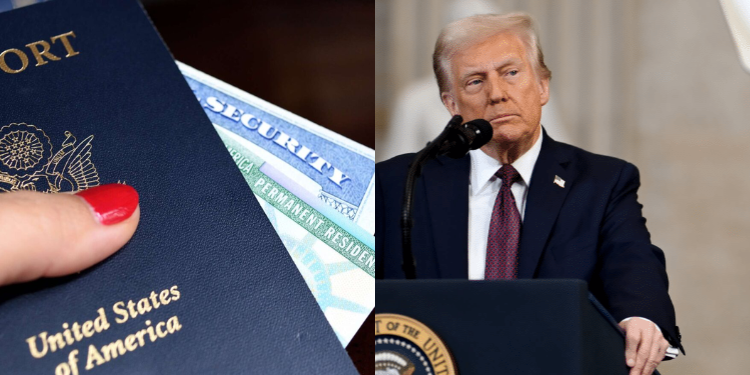
A federal judge has ordered the Trump administration to resume processing certain green card applications that had been placed on hold under a travel ban policy, marking a legal victory for dozens of immigrants already living in the United States.
In a major ruling, Maryland District Judge George L. Russell III found that the decision by U.S. Citizenship and Immigration Services (USCIS) to indefinitely pause applications was unlawful.
The agency, which operates under the Department of Homeland Security (DHS), had halted green card processing for individuals from countries affected by President Donald Trump’s expanded travel ban.
“USCIS does not have discretion to decide not to adjudicate at all,” Russell wrote in his 39-page opinion, directing the agency to resume work on the cases.
Court Rejects Indefinite Freeze
The case was brought by 83 immigrants who are already residing legally in the United States but had their green card applications frozen because of their country of origin. The administration had argued that the travel ban justified the pause, citing national security concerns tied to immigration from 39 designated countries.
However, the court rejected that argument, stating that while immigration authorities have discretion in how they handle applications, they cannot refuse to process them indefinitely.
Russell emphasized that many of the affected individuals had lived in the U.S. for years, maintained legal status, and contributed to the economy. The ruling clarified that delays due to administrative backlog are permissible, but a blanket, open-ended suspension is not.
Also Read: Illegal Immigrants Face New Crackdown as Trump Targets Asylum System Loopholes
The judge stopped short of imposing a strict deadline for decisions, noting that applications vary in complexity and stage. Still, the order requires USCIS to actively process the cases rather than leave them in limbo.
Immigrants Describe Years of Uncertainty
Advocacy groups tracking the issue say the pause has affected a large number of applicants beyond the initial plaintiffs. A campaign known as Project Press Unpause estimates that more than 2 million applications were left unprocessed, despite over $1 billion in fees collected by USCIS.
A spokesperson for the group, identified as Lavida, told Newsweek that many applicants have been waiting for years despite meeting all legal requirements.
“Most of us have been in the country for over five years with no issues with the law,” the spokesperson said. “We are legal immigrants, taxpayers, and contributors to the economy, yet we’ve been placed under an indefinite hold because of where we were born.”
The group also noted that many affected individuals work in critical sectors such as science and medicine, contributing to research and public health efforts in the United States.
The Department of Homeland Security has not publicly responded to the ruling. USCIS has also not issued a formal statement on how quickly it will comply or whether it plans to appeal.
Policy Rooted in Travel Ban Expansion
The green card freeze stemmed from presidential proclamations expanding travel restrictions under the Immigration and Nationality Act. These measures were intended to limit entry into the United States from countries identified as posing security risks.
While the State Department oversees visa issuance abroad, USCIS interpreted the policy as applying to individuals already inside the country, leading to internal guidance that halted application processing based solely on nationality.
The court found that the interpretation was overly broad, especially for individuals who had already been vetted and admitted into the U.S. through legal channels.
What Happens Next
The ruling applies directly to the plaintiffs in the case, meaning USCIS must resume processing their applications. However, it does not automatically lift the freeze for all affected immigrants nationwide.
The decision could influence similar cases currently moving through the courts. Judge Russell noted that a “categorical and indefinite pause” is likely unlawful, a conclusion that may guide future rulings.
Also Read: Trump Admin Uses $200,000 in Taxpayer Money to Warn Illegal Immigrants of Severe Consequences
For now, USCIS retains the authority to continue the pause for non-plaintiffs, though pressure is expected to mount as additional lawsuits are filed.
Why This Matters
The decision shows ongoing tensions between immigration enforcement policies and legal protections for individuals already living in the United States. While the Trump administration has defended the travel ban as a security measure, the court’s ruling limits how far such policies can extend.
For thousands of immigrants, the outcome affects more than paperwork. Green cards provide stability, work authorization, and a path to citizenship. Delays can disrupt careers, families, and long-term plans.
The ruling also raises broader questions about administrative accountability. By affirming that federal agencies cannot indefinitely delay decisions, the court has reinforced the principle that immigration processes must remain fair and timely, even amid shifting political priorities.