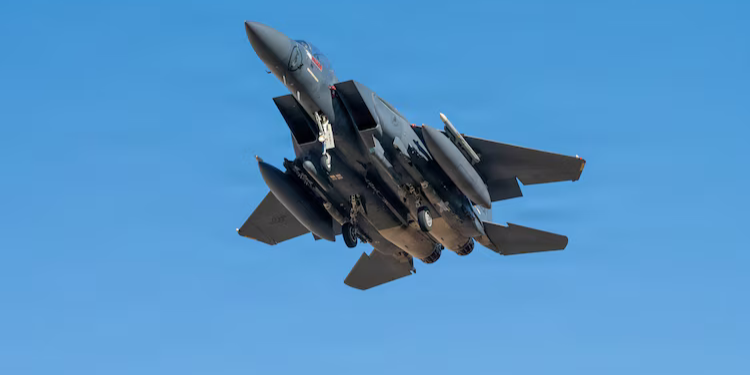
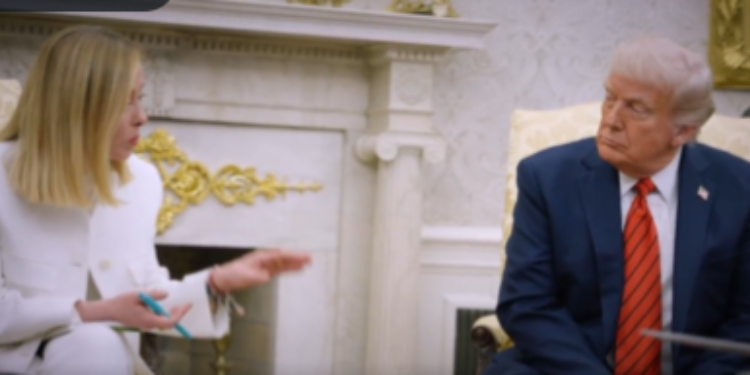
President Donald Trump has blasted Italy after the European nation refused to allow U.S. military planes carrying weapons for the Iran war to land at its airbase.
The rebuke comes after Trump sharply criticized Italian Prime Minister Giorgia Meloni in the most direct confrontation between the two leaders since the U.S. president’s return to the White House in January 2025.
On March 31, Italy’s defense ministry confirmed that U.S. bombers had been denied access to Sigonella, one of seven U.S. Navy bases in Italy.
Officials said the U.S. request for authorization came too late, leaving insufficient time for parliamentary approval as required under international treaties.
Those agreements, dating back to the late 1950s, permit U.S. bases in Italy to be used for training and logistics but prohibit their use as transit hubs for aircraft carrying weapons unless in emergencies.
Italy’s government insisted the decision did not signal a rupture in relations. Meloni’s office said ties with Washington remained “solid and based on full and loyal cooperation.”
Trump rebukes Italy over Sicily Airbase denial in Iran war
However, Trump’s response was swift and uncompromising, with the president lashing out at Italy over the denial of U.S. military planes carrying weapons for the Iran war access to a Sicilian airbase.
“Italy wasn’t there for us, we won’t be there for them!” Trump declared in a Truth Social post on April 16.
Earlier, Trump had accused Meloni of lacking courage and refusing to share the security burden despite benefiting from U.S. protection and Middle Eastern energy supplies.
“Italy relies on oil from the region but is unwilling to share the security burden,” Trump said, adding that Meloni’s refusal to support U.S. military action showed weakness.
Also Read: U.S. Senator Vows to Block Aid to Israel Hours After Italy Suspends Defense Pact
Trump also raised concerns about Iran’s nuclear program, warning that Meloni did not take the threat seriously enough, noting that “Iran could destroy Italy quickly if it obtained nuclear weapons.”
He further criticized Italy’s domestic situation, linking immigration trends to what he described as the country’s decline. The remarks represent a sharp change in tone from earlier months, when Trump described Meloni as a close ally and key interlocutor in Europe.
His public rebuke adds to the strain between Washington and Rome as European leaders distance themselves from U.S. war policy.
Spain has already closed its airspace to U.S. aircraft involved in the conflict in Iran, while the United Kingdom has restricted its bases to defensive missions only. France has criticized the escalation, warning of wider instability in the Middle East.
Meloni, who has sought to balance Italy’s NATO commitments with domestic political pressures, has so far resisted calls to deepen Italy’s involvement in the war in Iran.
Her government has emphasized adherence to treaty obligations and parliamentary oversight, portraying the denial of Sigonella as a procedural matter rather than a political rebuff.
NATO under strain
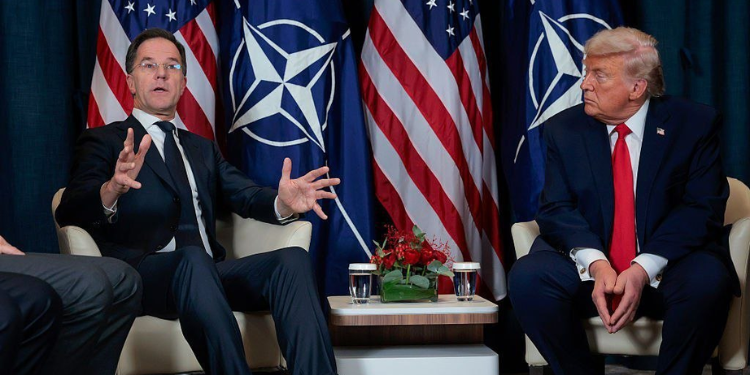
Trump’s confrontation with Italy also comes amid broader tensions with NATO allies. He has repeatedly questioned the alliance’s reliability, calling NATO a “paper tiger” and suggesting adversaries such as Russia recognize its weakness without U.S. leadership.
Also Read: Ukraine Set for Fresh $60bn NATO Boost Alongside €90bn EU Loan
At an Easter lunch earlier this month, Trump singled out France and the United Kingdom as “very bad allies,” expressing doubt about their reliability in a crisis.
His frustrations have been echoed by some top U.S. leaders, including Senator Marco Rubio and Secretary of War Pete Hegseth, who suggested the alliance may need to be reassessed after the war.
European leaders, however, have responded cautiously. British Prime Minister Keir Starmer defended his decision not to join the Iran conflict, saying, “This is not our war, and we’re not going to get dragged into it.”
He reaffirmed the U.K.’s commitment to NATO, calling it “the single most effective military alliance the world has ever seen.”
Poland’s Defense Minister Władysław Kosiniak‑Kamysz earlier urged calm, while Finland’s President Alexander Stubb described his March conversation with Trump as “constructive,” emphasizing the importance of dialogue on NATO, Ukraine, and Iran.