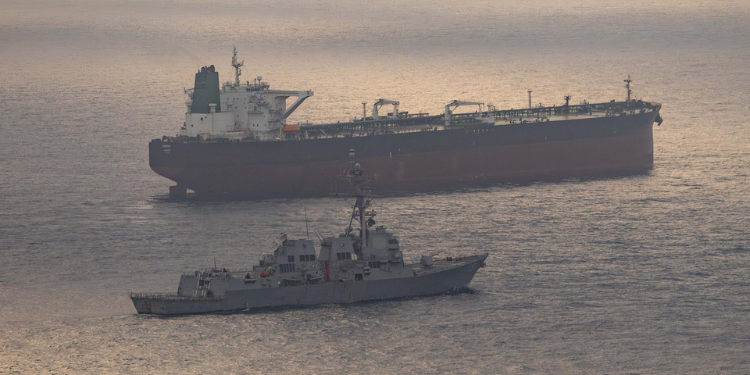
A U.S. Navy helicopter launched from the guided-missile destroyer USS Pinckney intercepted a sanctioned Iranian tanker in the Arabian Sea on Saturday, April 25, and ordered it to turn back to Iran under escort.
U.S. Central Command said the tanker, M/V Sevan, was one of 19 vessels hit with fresh U.S. Treasury sanctions the day before.
The ship had been moving Iranian oil and gas products, including propane and butane, worth billions of dollars to foreign buyers.
The interception happened early Saturday after a helicopter from the USS Pinckney approached the tanker and ordered it to turn around.
MV Sevan then changed course and began heading back toward Iran while under U.S. Navy watch.
“U.S. forces continue to enforce U.S. sanctions and fully implement the blockade against ships entering or departing Iranian ports,” CENTCOM said in a statement posted on X.
Also Read: Iran Strikes Hit U.S. Bases Harder Than Admitted, Costs Could Reach Billions
The command added that 37 vessels have now been redirected since the blockade took effect. The effort intends to cut off revenue from Iranian energy sales that help fund the Tehran government and its proxies.
The M/V Sevan is part of what officials call Iran’s “shadow fleet.” These older tankers often fly false flags, disable tracking signals, or move cargo at sea to evade detection and sanctions. U.S. officials say the fleet has kept Iranian oil flowing to buyers in Asia despite years of restrictions.
U.S. Navy blockade
Saturday’s action took place in waters where the U.S. Navy has expanded patrols. The USS Pinckney, an Arleigh Burke-class destroyer, carries sophisticated radar and helicopter teams trained for such boardings and escorts.
According to the update, no shots were fired, and no injuries were reported. The tanker crew followed commands without resistance, according to the CENTCOM update.
The move occurs as the United States keeps pressure on Iran amid fragile cease-fire talks and wider tensions in the region.
President Trump’s administration has made clear it will not let Iranian oil sales finance attacks on U.S. allies or American forces.
Shipping trackers and security sources say similar operations have happened in recent days. U.S. forces have stopped or turned around several Iranian-linked tankers in the Indian Ocean and Arabian Sea. Some carried hundreds of thousands of barrels of crude.
Iran has called the blockade illegal and accused the U.S. of economic warfare. Tehran has seized and even fired at foreign vessels in the Strait of Hormuz in the past as a response to pressure.
U.S. officials argue the actions are in response to Iran’s endless closure of the Strait of Hormuz and lawful enforcement of existing sanctions.
Also Read: Trump Pulls Plug on Kushner, Witkoff Pakistan Trip as Iran Refuses Direct Talks
They point to Treasury designations naming specific ships and companies tied to the Iranian Revolutionary Guard Corps and oil-smuggling networks.
The shadow fleet has grown in recent years as Iran looked for ways around restrictions. Many of the tankers are aging and lack proper insurance or safety standards, raising risks of spills or accidents in busy sea lanes.
By forcing ships to return to Iranian ports, the Navy aims to keep the oil and gas products from reaching international markets.
Each redirected tanker means lost income for Tehran at a time when its economy already faces heavy sanctions.
Military analysts say the steady pace of interceptions, now at 37 vessels, shows the blockade has a real effect. Paper sanctions alone failed for years, they note. Physical naval presence has changed the game.
The USS Pinckney and its crew operate as part of the U.S. Fifth Fleet, based in Bahrain. The fleet patrols key chokepoints that carry nearly 20 percent of the world’s oil trade.
No comment came immediately from Iranian officials on the Sevan incident. Past responses have included threats to disrupt shipping in the Strait of Hormuz, though Iran’s navy has suffered losses in earlier clashes.
Stalled talks
The Trump administration was to resume talks with Tehran in Pakistan today, but the meeting did not take place.
Officials from Iran arrived in Pakistan on Friday but had already affirmed they would engage in talks if the U.S. blockade remained in effect.
Trump then ordered his envoy not to depart for Pakistan. He also said he will not ease pressure until Iran curbs its nuclear program, missile work, and support for militant groups.