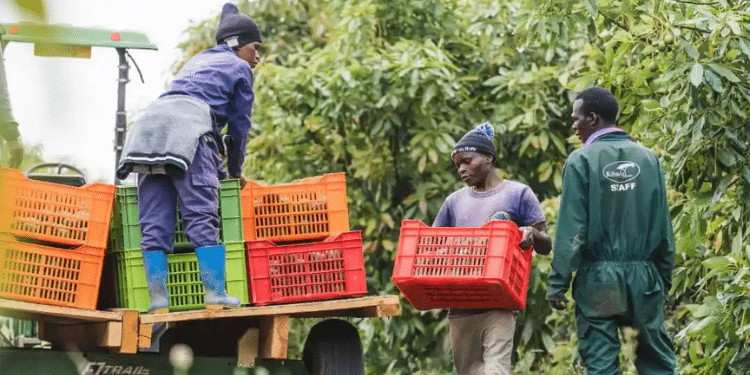
Fuliza, M-Pesa, and KCB M-Pesa have emerged among the top digital credit lenders for farmers in 2026.
An Agricultural Sector Survey 2026 found that approximately 30% of farmers in May acquired digital loans to finance their operations.
“Digital lenders continued to be a major source of credit to farmers, with the proportion reporting to have accessed digital loans at 30 percent in May 2026 compared to 35 percent in March 2026,” the Agricultural Sector Survey 2026 said.
Despite the high access to digital loans, the survey indicated that in March the percentage was higher than in May.
However, digital credit usage among farmers remained consistently above 25% in January, March, and May, according to the report.
Digital Loans Comparison with Traditional Loan Models
Farmers in the survey were noted to shift to digital loan apps from the traditional Savings and Credit Cooperative Societies (SACCOs).
Borrowing from SACCOs stood at 23 percent among the sampled farmers in May, up from the 15 percent recorded in March.
Further, digital credit lenders superseded borrowing from Micro-Finance Institutions (MFIs), which accounted for 7 percent of farmers’ loans, and the government-backed Hustler Fund, which accounted for 5 percent.
Additionally, the number of farmers borrowing from produce buyers increased from 24 percent in March to 45 percent in May.
Also Read: Tea Farmers Face Earnings Squeeze as Fuel Costs and Export Disruptions Rise
M-Pesa, Fuliza, and KCB M-Pesa
According to the survey report, 86 percent of the loans from digital lenders, including M-Pesa, Fuliza, and KCB M-Pesa, were acquired for agricultural inputs, including fertilizer and seeds.
Furthermore, 77 percent of the farmers used the loans they obtained to cover labor wages during the production process.
For the expansion of farming operations, 57 percent was allocated to diversifying agricultural activities, while 52 percent was allocated to hiring and leasing farm equipment.
Also Read: Win for Cheruiyot and Tea Farmers as ODPP Hints at Taking Action on Stalled KTDA KSh 978M Projects
Farm Produce Prices
With 77 percent of farmers relying on rain for agricultural processes and only 23 percent using irrigation, cabbage prices decreased by over 20 percent in April.
However, in May, the price of cabbages increased by 29 percent, driven by seasonal factors and economic funding, according to the survey report.
A similar seasonal price spike was also observed in produce such as tomatoes, carrots, and green maize.
Despite global instability, 65 percent of the farmers during the survey expect inflation to rise and thus anticipate changes in the agricultural sector.
Following the economic instability due to global disruptions, 72 percent of farmers reported benefiting from government-subsidized fertilizers.
Additionally, during the survey, 30 percent of farmers reported using digital loans from Fuliza and other digital lenders to facilitate farming operations; 86 percent stated that government-subsidized fertilizers were a critical intervention for farmers.
Follow our WhatsApp Channel and X Account for real-time news updates.