The High Court has declared the Government’s planned sale of a 15 per cent stake in Safaricom PLC unlawful, null and void, bringing the controversial divestiture to a halt and ordering the transaction to be reversed.
The court delivered the judgment on September 15, 2026, with a three-judge bench faulting the Government over the partial divestiture of its Safaricom shares. The judges ruled that the process lacked adequate public participation and involved the concealment of key documents and material information.
The court said the lack of transparency made it difficult for the Cabinet to objectively evaluate the proposed divestiture under the Constitution.
The three judges further found that the government failed to disclose the identity of the proposed buyer and made misrepresentations while withholding material information relating to the sale.
“We accordingly find that the Government of Kenya engaged in unexplained obscurity on the identity of the proposed buyer, made misrepresentation and concealed material information in respect of the partial divestiture throughout the process,” the court ruled.
The bench said withholding or concealing material information during a public participation process undermines constitutional requirements on transparency and accountability.
“Concealing or withholding material information and documents during public participation violates constitutional transparency requirements and invalidates the resulting policies or projects because it renders public engagement a cosmetic formality rather than a meaningful exercise,” the court added.
The judges held that public participation must be meaningful and informed, requiring the government to provide citizens with enough information to engage effectively in decisions involving public assets.
Also Read: Court Rules on Standard Group Claims Linking Charlene Ruto to KSh2.8B Police Uniform Tender
What the Court Had Earlier Ordered
The judgment follows an earlier ruling in the same case delivered on May 18, where a three-judge bench comprising Justices Francis Gikonyo, Roselyne Aburili and Thande Ouya issued a conservatory order stopping the Government and other respondents from proceeding with the intended sale of its 15 per cent Safaricom stake.
The May order was temporary and was intended to preserve the Government’s shares until the main petition was heard and determined.
The judges made it clear they were not then deciding whether the proposed transaction was constitutional or lawful. They said those questions would only be conclusively determined after the full hearing of the petition.
The September 15 judgment is therefore the substantive determination that followed that earlier interim order.
How Much Was the Government Planning to Sell?
The Government had planned to dispose of 15 percent of its 35 percent holding in Safaricom, with the proposed transaction involving Vodacom Group.
The proposed sale was based on a price of about KSh34 per share, with the 15 per cent stake valued at approximately KSh204.3 billion.
If completed, the transaction would have reduced the Government’s direct shareholding in Safaricom from 35 per cent to 20 per cent.
Vodacom, which already had a significant stake in Safaricom through its Kenyan interests, was expected to increase its holding following the transaction.
Also Read: Court Rules on Standard Group Claims Linking Charlene Ruto to KSh2.8B Police Uniform Tender
Why the Safaricom Sale Was Challenged
The petitioners challenged the process the Government used to dispose of the shares.
Among the issues raised were the valuation of the shares, transparency of the transaction, public participation, the legal framework used for the divestiture, and the protection of Safaricom as a strategic national asset.
The petitioners also questioned whether the Government had adequately demonstrated that the proposed price represented value for the public.
They argued that Safaricom’s importance went beyond its commercial value because the company operates critical telecommunications, mobile money and digital infrastructure used by millions of Kenyans.
The government defended the proposed sale, saying it followed the law and received parliamentary approval. The respondents said the National Assembly approved the plan in March 2026.
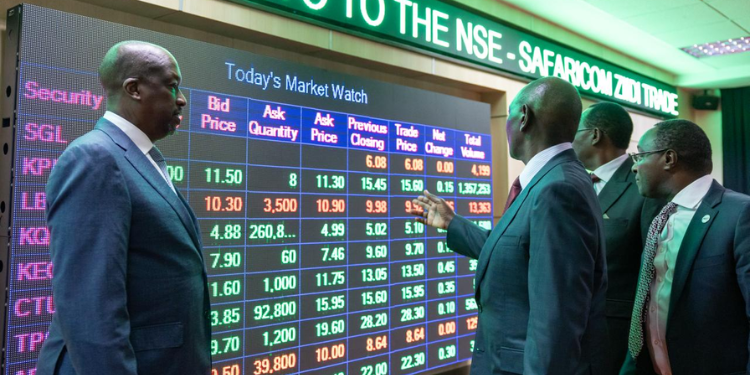
Safaricom also dismissed claims that its shares were undervalued, saying its stock is traded on the Nairobi Securities Exchange and that the proposed sale price should be based on market value.
Follow our WhatsApp Channel and X Account for real-time news updates.