President William Ruto has provided fresh details on the government’s plan to merge the Higher Education Loans Board (HELB) and the Kenya Universities and Colleges Central Placement Service (KUCCPS) into one entity.
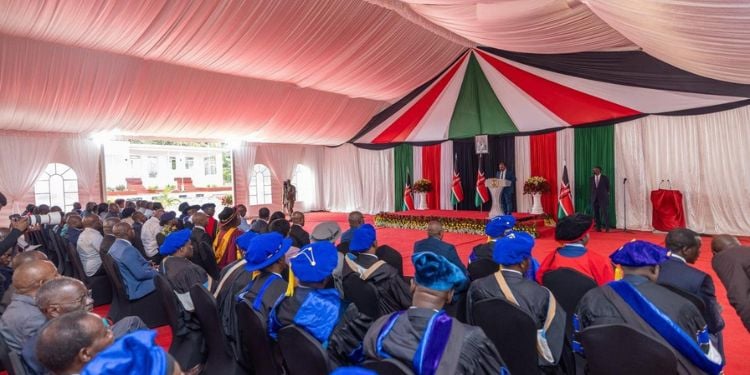
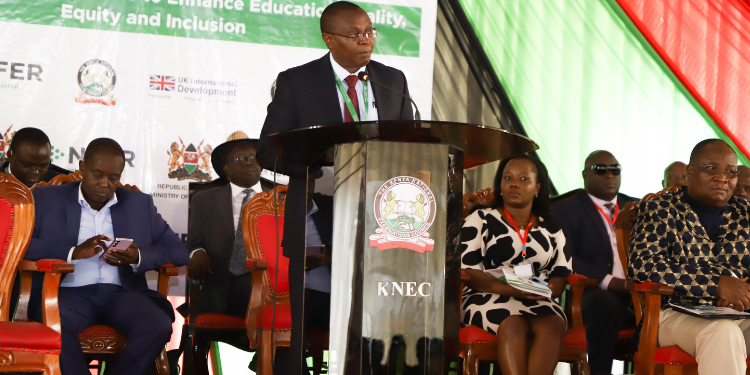
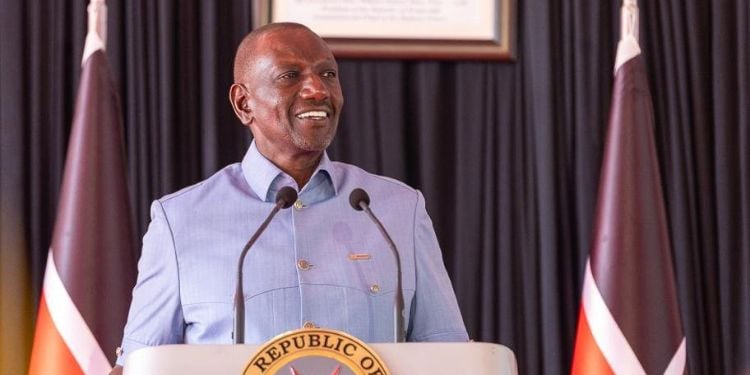
Speaking on higher education during the issuance of a Letter of Interim Authority to Kamagambo University at Kisumu State Lodge on September 15, 2026, Ruto said universities must focus on building the skills, research and institutions needed to drive national development.
Why Merge HELB and KUCCPS
Ruto has explained the government’s plan to consolidate student placement and higher education funding under one legislative framework.
Speaking on the proposed reforms, the president said the government has engaged stakeholders, while the proposals are currently undergoing public participation in Parliament.
He said the consolidation aims to coordinate student placement with funding so learners have a clear financing plan throughout their education.
Ruto said students have previously been placed in universities and other institutions without sufficient consideration of how they would fund their education.
“The reason why we are finally consolidating placement, funding, and higher education together in one piece of legislation is so that we can avoid what has happened in the past. Those placing students in our universities were not aware of where the money to teach them was going to come from,” he explained.
He said the proposed system will cover students entering universities, technical institutions and Kenya Medical Training Colleges.
Ruto also said a new funding mechanism is needed as more students pursue tertiary education, training and research.
He said the proposed funding model would ensure a child’s access to education is not determined by their parents’ ability to pay.
Instead, he said funding would be anchored on students’ intellectual capacity to learn.
The President said a university should go beyond awarding certificates by developing talent, strengthening institutions, producing research and generating ideas that can lead to new industries.
“That is what a university is for; not merely the certificates it awards, but the capacity it builds. It develops talent, strengthens institutions, produces research that solves problems and generates ideas from which new industries arise,” he said.
Ruto Stresses Quality and Relevance
Ruto said Kenya’s higher education sector has expanded significantly, noting that the number of institutions authorized to operate as universities has risen to 90 after the addition of Kamagambo University.
He said access to higher education has also grown, with the Commission for University Education recording 630,000 students pursuing degree programs in 2024 and nearly 124,000 graduates.
However, he cautioned that expansion alone is not enough, arguing that access must be accompanied by quality and relevance.
“Our universities will ultimately be judged by the competence of their graduates, the value of their research and the solutions they deliver to society,” he said.
Ruto said universities should prepare young people not only to compete for employment but also to create enterprises and transform sectors of the economy.
He identified agriculture, healthcare, affordable housing, the digital economy and renewable energy as areas requiring skilled professionals, innovation and new technologies.
Also Read: KUCCPS Reopens Applications for Select KMTC Courses Ahead of September Intake
The President also called for stronger cooperation between universities, industry and government.
He said employers should help shape relevant curricula, universities should expose students to real workplaces and problems, while the government should create conditions that allow research to develop into technology, enterprises and employment.
Kamagambo Gets Authority to Begin Operations
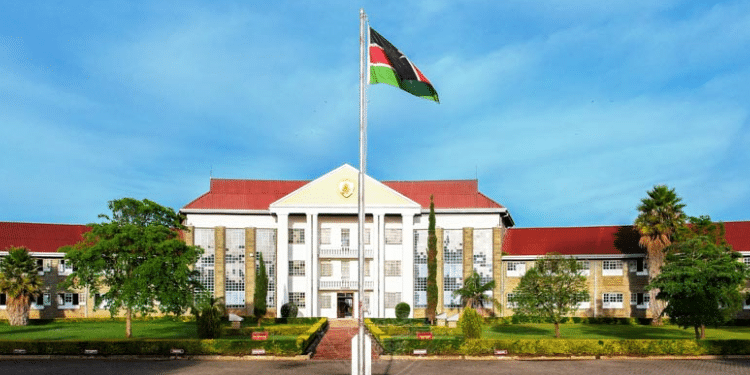
Ruto’s remarks came as Kamagambo University received a Letter of Interim Authority, allowing it to commence university operations within an approved mandate.
Under the authority, the institution may establish its governing organs and develop its academic resources.
With approval from the Commission for University Education, Kamagambo may admit students to three initial programs: the Bachelor of Education in Arts, the Bachelor of Arts in Theology with Entrepreneurship, and the Bachelor of Business Administration with Entrepreneurship.
Ruto stressed that the interim status obliges the institution to meet the standards required to obtain a full charter.
Also Read: HELB 2026 Allocations Out: How to Check Updated University Fee Statements
He said Kamagambo must demonstrate academic integrity, sound governance, prudent stewardship and quality as it develops.
The institution has roots in the Adventist mission established in 1912 and grew from a teacher-training institution whose graduates served in schools across Kenya.
Ruto said Kamagambo is the third private university established by the Adventist Church, after the University of Eastern Africa, Baraton, and the Adventist University of Africa in Ongata Rongai.
He urged the institution to use its history as a foundation while focusing on its future performance.
Ruto also said entrepreneurship should be reflected in Kamagambo’s programs and practice, noting that students should have opportunities to engage with businesses, test ideas, build prototypes, and understand how enterprises operate.
He called on the university to stay connected to the region it serves and direct its teaching and research toward the needs of Migori, the Lake Region, and the wider country.
The President said the institution should prioritize depth and excellence before expanding its academic mandate.
Follow our WhatsApp Channel and X Account for real-time news updates.