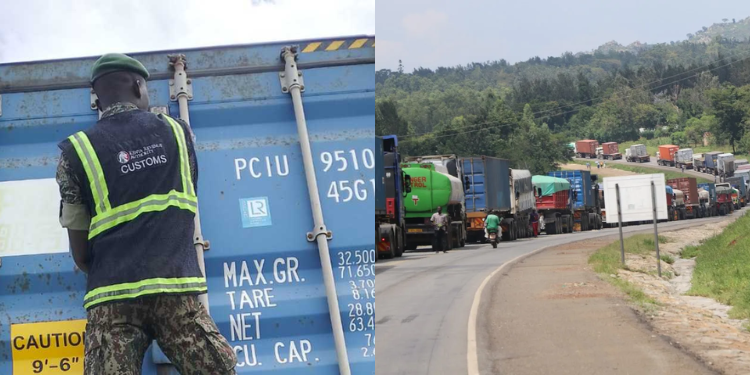

The Kenya Revenue Authority (KRA) has revealed the goods that drove September 2026 customs revenue growth, with collections up 5.8% from the same month in 2025.
In a statement on October 12, 2026, KRA said its Customs and Border Control department collected KSh90.053 billion during the month, exceeding the KSh89.088 billion target by KSh965 million.
“Kenya Revenue Authority (KRA) Customs and Border Control Department collected KES 90.053 billion in September 2026, exceeding its Treasury target by KES 965 million and sustaining its strong revenue performance in the 2026/2027 Financial Year,” the statement read in part.
The collections represented 101.1% of the monthly target, reflecting an increase from the KSh85.146 billion collected in September 2025.
KRA attributed the growth in bulk cargo imports mainly to fertilisers, iron and steel, palm oil and its fractions, rice, among other commodities.
Fertiliser, Rice and Steel Imports Drive Cargo Growth
The authority said the overall value of imports grew by 25.6% in September, while bulk cargo rose by 49.2%.
“The growth in non-oil revenue was driven by a 25.6 per cent increase in the overall value of imports, with bulk cargo growing by 49.2 per cent.”
Motor vehicle imports also rose by 8.1% during the period. Containerised cargo, measured in twenty-foot equivalent units (TEUs), increased by 8.2%.
This rise in commodity imports coincided with higher customs revenue collections, with KRA exceeding its September target by nearly KSh1 billion.
The authority’s figures showed that customs revenue increased by KSh4.907 billion compared with the amount collected in September 2025.
Also Read: KRA Issues New Notice Affecting Customs Agents From 2027
Non-Oil Revenue Exceeds Monthly Target
Non-oil revenue also performed above its target, reaching KSh57.199 billion against a projected KSh55.422 billion.
This was KSh1.778 billion above the target for the period.
KRA said it was strengthening technology-driven customs processes and enforcement measures to address illicit trade and revenue leakage.
The authority said these efforts are part of measures to improve customs operations and support revenue collection.
KRA Strengthens Cargo Monitoring Processes
Among the reforms highlighted by KRA is the Advance Cargo Declaration (ACD), alongside the collection of additional cargo information to improve risk management and the processing of customs declarations.
“The Authority is also implementing reforms to make Customs operations more efficient, transparent and predictable for traders. These include the introduction of Advance Cargo Declaration (ACD) and the increased use of data to strengthen cargo risk management, improve the processing of customs declarations and enhance the identification of high-risk consignments.”
Also Read: KRA Puts Clearing Agents on Notice Over Accurate Cargo Declarations
These measures are intended to provide customs officials with more information to assess cargo and support the processing of declarations.
KRA’s September performance came as the authority continued implementing measures to strengthen customs processes and enforcement against illicit trade.
The latest figures showed customs revenue exceeded the monthly target, supported by growth in imports, particularly bulk cargo, which rose 49.2%.
KRA reported that the overall value of imports rose by 25.6%, with fertilisers, iron and steel, palm oil and its fractions, and rice among the commodities driving the bulk cargo growth.
Follow our WhatsApp Channel and X Account for real-time news updates.