Kenya’s forest sector is emerging as a powerful engine of economic transformation, with large-scale tree nursery investments unlocking jobs, enterprise opportunities, and community livelihoods while driving the country’s green growth agenda.
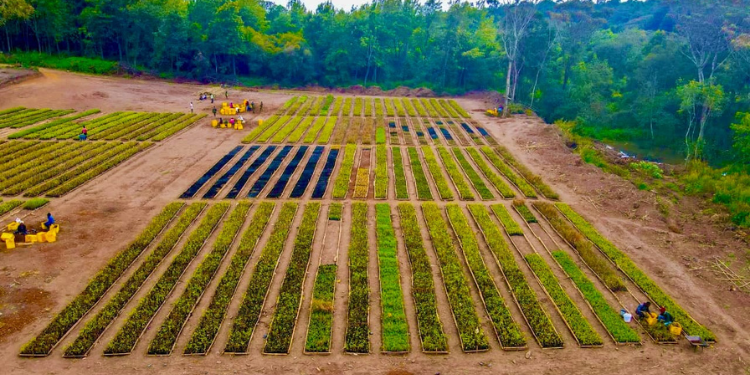
At the centre of this shift is the Kenya Forest Service (KFS), which is scaling up operations at the Kinale Forest ecosystem Tree Nursery into a major production hub under the government’s ambitious 15 Billion tree-growing programme.
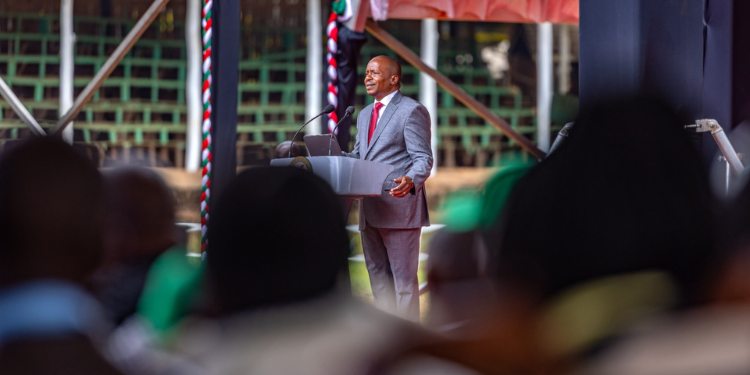
Speaking during a visit to the site, Chief Conservator of Forests (CCF) Alex Lemarkoko said the nursery is expanding its annual output from 200,000 seedlings to a projected 8 million, in line with the country’s target of producing at least 1.5 billion seedlings annually.
“This is a deviation from the norm. The expanded nursery is part of a broader agenda to support the national target, where we aim to produce at least one billion seedlings from KFS nurseries every year, with an additional half a billion from other partners. The Community Forest Association, provides the current labor, which has helped us attain the two million target so far,” Lemarkoko said.
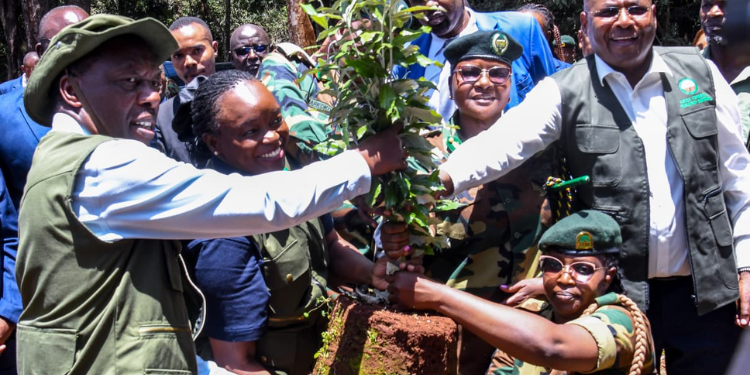
He reiterated that the National Youth Service (NYS) will be onboarded to accelerate the achievement of the 8 million seedling target.
Also Read: Mass Tree Planting: How to Do it Right
“The involvement of the National Youth Service in this process of tree growing is a well-thought-out idea by our leadership. I want to thank the head of state, our president. Additional labour from the National Youth Service comes to enhance our productivity in our nurseries.”
The nursery, located within Kinale Forest Station in Kiambu County, draws labour from surrounding communities, including neighbouring counties of Nakuru and Nyandarua, where the forest extends. With its mix of plantation and indigenous trees, the expansive forest is evolving into a multi-county, nature-based enterprise.

The Forest Station Manager, Robert Ngotho, noted that the initiative is increasingly attracting young people, many of whom are turning to tree nursery work as a source of income and economic empowerment.
“Youth are very interested because this is improving their livelihoods. They are now registering with the Social Health Authority and the Kenya Revenue Authority, which shows a growing awareness of financial and health responsibility,” he said.
The project is anchored on the Forest Conservation and Management Act, which emphasises community involvement in forest management. Through CFAs, local residents provide much of the labour needed to meet production targets, while additional support is expected from the National Youth Service.
Also Read: Kenya Could Save the World as Rare Trees Turn Air Into Stone
Currently, the nursery has about 600,000 seedlings ready for planting during the March–April rains.
Despite the progress, KFS officials cite limited funding as a major hurdle. Challenges include inadequate labour, insufficient watering systems, and shortages of soil and potting materials. Indicating that the tree-growing campaign is a ‘whole-of-society’ effort, involving government agencies, communities, and digital monitoring tools such as the Jaza Miti App to track progress and ensure accountability.
“Tree growing is not just a KFS agenda. It is a national climate change response strategy that requires participation from all stakeholders,” He emphasised
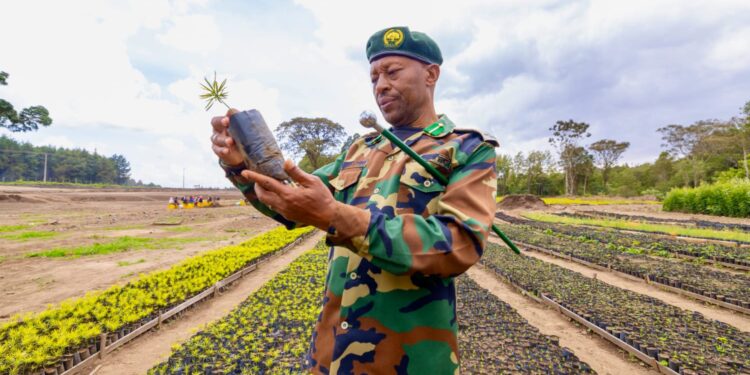
For local residents, the initiative is already making a difference. Helen Wambui, a casual worker at the nursery, said the job has helped her support her family.
“This job is good because you earn daily. It helps me pay school fees, feed my children, and pay rent,” she said. “Planting trees is also important for our environment. Without trees, we would face many challenges, including strong winds and lack of water.”
Wambui expressed hope that the programme will continue through 2032, as envisioned by President William Ruto, for sustained employment opportunities.