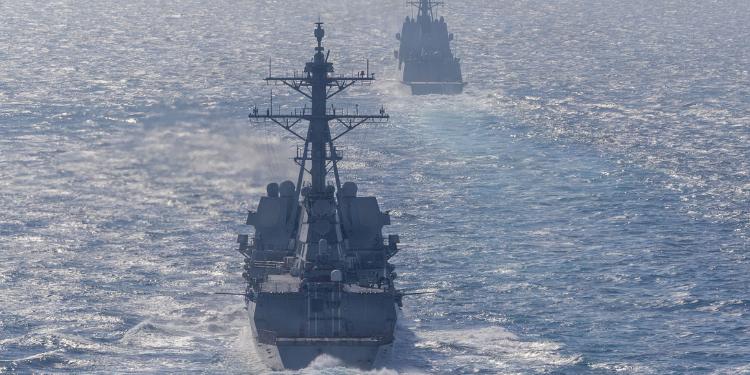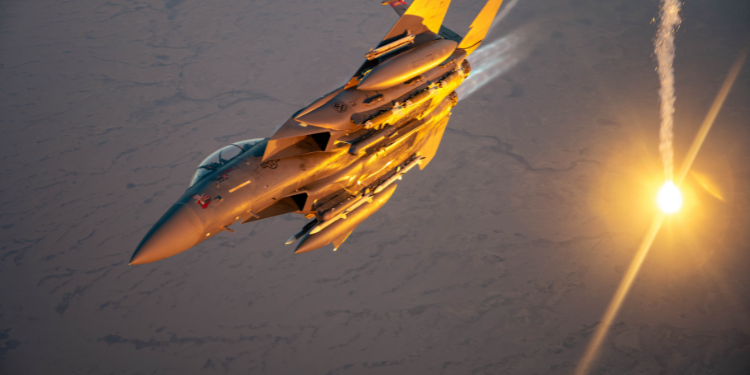
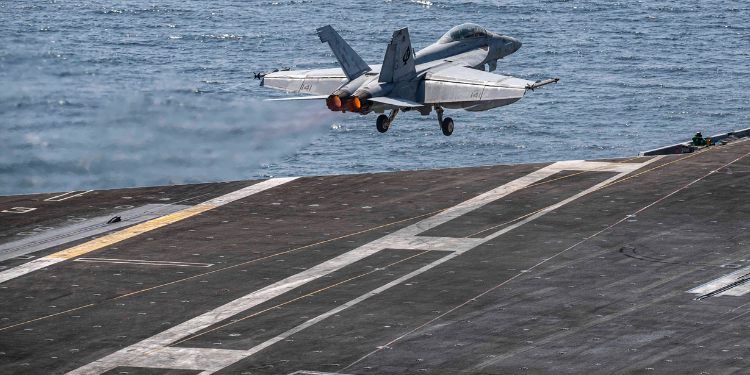
U.S. President Donald Trump has revealed the number of Iranian ships struck in the Strait of Hormuz. Trump announced that American forces have struck 28 vessels suspected of laying naval mines in the key global shipping route for oil and energy supplies, as the conflict between the United States and Iran escalates.
The president, speaking to reporters during a Wednesday, March 11, tour of a pharmaceutical company in Cincinnati, said the operations were carried out after concerns emerged that mines could be deployed in the strategic waterway.
“We have drones all over the place, now we are knocking out the drone plans, as you know. We are going fast. They started talking about mines, so we hit 28 mine ships as of this moment,” Trump said.
“Using the same weapon, the exact same weapon that we used against the drug dealers.”
The president’s remarks come after he said on Tuesday that U.S. forces had destroyed 10 vessels believed to be involved in mine-laying activity in the Strait of Hormuz.
Escalation in the Strait of Hormuz
The Strait sits at the entrance to the Persian Gulf and is widely considered one of the world’s most important energy transit corridors.
Oil tankers carrying crude from countries such as Saudi Arabia, Iraq, and the United Arab Emirates pass through the narrow waterway to reach global markets.
U.S. officials had, in a Tuesday report by CBS News, said that Iran may have been preparing to use naval mines in the key Strait of Hormuz off the Iranian coast.
The American officials said Iran is using smaller crafts that can carry two to three mines each to lay them into the strait. On Tuesday, CNN also reported that Iran has begun laying mines in the Strait.
Following the reports, President Trump warned Tehran to remove any mines that may have been placed in the strait, saying military consequences could follow if shipping was threatened.
“If Iran has put out any mines in the Hormuz Strait, and we have no reports of them doing so, we want them removed, IMMEDIATELY!”
He also threatened, “If for any reason mines were placed, and they are not removed forthwith, the Military consequences to Iran will be at a level never seen before,” and added, “If, on the other hand, they remove what may have been placed, it will be a giant step in the right direction!”
Later, President Trump announced the destruction of 10 vessels suspected of laying naval mines by American forces in the Strait of Hormuz.
He said the vessels were “inactive mine laying boats and/or ships” that had been targeted by U.S. forces in the past few hours.
“I am pleased to report that within the last few hours, we have hit, and completely destroyed, 10 inactive mine-laying boats and/or ships, with more to follow!”
Also Read: Daring United States Military Bombs Area Inside Strait of Hormuz
In a press conference at the Pentagon on Tuesday morning, Chairman of the Joint Chiefs of Staff U.S. Central Command (CENTCOM), Gen. Dan Caine, said the command, which oversees military operations against Iran, continues to hunt and strike “mine-laying vessels” and “mine storage facilities.”
On Monday, Trump had warned Iran of the consequences of stopping the flow of commercial ship traffic in the Strait, posting on Truth Social, “If Iran does anything that stops the flow of oil within the Strait of Hormuz, they will be hit by the United States of America twenty times harder than they have been hit thus far.”
U.S. military issues civilian warning
Meanwhile, CENTCOM on Wednesday issued a public warning urging civilians to avoid Iranian naval facilities.
“Iranian dockworkers, administrative personnel, and commercial vessel crews should avoid Iranian naval vessels and military equipment,” the command said in a statement.
The U.S. military added that it could not guarantee civilian safety near ports where Iranian forces are operating.
According to the statement, Iranian naval vessels and equipment have been positioned inside civilian port facilities used by commercial shipping.
“Civilian ports used for military purposes lose protected status and become legitimate military targets under international law.”
Officials also said American forces would continue taking precautions to reduce harm to civilians during operations.
The conflict between the United States and Iran has already begun affecting maritime traffic in and around the Strait of Hormuz.
According to the United Kingdom Maritime Trade Operations center, a Thailand-flagged bulk carrier called the Mayuree Naree was struck by a projectile roughly 10 nautical miles off the coast of Oman.
Authorities said a fire broke out on the vessel but was later extinguished. A small crew reportedly remained onboard.
Also Read: Iran Asserts Control of Strait of Hormuz with Intensified Oil Shipments to China
Iran’s Islamic Revolutionary Guard Corps later claimed responsibility for the attack, saying the ship had ignored warnings while attempting to transit the strait.
Iranian media also reported that another vessel, the Liberia-flagged container ship Express Rome, had been hit, though independent confirmation of that claim has not been reported.
Shipping disruptions and rising energy prices
The fighting has disrupted shipping through the waterway, with traffic slowing dramatically as shipping companies reassess safety risks.
The disruption has already begun pushing gasoline prices higher in several markets.
Governments and shipping companies are now working on contingency plans to reopen the corridor once fighting subsides.
Last week the U.S. International Development Finance Corporation (DFC) announced a maritime reinsurance facility designed to insure shipping losses of up to $20 billion during the conflict.
Trump had also indicated that U.S. naval escorts could be deployed if necessary to protect energy shipments moving through the region.