Tuesday, June 2, 2026
  • News
    • Latest News
    • Breaking News
    • Fact Check
    • Investigations
    • Explainers
  • Politics
    • Global Politics
    • Elections
    • Government & Policy
    • Diplomacy
    • Conflicts & Security
    • Political Analysis
  • Business
    • Global Economy
    • Markets
    • Technology
    • Startups
    • Energy
    • Finance
  • World News
    • Americas
    • Asia
    • Asia Pacific
    • Africa
    • Europe
    • Middle East
  • Africa
    • Central Africa
    • East Africa
    • West Africa
    • Southern Africa
  • Health
    • Global Health
    • Public Health
    • Health Policy
    • Medical Research
    • Diseases & Conditions
    • Mental Health
    • Nutrition
    • Climate & Health
    • Health Explainers
  • Sports
    • Athletics
    • Basketball
    • Boxing
    • Cricket
    • Football
    • Formula 1
    • Golf
    • Rugby
  • Weather
    • Climate Business
    • Climate Change
    • Climate Solutions
    • Living Green
  • Culture
    • Arts
    • Film & TV
    • Food
    • Music
    • Lifestyle
    • Travel
  • Opinion
    • Editorials
    • Letters
  • Behind The Brand
REGISTER
LOGIN
No Result
View All Result
The Kenya Times
  • News
    • Latest News
    • Breaking News
    • Fact Check
    • Investigations
    • Explainers
  • Politics
    • Global Politics
    • Elections
    • Government & Policy
    • Diplomacy
    • Conflicts & Security
    • Political Analysis
  • Business
    • Global Economy
    • Markets
    • Technology
    • Startups
    • Energy
    • Finance
  • World News
    • Americas
    • Asia
    • Asia Pacific
    • Africa
    • Europe
    • Middle East
  • Africa
    • Central Africa
    • East Africa
    • West Africa
    • Southern Africa
  • Health
    • Global Health
    • Public Health
    • Health Policy
    • Medical Research
    • Diseases & Conditions
    • Mental Health
    • Nutrition
    • Climate & Health
    • Health Explainers
  • Sports
    • Athletics
    • Basketball
    • Boxing
    • Cricket
    • Football
    • Formula 1
    • Golf
    • Rugby
  • Weather
    • Climate Business
    • Climate Change
    • Climate Solutions
    • Living Green
  • Culture
    • Arts
    • Film & TV
    • Food
    • Music
    • Lifestyle
    • Travel
  • Opinion
    • Editorials
    • Letters
  • Behind The Brand
  • News
    • Latest News
    • Breaking News
    • Fact Check
    • Investigations
    • Explainers
  • Politics
    • Global Politics
    • Elections
    • Government & Policy
    • Diplomacy
    • Conflicts & Security
    • Political Analysis
  • Business
    • Global Economy
    • Markets
    • Technology
    • Startups
    • Energy
    • Finance
  • World News
    • Americas
    • Asia
    • Asia Pacific
    • Africa
    • Europe
    • Middle East
  • Africa
    • Central Africa
    • East Africa
    • West Africa
    • Southern Africa
  • Health
    • Global Health
    • Public Health
    • Health Policy
    • Medical Research
    • Diseases & Conditions
    • Mental Health
    • Nutrition
    • Climate & Health
    • Health Explainers
  • Sports
    • Athletics
    • Basketball
    • Boxing
    • Cricket
    • Football
    • Formula 1
    • Golf
    • Rugby
  • Weather
    • Climate Business
    • Climate Change
    • Climate Solutions
    • Living Green
  • Culture
    • Arts
    • Film & TV
    • Food
    • Music
    • Lifestyle
    • Travel
  • Opinion
    • Editorials
    • Letters
  • Behind The Brand
No Result
View All Result
The Kenya Times ~ Trending, Breaking News and Videos
No Result
View All Result
ADVERTISEMENT

Is The Shamba System Ideal For Kenya?

September 27, 2022
Reading Time: 6 mins read
Shamba System
FacebookTwitterLinkedInRedditWhatsApp
Advertisement

Deputy President Rigathi Gachagua on September 24, 2022, proposed to have the country revert to Shamba System.

Gachagua’s proposal sparked debate across the country on whether the system is ideal for Kenya or whether Kenya is ready for the re-introduction of the Shamba System.

The deputy president while speaking in Baringo on that same day hinted that the government plans to allow peasant farmers to farm in forests to boost food production in the country – Shamba System.

“There was Shamba System where locals could plant maize until the trees grew. This government is yours; we have made an order for Wananchi to be given an opportunity to cultivate in the forest to have more food,” Gachagua noted.

However, Kenyans have had mixed reactions on the DPs proposal with critics saying it is the most abused programme in the forestry sector.

Kenyan Lawyer Ahmednasir Abdullahi equated the Shamba System to land grabbing while the outspoken lawyer Miguna Miguna termed it “a very bad idea”.

ADVERTISEMENT

What Is the Shamba System

Shamba is a Swahili word meaning farm.

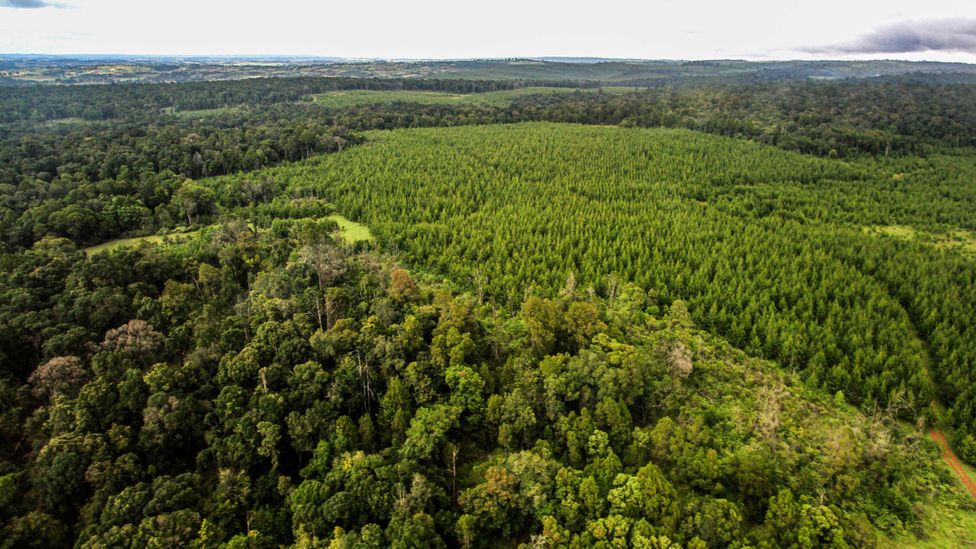
Shamba System was introduced in Kenya by the colonial administration in 1910 to provide raw materials for the timber industry and reduce pressure on natural forests. In other words, it was meant to promote sustained and optimum production of food crops and at the same time assist forest conservation.

It involved allocation of Shambas to farmers in degraded forests to plant and tend to tree seedlings as they cultivate their crops.

Moreover, the seedlings were provided by the Kenya Forest Service (KFS) who also oversaw implementation of the system, whereas farmers provide labor whose pay was the product they would harvest from the Shambas. When the trees had matured enough, the beneficiaries would hand back the land to the Kenya Forest officials. For them, it was a win-win agreement.

Nonetheless, the Shamba System became very popular during the late President Daniel Moi’s rule. At this time, the system was aligned, and locals would cooperate with officials from the Kenya Forest Service in matters allocation of land (which was usually not more than an acre for each family).

ADVERTISEMENT

Likewise, the communities who participated in the Shamba System cultivated maize, beans, potatoes, groundnuts, onions, and tomatoes.

In addition, farmers allocated the land would be allowed to harvest firewood, forest fruits, and even keep beehives.

In the beginning, the Shamba System transformed natural forest to 160,000 hectares of plantation forest. However, years later, the system was abolished due to mismanagement and destruction of forests.

Its first ban was in 1986 but was lifted in 1994 before the late President Mwai Kibaki barred it again in 2003 citing abuse by Kenya Forest Service (KFS) officials and timber millers.

Nonetheless, Uhuru Kenyatta’s administration also outlawed the Shamba System in January 2021 citing environmental degradation, three years after imposing cessation on logging in public and community forests over the same concerns.

Moreover, the government raised concerns over the encroachment of the Mau Forest particularly leading to mass evictions.

Why the Shamba System Was Abolished

In its inception stages, the Shamba System was successful due to the governments involvement through the Kenya Forest Service docket.

The KSF had personnel working hand in hand with farmers on a weekly basis. As a result, farmers could be guided on what to plant and what not to, and during what season plus the kinds of trees to plant and when to harvest.

Moreover, the KSF officers were also responsible for plot acquisition which ensured that only those with good intentions were allocated farmland.

Conversely, the Shamba System was banned under the late president Mwai Kibaki’s tenure after most farmers refused to vacate their allocated plots of land on the expiry of the three-year period given.

Similarly, the Kibaki-led government abolished the Shamba System because of logging.

Corruption was another reason for its abolishment as rogue millers allegedly collaborated with some KFS officials to cut down indigenous trees for personal benefits. The foresters were allegedly apportioning themselves huge chunks of forest land with little attention to the plants and tending to tree seedlings.

At the same time, the late Nobel Peace Prize Winner, and environmentalist Prof. Wangari Maathai criticized the Shamba System saying it had been abused.

According to the late Wangari, farmers turned large chunks of indigenous forests into farmlands thus, reducing the capacity of the forests to be effective water reservoirs.

Prof Wangari also noted that the Shamba System gave room for the introduction of non-native species such as cypress and eucalyptus. Thence, warning against sacrificing native forests for exotic plantations which she argued are environmentally harmful because they lack the ecologically crucial functions that an indigenous forest ecosystem can provide.

Nonetheless, an institutional task force was formed in the year 2000, to review the implementation of the Shamba System.

The task force comprised the Forest Department, the Kenya Forestry Research Institute (KEFRI), Kenya Wildlife Service (KWS) and the Nyayo Tea Zones and Development Corporation (NTZDC).

In 2001, this task force released its report which recommended the sound management of areas under the system. This is where the deputy president needs to start before effecting his directive.

DP Gachagua’s Pronouncement

According to Deputy President Rigathi Gachagua, forests belong to Kenyans, and they have a right to unrestricted access.

“You are the ones who have taken care of them all these years. There is a CS who came and banned you from taking even a leaf to cook.” Stated the DP.

Gachagua further added that they were only waiting for the appointment of the new Cabinet Secretary for Environment and Forestry to give way forward.

He also added that it is unreasonable to deny Kenyans the chance to cultivate crops in forests and then import maize.

Also Read: DP Rigathi Says Farmers Should Revert to Shamba System

“So, we will release a plan where you cultivate in forests without destroying trees. And the good thing about trees is that once they grow big, no one will tell you to vacate the forest.” DP Gachagua stated.

The big question remains; Is the Shamba System Ideal for Kenya?

Tags: DP Rigathi GachaguaKenya Forest ServiceMinistry of Environment and ForestryShamba SystemWangari Maathai

Related Posts

Stars Abroad: Moses Shumah, Kenyan Striker Breaking Records In Zambia

Stars Abroad: Moses Shumah, Kenyan Striker Breaking Records in Zambia

June 1, 2026
In 2007, At The Age Of 9, Corazone Aquino Started Her Football Career At The Masa Babes Club And Is Currently Known As President Kimbrow.

Corazone Aquino: Kenyan Star Named After Philippines’ Former President

June 1, 2026
Who Owns The Giraffe Centre? The Untold Story Of Jock And Betty Leslie-Melville

Visionary Conservationist Couple Behind Nairobi’s Famous Giraffe Centre  

May 31, 2026
Chama, Gen Z Activist ‘Mr Speaker Sir’ Resurfaces After 1 Year 9 Months Off The Radar

Gen Z Protest Icon ‘Mr Speaker Sir’ Resurfaces After Nearly 2 Years in Hiding

May 28, 2026
ADVERTISEMENT

The Kenya Times Facebook

LATEST ARTICLES

  • Ruto Explains Why He Allowed US to Have Ebola Quarantine at Laikipia Air Base
  • Opinion | The Mother Who Hates Her Own Children: Kenya’s Moral Collapse
  • Bolt Sets the Record Straight on Reports of Shutting Down in Kenya
  • Ex-Catholic Priest Arrested Over Calls to Overthrow Ruto
  • Nairobi Mentioned as Trump Cut Number of Embassies in Africa
  • Why Transgender Troops Can Now Serve in the U.S. Military
  • “I Couldn’t Care Less” Trump Responds After Iran Ends Talks With US
  • Jill Biden Reveals Regret Over Joe Biden’s 2024 Run in New Interview
  • Stars Abroad: Moses Shumah, Kenyan Striker Breaking Records in Zambia
  • Doctors Question Transparency of Trump’s Heart Test Results
  • Corazone Aquino: Kenyan Star Named After Philippines’ Former President
  • KMA Reveals How to Know Licensed Doctors After Deadly Kitale Surgery
  • Iran Ends All Negotiations With US, Vows to “Completely” Block the Strait of Hormuz
  • Wise vs Remitly vs Western Union: Best International Transfer in 2026
  • KDF Soldiers Take Charge as Protests Erupt in Nanyuki Over Ebola Quarantine Facility
ADVERTISEMENT

Company

About Us

Our Authors

Our Experts

Social Media

Policies

Privacy Policy

House Rules

Standards and Policies

Terms and Conditions

Subscription

My Account

Contact Us

Contact Us

Join Our Team

Advertise With Us

© Copyright 2026 | The Kenya Times | All Rights Reserved

Welcome Back!

Sign In with Facebook
Sign In with Google
Sign In with Linked In
OR

Login to your account below

Forgotten Password? Sign Up

Create New Account!

Sign Up with Facebook
Sign Up with Google
Sign Up with Linked In
OR

Fill the forms below to register

All fields are required. Log In

Retrieve your password

Please enter your username or email address to reset your password.

Log In
Your Privacy and Cookies
We use cookies on our website to give you the most relevant experience by remembering your preferences and repeat visits. By clicking “Accept”, you consent to the use of ALL the cookies.
Do not sell my personal information.
Cookie settingsACCEPT
Privacy & Cookies Policy

Privacy Overview

This website uses cookies to improve your experience while you navigate through the website. Out of these cookies, the cookies that are categorized as necessary are stored on your browser as they are essential for the working of basic functionalities of the website. We also use third-party cookies that help us analyze and understand how you use this website. These cookies will be stored in your browser only with your consent. You also have the option to opt-out of these cookies. But opting out of some of these cookies may have an effect on your browsing experience.
Necessary
Always Enabled
Necessary cookies are absolutely essential for the website to function properly. This category only includes cookies that ensures basic functionalities and security features of the website. These cookies do not store any personal information.
Functional
Functional cookies help to perform certain functionalities like sharing the content of the website on social media platforms, collect feedbacks, and other third-party features.
Performance
Performance cookies are used to understand and analyze the key performance indexes of the website which helps in delivering a better user experience for the visitors.
Analytics
Analytical cookies are used to understand how visitors interact with the website. These cookies help provide information on metrics the number of visitors, bounce rate, traffic source, etc.
Advertisement
Advertisement cookies are used to provide visitors with relevant ads and marketing campaigns. These cookies track visitors across websites and collect information to provide customized ads.
Others
Other uncategorized cookies are those that are being analyzed and have not been classified into a category as yet.
SAVE & ACCEPT
LOGIN | REGISTER
  • Login
  • Sign Up
  • Cart
No Result
View All Result
  • News
    • Latest News
    • Breaking News
    • Investigations
    • Explainers
    • Fact Check
  • Politics
    • Global Politics
    • Conflicts & Security
    • Elections
    • Diplomacy
    • Government & Policy
    • Political Analysis
  • Business
    • Global Economy
    • Markets
    • Technology
    • Startups
    • Energy
    • Finance
  • World News
    • Americas
    • Asia
    • Asia Pacific
    • Africa
    • Europe
    • Middle East
  • Africa
    • East Africa
    • West Africa
    • Southern Africa
    • Central Africa
  • Health
    • Global Health
    • Public Health
    • Health Policy
    • Medical Research
    • Diseases & Conditions
    • Mental Health
    • Nutrition
    • Climate & Health
    • Health Explainers
  • Sports
    • Athletics
    • Basketball
    • Boxing
    • Cricket
    • Football
    • Formula 1
    • Golf
    • Rugby
  • Weather
    • Climate Business
    • Climate Change
    • Climate Solutions
    • Living Green
  • Culture
    • Arts
    • Film & TV
    • Food
    • Lifestyle
    • Music
    • Travel
  • Opinion
    • Editorials
    • Letters
  • Behind The Brand
  • Contact Us

Not enough quota to unlock this post
Unlock left : 0
Are you sure want to cancel subscription?