
Thursday, September 3, 2026
  • News
    • Latest News
    • Breaking News
    • Fact Check
    • Investigations
    • Explainers
  • Politics
    • Global Politics
    • Elections
    • Government & Policy
    • Diplomacy
    • Conflicts & Security
    • Political Analysis
  • Business
    • Global Economy
    • Markets
    • Technology
    • Startups
    • Energy
    • Finance
  • World News
    • Americas
    • Asia
    • Asia Pacific
    • Africa
    • Europe
    • Middle East
  • Africa
    • Central Africa
    • East Africa
    • West Africa
    • Southern Africa
  • Health
    • Global Health
    • Public Health
    • Health Policy
    • Medical Research
    • Diseases & Conditions
    • Mental Health
    • Nutrition
    • Climate & Health
    • Health Explainers
  • Sports
    • World Cup 2026
    • Athletics
    • Basketball
    • Boxing
    • Cricket
    • Football
    • Formula 1
    • Golf
    • Rugby
  • Weather
    • Climate Business
    • Climate Change
    • Climate Solutions
    • Living Green
  • Culture
    • Arts
    • Film & TV
    • Food and Recipes
    • Music
    • Lifestyle
    • Travel
  • Opinion
    • Editorials
    • Letters
  • Behind The Brand
REGISTER
LOGIN
No Result
View All Result
The Kenya Times
  • News
    • Latest News
    • Breaking News
    • Fact Check
    • Investigations
    • Explainers
  • Politics
    • Global Politics
    • Elections
    • Government & Policy
    • Diplomacy
    • Conflicts & Security
    • Political Analysis
  • Business
    • Global Economy
    • Markets
    • Technology
    • Startups
    • Energy
    • Finance
  • World News
    • Americas
    • Asia
    • Asia Pacific
    • Africa
    • Europe
    • Middle East
  • Africa
    • Central Africa
    • East Africa
    • West Africa
    • Southern Africa
  • Health
    • Global Health
    • Public Health
    • Health Policy
    • Medical Research
    • Diseases & Conditions
    • Mental Health
    • Nutrition
    • Climate & Health
    • Health Explainers
  • Sports
    • World Cup 2026
    • Athletics
    • Basketball
    • Boxing
    • Cricket
    • Football
    • Formula 1
    • Golf
    • Rugby
  • Weather
    • Climate Business
    • Climate Change
    • Climate Solutions
    • Living Green
  • Culture
    • Arts
    • Film & TV
    • Food and Recipes
    • Music
    • Lifestyle
    • Travel
  • Opinion
    • Editorials
    • Letters
  • Behind The Brand
  • News
    • Latest News
    • Breaking News
    • Fact Check
    • Investigations
    • Explainers
  • Politics
    • Global Politics
    • Elections
    • Government & Policy
    • Diplomacy
    • Conflicts & Security
    • Political Analysis
  • Business
    • Global Economy
    • Markets
    • Technology
    • Startups
    • Energy
    • Finance
  • World News
    • Americas
    • Asia
    • Asia Pacific
    • Africa
    • Europe
    • Middle East
  • Africa
    • Central Africa
    • East Africa
    • West Africa
    • Southern Africa
  • Health
    • Global Health
    • Public Health
    • Health Policy
    • Medical Research
    • Diseases & Conditions
    • Mental Health
    • Nutrition
    • Climate & Health
    • Health Explainers
  • Sports
    • World Cup 2026
    • Athletics
    • Basketball
    • Boxing
    • Cricket
    • Football
    • Formula 1
    • Golf
    • Rugby
  • Weather
    • Climate Business
    • Climate Change
    • Climate Solutions
    • Living Green
  • Culture
    • Arts
    • Film & TV
    • Food and Recipes
    • Music
    • Lifestyle
    • Travel
  • Opinion
    • Editorials
    • Letters
  • Behind The Brand
No Result
View All Result
The Kenya Times ~ Trending, Breaking News and Videos
No Result
View All Result
ADVERTISEMENT

Why Finance Bill 2026 Could Make Borrowing More Expensive – A Banking Economist’s Honest Breakdown

Nicasio Karani MigwibyNicasio Karani Migwi
June 3, 2026
Reading Time: 7 mins read
Experts Have Raised Concerns That The Finance Bill 2026 Is Likely To Increase The Cost Of Borrowing In Kenya And Budget Financing

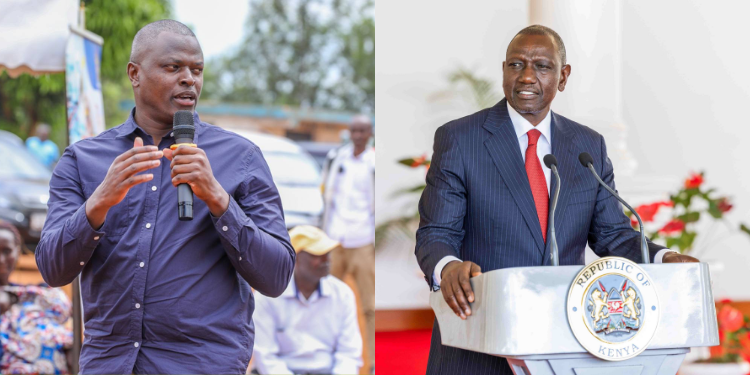
President William Ruto addressing a rally in Wajir County on June 2, 2026. PHOTO/State House.

FacebookTwitterLinkedInRedditWhatsApp
Advertisement

A Quick Overview of the 2026/2027 Budget and Finance Bill 2026

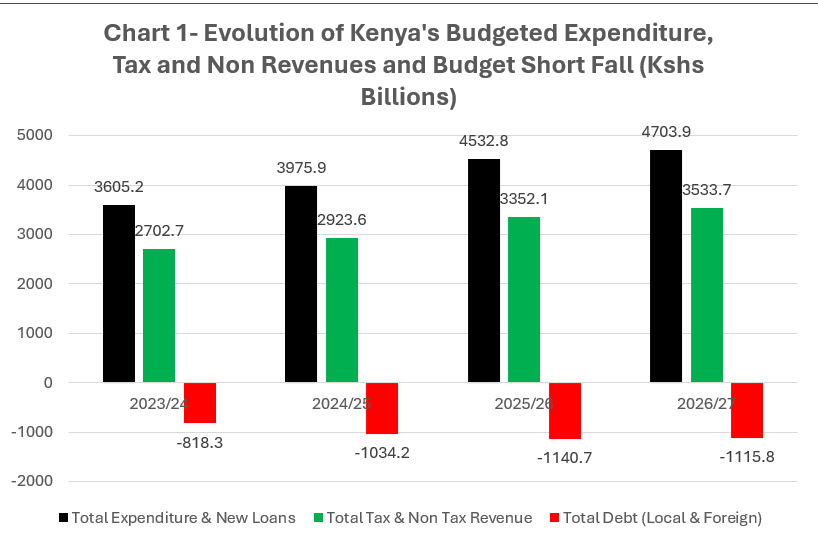
The total spending of the July 2026 to July 2027 budget is projected to reach Kshs 4.7 trillion, as shown by Chart 1 below. It is worth noting that the total budget figure does not include payments due on existing public debt, as it is assumed they can be rolled over through refinancing in the money markets. The largest portion of the Kshs 3.45 trillion budget (73.49%) will be spent on salaries, loans, pensions, and expenses to keep the government running. Spending on development infrastructure (roads, railways, bridges, airports, seaports, energy, ICT, water, sanitation) will reach Kshs 749.5 billion (15.93%). National government money transferred to counties as an equitable share of revenues, an equalization fund, or conditional and unconditional grants will reach Kshs 495.5 billion (10.53%). The allocation for emergency is set at Kshs 2 billion.

The Finance Bill 2026 targets raising a total of Kshs 3.53 trillion from Kenyan citizens and businesses. The share of tax revenues from income taxes by corporates and Pay as You Earn (PAYE), sales excise taxes, Value Added Tax (VAT), import and export customs duties will top Kshs 2.76 trillion (78.3%).

The share from fees charged by government ministries, departments, agencies and semi-autonomous government agencies is estimated at Kshs 631.8 billion (17.88%). The share on non-tax revenues from dividends or sale of state-owned enterprises is estimated at Kshs 134.5 billion (3.8%).
Kenyans Are Set To Feel The Economic Pinch If Finance Bill 2026 Is Passed Without Amendments
Evolution of Kenya’s Budgeted Expenditure, Tax and Non Revenues and Budget Short Fall (Kshs Billions)

To balance the equation and the difference between the estimated budget expenditure of Kshs 4.7 trillion and the total revenue of Kshs 3.53 trillion, the government intends to borrow and therefore add new debt of Kshs 1.11 trillion. Borrowing of new debt from Kenyans is expected to reach Kshs 890.4 billion (79.8%).

Borrowing new debt from foreigners is estimated at Kshs 225.5 billion (20.2%).  Below are the alternative ways that the budget and Finance Bill 2026 can increase your borrowing costs for both existing and new loans.

Proposed Size of Government Borrowing from Kenyans

Borrowing new additional debt from Kenyan citizens and businesses by selling them treasury bonds and bills is expected to reach Kshs 890.4 billion. This is equal to 4.25% of GDP, Kshs 20.94 trillion; 18.93% of the total estimated budget expenditure, Kshs 4.7 trillion; and 79.8% of the new additional debt, Kshs 1.11 trillion.

ADVERTISEMENT

What this means for you is that the high amount of new additional borrowing by the government may push everyone out of getting loans from banks, as the competition for the scarce money will cause interest rates to rise.

Proposed Size of Government Borrowing from Foreigners

Borrowing new debt from foreigners (loans from foreign banks, investors (Eurobonds from Eurodollar markets, Sukuk Bonds from the Middle East, Samurai bonds from Japan, Panda bonds from China), governments, IMF, World Bank, African Development Bank, European Investment Bank,  loans for projects and imports) is expected to reach Kshs 225.5 billion.


Also Read: Mitumba Tax, Rental Tax Among Contentious Proposals Dropped in Finance Bill 2026


This is equal to 1.1% of GDP, Kshs 20.94 trillion; 4.8% of the total estimated budget expenditure, Kshs 4.7 trillion; and 20.2% of the new additional debt, Kshs 1.11 trillion. If global inflation continues to rise due to hikes in Middle East oil prices and supply chain disruptions, global central banks will be forced to snuff out the inflation by increasing their interest rates.

This will force the Kenyan government to avoid external borrowing and instead substitute it with borrowing from Kenyan businesses and citizens. What this means for you is that competition for bank loans between government, private sector and households may push up interest rates on your existing and new loans. 

ADVERTISEMENT

Debt Repayment Pressures on the Current Local and Foreign Debt

Kenya’s Medium Term Debt Strategy (MTDS) report for 2026/2027 to 2028/2029 showed Kenya has a high debt burden because, as at June 2025, the debt to GDP ratio of 67.8% surpassed the target of not more than 60%, and the present value of debt to GDP at 65.3% was way above the national parliament ceiling of existing debt of 55%.
Cs John Mbadi Confirms Us$170 Million Samurai Loan Issuance In Japanese Market Ahead Of Finance Bill 2026
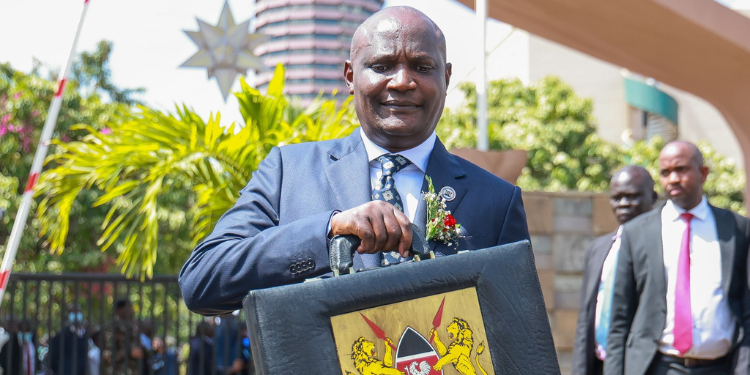
National Treasury CS John Mbadi. PHOTO/Parliament

The country is put in the class of countries with high risk of stressful debt. This means Kenya is highly vulnerable to being pushed off the cliff by external shocks, including rising global oil prices, interest rates, and the strengthening of the Dollar, as well as the resulting downgrades of Kenya’s credit score by Moody’s, S&P, and Fitch. If this happens, the government will be forced to borrow at high interest rates both domestically and externally, thereby raising borrowing costs for you and everyone else.

The 2027 Elections Big Government Requires Big Budget Problem

Politicians are going to be demanding ‘’development’’ from government for them to stand a chance of being elected in August 2027. To win over voters, the government lacks the political will and motivation to cut budgets and instead bows to pressure to maintain this large budget (Kshs 4.7 trillion, 22.4% of the GDP estimated at Kshs 20.94 trillion), thereby maintaining a big government.

The problem stems from the government’s failure to tighten its belt by growing the economy to increase tax revenues and/or cutting unnecessary expenditure.

Additionally, inflation from the money politicians will spend on their 2027 campaigns may increase inflation and force the Central Bank of Kenya to hike interest rates, thereby raising borrowing costs for you and everyone else.

Financing the Kshs 5 Trillion National Infrastructure Fund by Borrowing from Kenyans

The National Infrastructure Fund is expected to be financed through pension funds, collective investment schemes, sovereign wealth funds and climate finance. Should this fail and the government is forced to look for money by borrowing the money while still financing the budget shortfall with borrowings from Kenyans, the interest rates may skyrocket and thus raise borrowing costs for you and everyone else.  

Rise in factors determining interest rates charged by banks

The various factors that banks take into account while declaring interest rates on loans include the costs of deposits, the cost of borrowing foreign loans, operational costs, the rate at which borrowers fail to repay their loans, and the Central Bank Rate (CBR).


Also Read: Mbadi Revives Debate to Merge Counties as CBK Downgrades Kenya’s Economic Growth


Any medium to large increase in these factors will occasion a rise in borrowing costs for you and everyone as the banks hike up their lending interest rates.

Tips on How You Can Protect Yourself in a High Borrowing Costs Environment
  1. Take lessons and read books which sharpen your financial knowledge.
  2. Maintain excellent credit scores to benefit from lower risk-based rates.
  • Maintain proactive loan repayment behavior to maintain a clean loan history.
  1. Avoid multiple borrowings and being over-indebted.
  2. Compare lenders and always avoid high-interest-rate loans.
  3. Avoid diverting your loans to wrong purposes.
  • Talk with your bank to reduce your monthly repayment by prolonging your loan period.
Frequently Asked Questions (FAQs)
  1. Is Kenya stressed with a high debt burden? The present value of debt-to-GDP at 65.3% is above the parliament’s approved ceiling of 55%.
  2. Has Kenya been disciplined enough to reduce new debt over time? Not really. The budgeted new debt of Kshs 1.11 trillion is 5.3% of the Kshs 20.94 trillion GDP, which means that tightening belts to reduce expenditure or growing GDP to increase revenues has not managed to reduce the budget shortfall to the ceiling of less than 3% of GDP.
  • What are the top most [primary drivers of the cost of borrowing in Kenya? High interest rates stemming from the high cost of living (inflation) and the government’s high appetite for borrowing from banks.

Follow our WhatsApp Channel and X Account for real-time news updates.

All Eyes On Parliament To See If It Will Approve The Finance Bill 2026 Without Amendments
Kenya’s Parliament. PHOTO/NA.
Tags: Finance Bill 2026Treasury CS John Mbadi
Nicasio Karani Migwi

Nicasio Karani Migwi

Nicasio Karani Migwi is a specialist in banking and financial services, macroeconomics, strategic management, international business and Corporate Governance (Board Directorship). He currently works as a General Manager- Special Projects and Bank Economist - real economy & financial markets at Equity Group Holdings PLC. He did part-time lecturing for the MBA Global Strategic Management at Jomo Kenyatta University of Agriculture and Technology. His education background comprise ; PhD (Business Administration , Strategic Management) student at Jomo Kenyatta University of Agriculture and Technology ,MSc Economics of the University of Copenhagen- Denmark as a Full Danish Government Scholar, MA Banking and Finance at Sheffield Hallam University- UK as a Full Commonwealth Shared Scholarship Scheme Scholar ,BA Economics at Moi University- Kenya, Executive Education in University Business Schools (Columbia - New York USA -General Managers Leadership Program, Harvard - Boston, USA- Accion Strategic Leadership for Microfinance ,Strathmore - The Effective Director Program, Boulder Institute - Turin, Italy -Microfinance Policy). Nicasio is member of the Institute of Directors of Kenya, Economists Society of Kenya, Kenya Institute of Bankers, Kenya Institute of Management and World Economics Association.

Related Posts

Gtc Office Tower Nairobi: Leasing Costs, Security Features And Businesses Inside The Landmark Building

How Nairobi’s Expansion is Tearing Families Apart, Book Finds

September 3, 2026
President William Ruto Has Vowed To Transform Kenya Into Singapore Through Transformative Leadership.

Ruto’s Singapore Dream: The Math That Never Added Up

September 2, 2026
Parliament Has Allocated Ksh175.5 Billion To Health, Including Ksh19.1 Billion For The Primary Healthcare Fund And Ksh4.0 Billion For Emergencies.

More Revenue for Health Will Not Be Enough Without Budget Credibility

August 31, 2026
A Collage Of Kenya'S Former Deputy President Rigathi Gachagua And Health Cs Aden Duale. Photo/Courtesy

When Political Insults Become Attacks on Entire Communities

August 31, 2026
ADVERTISEMENT

The Kenya Times Facebook

LATEST NEWS

  • African Tech Founders Get New Path to Investors, Deals and Mentorship
  • Tata Chemicals Magadi: Owners of Over 100-Year-Old Company Ruto Ordered Out of Kenya
  • From Dusty Pitches to Champions League: Jereko Joins Nekesa in Kenyan Football History
  • CS Ogamba Issues New Directive on University and TVET Funding for First-Year Students
  • Ruto Reveals Why He Kicked Multimillion-Shilling Company Out of Kenya
  • Jomo Kenyatta Boys High School Closed Again
  • How Nairobi’s Expansion is Tearing Families Apart, Book Finds
  • World Meteorological Organization Issues Major El Niño Warning as New Weather Threat Emerges
  • University Faces Protest Over Expansion to Satellite Campuses
  • Migori County Announces 118 Jobs in New Recruitment Drive: How to Apply
  • Sakaja Reveals One Nairobi Problem Residents Can Blame Him For
  • Kenya Among 5 Nations Set to Receive Japan’s New Military Gear
  • Ndindi Nyoro Breaks Silence on His Bitter Split With President Ruto
  • Akoko Val: How Cooking Videos Became Her Ticket to Social Media Fame and a Luxury Lifestyle
  • Story of Ken Wa Maria, How He Rose from Gikomba Trader to Kamba Music Star
ADVERTISEMENT

Company

About Us

Our Authors

Our Experts

Social Media

Policies

Privacy Policy

House Rules

Standards and Policies

Terms and Conditions

Subscription

My Account

Contact Us

Contact Us

Join Our Team

Advertise With Us

© Copyright 2026 | The Kenya Times | All Rights Reserved

Welcome Back!

Sign In with Facebook
Sign In with Google
Sign In with Linked In
OR

Login to your account below

Forgotten Password? Sign Up

Create New Account!

Sign Up with Facebook
Sign Up with Google
Sign Up with Linked In
OR

Fill the forms below to register

All fields are required. Log In

Retrieve your password

Please enter your username or email address to reset your password.

Log In
Your Privacy and Cookies
We use cookies on our website to give you the most relevant experience by remembering your preferences and repeat visits. By clicking “Accept”, you consent to the use of ALL the cookies.
Do not sell my personal information.
Cookie settingsACCEPT
Privacy & Cookies Policy

Privacy Overview

This website uses cookies to improve your experience while you navigate through the website. Out of these cookies, the cookies that are categorized as necessary are stored on your browser as they are essential for the working of basic functionalities of the website. We also use third-party cookies that help us analyze and understand how you use this website. These cookies will be stored in your browser only with your consent. You also have the option to opt-out of these cookies. But opting out of some of these cookies may have an effect on your browsing experience.
Necessary
Always Enabled
Necessary cookies are absolutely essential for the website to function properly. This category only includes cookies that ensures basic functionalities and security features of the website. These cookies do not store any personal information.
Functional
Functional cookies help to perform certain functionalities like sharing the content of the website on social media platforms, collect feedbacks, and other third-party features.
Performance
Performance cookies are used to understand and analyze the key performance indexes of the website which helps in delivering a better user experience for the visitors.
Analytics
Analytical cookies are used to understand how visitors interact with the website. These cookies help provide information on metrics the number of visitors, bounce rate, traffic source, etc.
Advertisement
Advertisement cookies are used to provide visitors with relevant ads and marketing campaigns. These cookies track visitors across websites and collect information to provide customized ads.
Others
Other uncategorized cookies are those that are being analyzed and have not been classified into a category as yet.
SAVE & ACCEPT
LOGIN | REGISTER
  • Login
  • Sign Up
  • Cart
No Result
View All Result
  • News
    • Latest News
    • Breaking News
    • Investigations
    • Explainers
    • Fact Check
  • Politics
    • Global Politics
    • Conflicts & Security
    • Elections
    • Diplomacy
    • Government & Policy
    • Political Analysis
  • Business
    • Global Economy
    • Markets
    • Technology
    • Startups
    • Energy
    • Finance
  • World News
    • Americas
    • Asia
    • Asia Pacific
    • Africa
    • Europe
    • Middle East
  • Africa
    • East Africa
    • West Africa
    • Southern Africa
    • Central Africa
  • Health
    • Global Health
    • Public Health
    • Health Policy
    • Medical Research
    • Diseases & Conditions
    • Mental Health
    • Nutrition
    • Climate & Health
    • Health Explainers
  • Sports
    • World Cup 2026
    • Athletics
    • Basketball
    • Boxing
    • Cricket
    • Football
    • Formula 1
    • Golf
    • Rugby
  • Weather
    • Climate Business
    • Climate Change
    • Climate Solutions
    • Living Green
  • Culture
    • Arts
    • Film & TV
    • Food and Recipes
    • Lifestyle
    • Music
    • Travel
  • Opinion
    • Editorials
    • Letters
  • Behind The Brand
  • Contact Us

Not enough quota to unlock this post
Unlock left : 0
Are you sure want to cancel subscription?