The Teachers Service Commission (TSC) has addressed reports circulating on social media about the hardship allowance reclassification structure ahead of their July 2026 review.
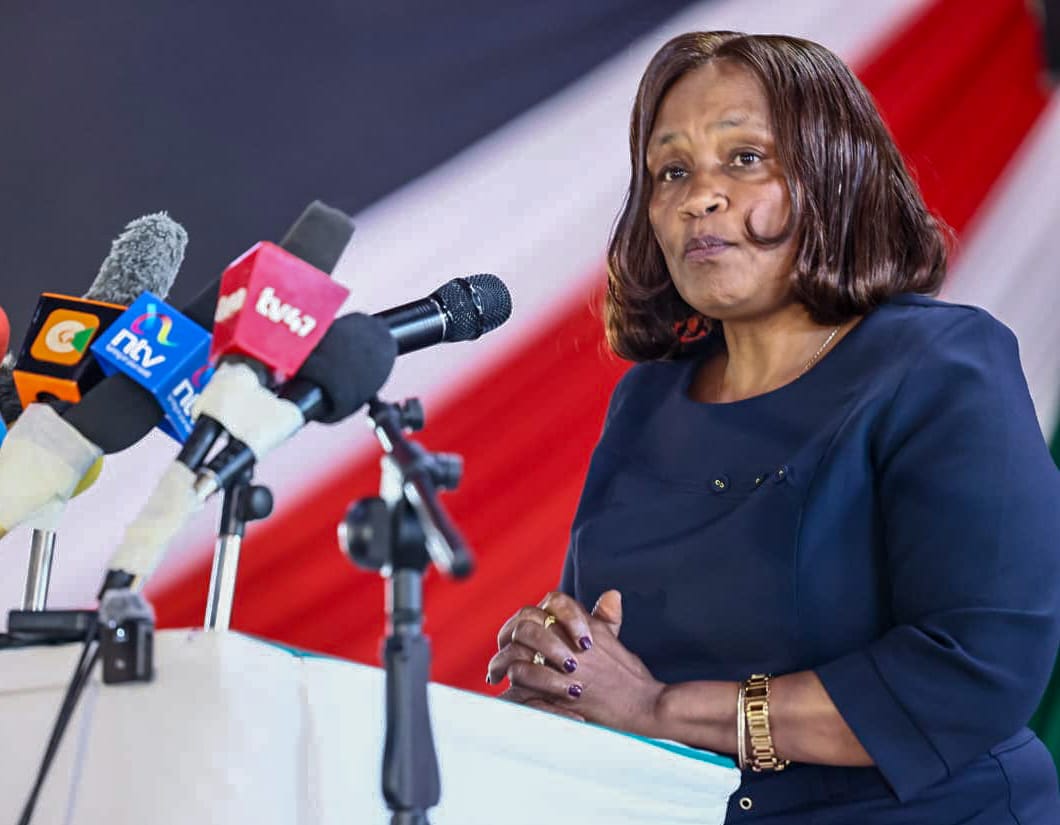
In a statement on April 23, TSC referenced two flagged posters circulating online regarding Hardship Allowance reclassifications and secondary school subject combinations.
“Reference is made to the two circulating posters regarding Hardship Allowance Reclassifications and Secondary School Subject Combinations. Please note that the information is not only misleading but FAKE,” the commission said in a statement.
The commission stated that the information contained in the posters is misleading and not authentic.
TSC advised the public to rely only on official communication channels for verified information.
The approved platforms listed included the TSC website (http://tsc.go.ke), its official Facebook page (TSC KENYA), and its X account (@TSC_KE).
“You are always advised to rely on official communication relayed through the TSC official channels i.e., TSC Website(http://tsc.go.ke); Facebook (TSC KENYA) and X (@TSC_KE),” TSC stated.
TSC Flags Hardship Allowance List Circulating Online
The flagged circulating document claimed that the Teachers Service Commission (TSC) has outlined revised hardship allowance designations effective July 1, 2026, in collaboration with the Salaries and Remuneration Commission (SRC).
The document showed a new two-tier system that classifies hardship areas into extreme and moderate hardship categories based on updated socio-economic assessments.
Also Read: TSC Suspends KEWOTA Deductions from Teachers With Immediate Effect
The fake document also indicates that Tinderet, Marakwet, and Tharaka Nithi have been removed from hardship classification following improved socio-economic conditions.
Court Decision Opens Way for Hardship Area Reclassification Plan
A revised hardship-area framework was introduced by the Teachers Service Commission (TSC) in May 2025, proposing a shift to a two-tier system separating zones into Extreme and Moderate categories, with implementation initially planned for 1 July 2025.
Later in July 2025, the Salaries and Remuneration Commission (SRC) maintained that the existing hardship classifications would remain applicable, effectively delaying the rollout of the proposed adjustments amid disputes and legal uncertainty.
Legal action followed in May 2025 when the Kenya Teachers in Hardship and Arid Areas Welfare Association (KETHAWA) moved to the Employment and Labour Relations Court seeking to block the planned reclassification by the two commissions.
By September 2025, the court issued conservatory orders halting implementation of the proposed changes, preserving the status quo regarding hardship allowances pending determination of the case.
On April 9, 2026, the court dismissed the petition, ruling that the challenge had been filed prematurely since the revised hardship framework had not yet taken effect.
Subsequent reports on April 17, 2026, indicated that the government had prevailed in the dispute, clearing the way for authorities to proceed with finalization of the updated hardship-area classification.
The ruling now positions the government to proceed with the policy review within the existing legal and administrative framework.
How Hardship Areas in Kenya Are Classified
Hardship areas in Kenya are determined through a formal, evidence-based classification process coordinated by the Salaries and Remuneration Commission (SRC) and the Ministry of Public Service, Human Capital Development, and Special Programs.
Also Read: TSC Clarifies Reports of April Salary Delays Linked to KEWOTA Court Ruling
According to technical assessments conducted by the Kenya National Bureau of Statistics (KNBS) and an Inter-Agency Technical Committee, multiple socio-economic and geographic factors are used to evaluate each duty station.
One key parameter is access to basic needs, including the availability of food markets and a reliable, clean water supply within affected communities.
Infrastructure conditions are also assessed, particularly transport networks, distance from urban centers, and access to communication services such as mobile connectivity and internet coverage.
Public service availability forms another core measure, including the presence and accessibility of health facilities, schools at all levels, and financial services such as banking.
Environmental and geographic conditions are considered, with a focus on arid and semi-arid zones, drought-prone regions, flooding risks, and terrain challenges that affect accessibility.
Security and livelihood risks are also factored in, including exposure to banditry, conflict, and other safety concerns, as well as poverty levels that affect access to essential services.
The collected indicators are weighted and scored by KNBS and the Inter-Agency Technical Committee to place each area on a hardship severity scale, typically classified as either an extreme or a moderate hardship zone.