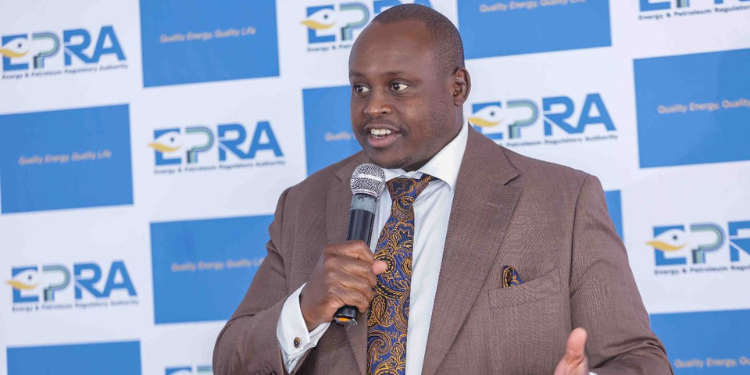
The Energy and Petroleum Regulatory Authority (EPRA) has listed petroleum stations that were found selling adulterated or export-bound motor fuels in the local market.
In a notice dated March 31, EPRA identified five (5) five petroleum stations between January and March 2026.
During the period, EPRA noted that it conducted 2,713 tests across 758 petroleum sites nationwide.
Of these, 753 sites (99.34%) met the required fuel quality standards, while 5 stations were found non-compliant.
“During the period January March 2026, a total of 2,713 tests were conducted at 758 petroleum sites. From the tests, 753 (99.34%) of the sites were found to be compliant. However, tests from Five, 5 (0.66%) sites turned out to be non-compliant,” read the part of the notice.
EPRA Publishes List of Sites Selling Contaminated Fuel
According to EPRA, several filling stations and local trucks were found selling or transporting diesel mixed with domestic kerosene or diesel meant for export.
Below is a table of notable cases as per the authority’s list:
| Test Date | Station Name | County | Nature of Non-Compliance | Status |
|---|---|---|---|---|
| 28.01.2026 | Asis Energy Filling Station, Kapkayo | Elgeyo Marakwet | Super petrol and diesel adulterated with domestic kerosene, high sulphur content | Station reopened after product upgrade and payment of KSh 101,638 in taxes and penalties |
| 04.02.2026 | Fuel Site, Habaswein | Wajir | Diesel containing high sulphur | Fuel impounded, matter in court |
| 18.02.2026 | AGO-Ex-Illegal Fuel, Matuga | Kwale | Diesel meant for export found in local market | Fuel impounded, matter in court |
| 12.03.2026 | Green Wells Energies Kisumu CBD Service Station | Kisumu | Kerosene meant for export sold locally | Station reopened after paying KSh 435,100 in taxes and penalties |
| 27.03.2026 | Murungaru Plateau Filling Station, Murungaru | Nyandarua | Diesel adulterated with domestic kerosene | Station closed |
The authority urged the members of the public to report suspected cases of petroleum fuel adulteration or illegal export through EPRA’s hotline (0709 366 000), USSD code (*363#), or SMS service (40850).
EPRA added that the hotline and reporting mechanisms are operational during normal working hours to enhance enforcement and ensure compliance across the petroleum sector.
Also Read: EPRA Lists 20 Companies Controlling Fuel Market in Kenya
Petrol Stations Hiding Fuel in Kenya
The published list comes as the country faces uncertainty over whether Kenya will continue to experience fuel shortages.
On March 30, President William Ruto outlined key measures the Government is taking to mitigate the impact of the ongoing Middle East conflict on Kenya’s economy.
He said the government has implemented measures to ensure the country maintains a steady supply of petroleum products.
“Rising international oil prices are already affecting consumers globally. However, the Government-to-Government fuel procurement arrangement has cushioned Kenyans from immediate shocks. This strategic intervention has mitigated price increases, ensured security of supply, and proven to be both prudent and forward-looking,” read part of the statement.
Also Read: EPRA Signals Potential Shift in Oil Loading Ports Amid Worsening Strait of Hormuz Tensions
Rising global oil prices have put pressure on economies worldwide, with the latest reports prompting companies, including Shell in Kenya, to announce fuel shortages.
On the other hand, Energy and Petroleum Cabinet Secretary (CS) Opiyo Wandayi called on Oil Marketing Companies (OMCs) to release any petroleum products they may be withholding from the public.
CS Opiyo Wandayi accused some oil marketers and retailers of deliberately withholding fuel in anticipation of future price increases.
He described such practices as commercially opportunistic, against the public interest, and a breach of licensing obligations.
Further, he directed that all oil marketing companies (OMCs) must sell fuel at the prices set by the Energy and Petroleum Regulatory Authority (EPRA).