The Government Vehicle Check Unit (GVCU) is a specialized unit within the Traffic Department of the National Police Service (NPS) whose role is to ensure that all government‑owned vehicles are used strictly for official duties and not for personal convenience.
Government vehicles are easily identified by their GK (Government of Kenya) number plates, and any such vehicle on the road falls under GVCU supervision.
By cracking down on misuse, the unit protects taxpayers’ money, reduces wasteful spending on fuel and repairs, and promotes accountability across the public sector.
Why the GVCU Unit Was Formed
The GVCU was established in 1967 at Police Headquarters, initially to deal only with the misuse of police vehicles. At the time, concerns were growing about official cars being treated as personal property.
The unit’s early success led to an expansion in 1987, when its mandate was widened to cover all government vehicles nationwide.
This expansion came as Kenya’s public service and parastatals grew, increasing the number of state‑owned vehicles on the road and the risk of abuse.
Today, the GVCU operates as a dedicated arm of the Traffic Police, backed by civil service transport regulations that give officers the authority to stop, inspect, and take action against any government vehicle found to be misused.
Who the GVCU Supervises
The unit’s reach is broad and cuts across the entire public sector. Its oversight applies to:
- National government ministries and state departments
- Parastatals and state corporations
- County governments
- Public schools, colleges, and training institutions
- The National Police Service itself
No government vehicle is exempt. Whether a car belongs to a senior civil servant, a school headteacher, or a county official, it can be stopped and inspected by GVCU officers.
The unit’s role has also been recognised in policy. The draft Government Transport Policy of 2024 explicitly affirms GVCU’s mandate and calls for continued government support to strengthen its operations.
The Unit’s Role on the Ground
The Government Vehicle Check Unit makes sure government vehicles are not misused. Officers focus on stopping common abuses such as:
- Using government vehicles for personal activities like shopping, school runs, or weekend trips
- Driving official vehicles outside working hours without approval
- Carrying unauthorised passengers, often family members or friends
- Driving without the right documents, such as work tickets, authority letters, or logbooks
- Treating government vehicles as private cars instead of public property
Officers also look out for reckless driving, traffic offences, and any misuse that causes unnecessary damage to government vehicles.
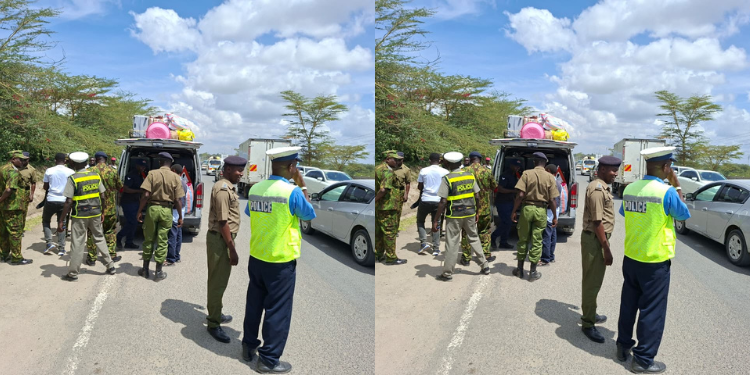
To do this, GVCU teams patrol roads, carry out spot checks near government offices, and follow up on reports from members of the public.
Drivers are required to explain where they are going and prove that the trip is for official work.
GVCU officers have the authority to stop any government vehicle with a GK number plate, check documents, and take action if rules are broken.
This may include issuing warnings, temporarily impounding the vehicle, or recommending disciplinary or legal action.
The unit also works with other agencies such as the National Transport and Safety Authority (NTSA).
Joint operations have focused on ensuring government vehicles use secure number plates and that public vehicle drivers undergo required training.
The public can help by reporting suspected misuse of government vehicles, such as vehicles parked at private homes during working hours or used for social events, through the toll‑free hotline 1526.