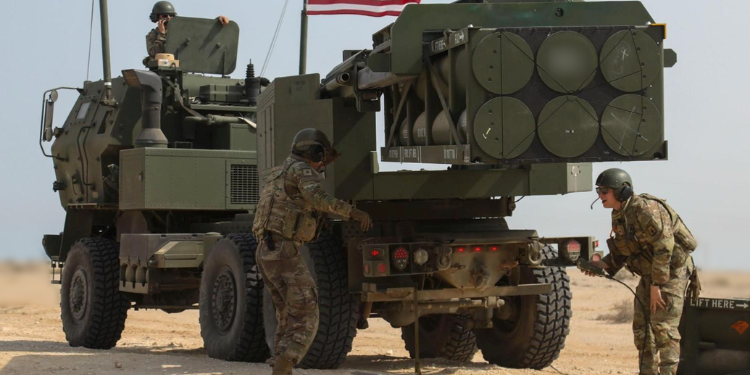
A new report has revealed that as many as 150 U.S. service members have been injured since the start of the war with Iran.
According to the report by Reuters, citing two people familiar with the matter, the figure is significantly higher than the previously disclosed number of eight seriously wounded troops publicly acknowledged by the United States Department of Defense.
Officials said most injuries were minor and that most affected troops had already returned to duty.
Pentagon spokesperson Sean Parnell said roughly 140 U.S. service members had been wounded during the first 10 days of sustained attacks following the launch of the U.S. military campaign against Iran.
“Since the start of Operation Epic Fury, approximately 140 U.S. service members have been wounded over 10 days of sustained attacks,” Parnell said.
He added that 108 troops had already returned to active duty, while eight were classified as seriously wounded and receiving advanced medical care.
The Pentagon did not provide additional details about how the injuries occurred. Reuters said it could not determine the exact nature of the injuries or whether they included traumatic brain injuries, which are commonly associated with exposure to explosions.
White House confirms similar estimate
In a press briefing on Tuesday, March 10, White House press secretary Karoline Leavitt also acknowledged that the number of wounded troops was in the “ballpark” of about 150.
“I can’t confirm the exact number. I know it is within that ballpark, but I will defer you to the Pentagon for the specific number of wounded or injured so far.”
The confirmation marks one of the clearest indications so far of the scale of injuries among U.S. forces since the conflict began.
President Donald Trump had on Saturday, March 7, announced that U.S. troops could “possibly” be sent on the ground in Iran, as the war continues.
Trump made the remarks while speaking to reporters aboard Air Force One, reiterating that he wants to be involved in the selection of Iran’s next leader and saying he doesn’t “want to come back every 10 years.”
According to the president, U.S. ground troops could “possibly” be sent into Iran, but there would have to be a “very good reason.”
“I don’t even want to talk about it now. I don’t think it’s an appropriate question; you know I’m not going to answer it. Could there be? Possibly, for a very good reason, have to be a very good reason. I would say if we ever did that, they would be so decimated that they wouldn’t be able to fight at the ground level,” the president said.
Also Read: Trump Speaks on US Troops Invading Iran as Khamenei’s Son Mojtaba Reportedly Wounded
Pressed whether he would consider using ground troops to secure enriched uranium at Iran’s nuclear sites, Trump also said it’s a possibility, but not right now.
“We’ll find out about that. We haven’t talked about it. It was a total obliteration. They haven’t been able to get to it. And at some point, maybe we will. It would be a great thing but right now we’re just decimating them, but we haven’t gone after it.”
Retaliatory strikes on U.S. bases by Iran
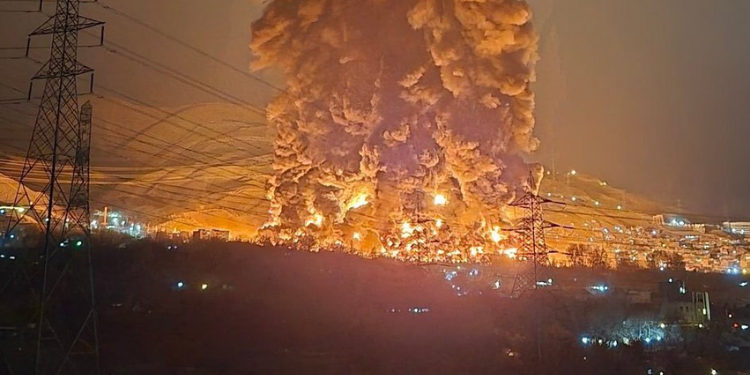
Iran has carried out retaliatory attacks against U.S. military positions since the start of the conflict on February 28.
Those strikes have targeted American bases across the region as well as diplomatic facilities and key infrastructure.
Iranian attacks have also hit hotels, airports, and oil facilities in several Gulf states.
The conflict began after the United States and Israel launched military operations against Iranian targets under what Washington has described as Operation Epic Fury.
The conflict has now entered its second week with continued military operations across the region.
Donald Trump said earlier this week the war could end “pretty quickly,” although he later clarified it would not conclude immediately.
The U.S. president also said he was dissatisfied with Iran’s new supreme leader, Mojtaba Khamenei, who succeeded his father, the late Ali Khamenei.
Trump has said U.S. forces have struck more than 5,000 targets during the campaign, including what he described as the destruction of much of Iran’s navy, air force, and missile-launching capability.
Also Read: Russia Secretly Joined US-Iran War? Panic as Putin Makes a Bold Move Against Americans
The war has triggered retaliatory strikes and air defense interceptions across the Middle East.
Missiles and drones launched from Iran have been intercepted in several Gulf countries, including Saudi Arabia, the United Arab Emirates, Kuwait, and Bahrain.
Authorities in Bahrain reported that a residential building in the capital, Manama, was hit in one attack, killing a 29-year-old woman and injuring eight others.
Iran says the conflict has caused heavy casualties within the country as well. Officials in Tehran say more than 1,200 people have been killed and roughly 10,000 injured since the start of the war.
On the other hand, U.S. Central Command (CENTCOM) has confirmed that eight American service members have died as of March 10, 2026, since the start of the U.S.-Israel war.
The fighting continues as both sides maintain military operations across the region.
Follow our WhatsApp Channel and X Account for real-time news updates.