
President Donald Trump has declared that he must play a role in choosing Iran’s next supreme leader as the war between the United States, Israel, and Iran entered its sixth day.
In an interview with Axios, Trump said he needs to be involved in the process of selecting Iran’s next leader and dismissed Mojtaba Khamenei, son of the late Ayatollah Ali Khamenei, as an unacceptable successor.
“Khamenei’s son is a lightweight. I have to be involved in the appointment,” Trump said, according to the outlet. He added that Iranian officials working on succession were “wasting their time.”
Under Iran’s constitution, the country’s 88-member Assembly of Experts is responsible for selecting the next supreme leader. One member said on state television Wednesday that the body was close to making a decision.
Trump acknowledged that Mojtaba Khamenei is widely seen as a leading candidate but said, “Khamenei’s son is unacceptable to me.”
“We want someone that will bring harmony and peace to Iran,” he added.
Earlier this week, Trump warned that replacing Iran’s leadership with someone “as bad as the previous person” would represent the worst-case scenario following U.S. and Israeli strikes.
Kurdish offensive backed, but U.S. role unclear
In a separate interview with Reuters, Trump said he supports a Kurdish offensive inside Iran, though he declined to say whether the United States would provide direct military backing.
“I think it’s wonderful that they want to do that, I’d be all for it,” he said. Asked whether Washington would offer air cover or operational support, Trump responded, “I can’t tell you that.”
Also Read: Fresh Twist with Iran’s Potential Successor Mojtaba Khamenei’s Status in Doubt
The remarks come amid earlier reports suggesting Kurdish opposition groups might launch ground operations from Iraq into western Iran.
However, multiple Kurdish political and military sources have denied that any such offensive has begun.
Officials from the Kurdistan Freedom Party (PAK), Komala, and PJAK rejected reports of cross-border operations. Aziz Ahmed, Deputy Chief of Staff to Kurdistan Region Prime Minister Masrour Barzani, called claims that Iraqi Kurds had entered Iran “patently false.”
Iranian Foreign Minister Abbas Araghchi has warned of potential “terrorist movements” near the Iraqi border, calling for enhanced security measures.
Even as political rhetoric intensifies, military operations show no sign of slowing.
The Israeli Air Force said it detected a new wave of missiles launched from Iran toward Israeli territory. Defense systems were activated, and the Home Front Command issued mobile phone alerts instructing civilians in affected areas to enter protected spaces immediately and remain there until further notice.
Sirens were reported in several regions as Israel’s air defense systems intercepted incoming projectiles.
Iran’s Revolutionary Guard has claimed responsibility for multiple waves of retaliatory strikes, describing recent launches as part of its 17th and 18th operations since the conflict escalated.
Iranian state-linked media previously asserted that Ben Gurion International Airport and advanced radar systems were targeted, though independent confirmation of specific damage remains limited.
Tehran under strike
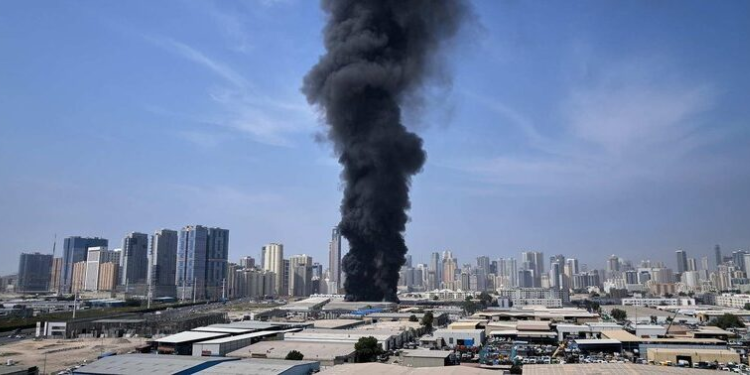
Iran continues to absorb sustained strikes across its territory after explosions were reported throughout Tehran overnight and into Thursday morning, with additional blasts in western cities, including Sanandaj.
Also Read: Iran Holds Firm: New Missile Barrage Launched at Israel as Explosions Rock Tehran
Local sources indicated that a radio and television authority facility may have been struck in Sanandaj, with surrounding residential buildings suffering blast damage.
Iran’s Ministry of Health said the civilian death toll from recent strikes has surpassed 1,000, with more than 6,000 injured.
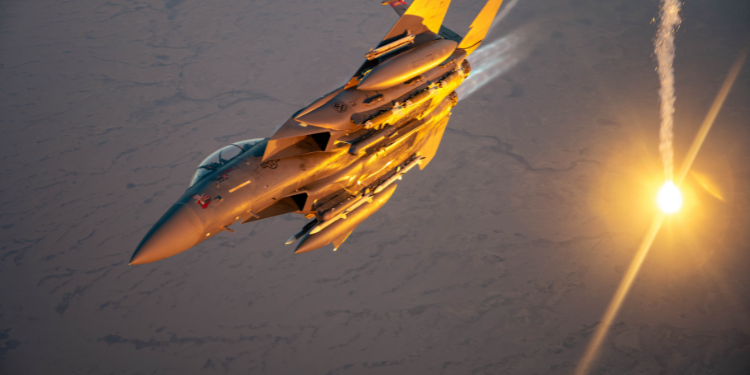
The United States and Israel have conducted coordinated operations against Iranian missile infrastructure, drone facilities, and military headquarters since the weekend.
Gulf allies strained
Qatar’s Ministry of Interior announced the evacuation of residents living near the U.S. Embassy in Doha as a precautionary measure. Authorities said alternative accommodation was being provided while security measures are assessed.
Saudi Arabia’s Defense Ministry reported intercepting three drones east of al-Kharj Governorate. U.S. diplomatic facilities in Saudi Arabia, Kuwait, and the United Arab Emirates have faced drone threats this week.
CBS News reported that Gulf allies are rapidly running low on interceptor missiles after days of sustained Iranian drone and missile activity.
Meanwhile, cargo vessels have begun avoiding the Strait of Hormuz following an announcement by Iran’s Islamic Revolutionary Guard Corps regarding the waterway’s closure. The strait is a critical corridor for global oil and gas shipments, and disruptions have intensified pressure on energy markets.
Follow our WhatsApp Channel and X Account for real-time news updates.